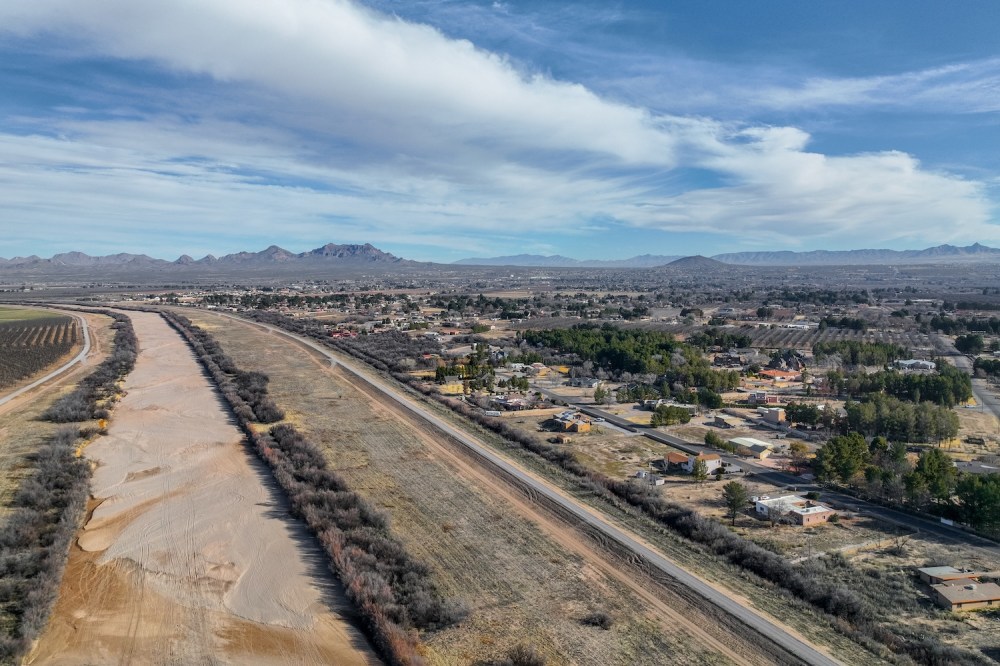
Decades of tension between the United States and Mexico over shared water resources turned into an actual water-cum-trade war overnight. In a post on Truth Social, U.S. President Donald Trump made good on earlier promises and threatened additional tariffs on Mexico if the country does not comply with its obligations to send water from the Rio Grande and its tributaries into Texas.
“Mexico still owes the U.S. over 800,000 acre-feet of water for failing to comply with our Treaty over the past five years,” Trump wrote. “Mexico has an obligation to FIX THIS NOW.”
Decades of tension between the United States and Mexico over shared water resources turned into an actual water-cum-trade war overnight. In a post on Truth Social, U.S. President Donald Trump made good on earlier promises and threatened additional tariffs on Mexico if the country does not comply with its obligations to send water from the Rio Grande and its tributaries into Texas.
“Mexico still owes the U.S. over 800,000 acre-feet of water for failing to comply with our Treaty over the past five years,” Trump wrote. “Mexico has an obligation to FIX THIS NOW.”
Outside of the American West, trans-boundary water disputes often seem like something that only affects faraway places, such as the everlasting fight between Egypt and Ethiopia over the Grand Ethiopian Renaissance Dam; China’s threat to its neighbors with big hydroelectric projects; India and Pakistan nearly going to war this year over a shared river; and Turkey and Iraq nearly doing the same.
But the U.S.-Mexico water dispute has been brewing for a long time, and as with those other disagreements, there are no immediate solutions. Mexico, and northern Mexico especially, has been hammered by drought in recent years, which has made it all but impossible to fulfill its commitments under the 1944 treaty that regulates water flow between the two countries. Under that treaty, Mexico is obligated to provide the United States with at least 350,000 acre-feet of water a year, while the United States is obligated to send even more Colorado River water the other way.
Mexican President Claudia Sheinbaum has tried to placate Trump, offering to release precious reserves of stored water earlier this spring after the first tariff threats. But Trump is right that Mexico has not fulfilled its obligations: There is hardly a year this century when Mexico’s deliveries of water to Texas farmers and ranchers came close to what they ought to be, and the past few years have been especially dry. The problem is that there is not much left to give: Water levels in the Amistad Reservoir, the largest international storage dam between the two countries, remains below 25 percent, and the Falcon Reservoir’s reserves are even lower.
On paper, at least, water disputes between the two countries are meant to be resolved by the International Boundary and Water Commission, not by presidential fiat. Part of the problem with the 1944 agreement—like the Colorado River Compact and all international water treaties from Egypt to the Indus—is that it was predicated on higher-than-average water flows. That means that when river flows return to normal (or lower), somebody has to tighten their belt.
But one of the reasons that Trump has taken such a direct and sudden interest in an issue that has been simmering since the late 19th century is because U.S. farmers and ranchers are suffering. Texas farmers are struggling to get the water they’d been enjoying for years; Midwestern farmers have harvests but fewer export markets than they’d like; and ranchers are trying to rustle up herds that have fallen to the lowest levels in more than 70 years.
That is partly because of drought, partly because of culled beef herds in the wake of the COVID-19 pandemic, and partly because the Trump administration’s trade policies have foreclosed formerly buoyant export markets. Trump’s White House is now having beef policy meetings to try and come up with a solution to soaring beef prices. Meanwhile, the president is mustering $12 billion in tariff monies to bail out farmers who are being hurt by his trade wars.
Underlying Mexico’s woes, and Trump’s latest tirade, is the climate, which is changing and unremitting. What Mexico went through in recent years was abnormal: Normally, when a cycle shifts from La Niña to El Niño, rainfall patterns revert to the mean. But they never really did.
The Obama administration took a lot of flak at the time, and even more since, by arguing that climate change was a national security threat. A decade ago, it wrote: “Climate change is an urgent and growing threat to U.S. national security, contributing to increased weather extremes which worsen refugee flows and conflicts over basic resources like food and water.”
Mexico now faces an additional 5 percent tariff on its exports to its largest trading partner if it doesn’t muster up more water by the end of the year. It’s not entirely clear what that tariff would apply to, since most of Trump’s tariffs on Mexico (like those on Canada) exempt goods covered by the United States-Mexico-Canada Agreement. But it will make for an interesting talking point when that trilateral trade deal comes up for review next year.
What the dispute does highlight is the role that water scarcity is coming to play in trans-national frictions and the role that climate change has in exacerbating those water flows.
The United States and Mexico, for all their history, are pretty good neighbors and can probably work this out. But the fallout from issues such as the melting of the Himalayan glaciers on all the downstream countries that rely on those water flows will be a much bigger concern, with billions of people at stake.
This post is part of FP’s ongoing coverage of the Trump administration. Follow along here.