
A clay flute tradition from Pakistan’s Sindh region – with echoes stretching back to the Indus Valley and faint parallels in Gujarat – became the early focal point of the 20th session of UNESCO’s Intergovernmental Committee for Safeguarding Intangible Cultural Heritage on Tuesday, as delegates voted to place the Boreendo, a spherical terracotta vessel-flute, on the List of Intangible Cultural Heritage in Need of Urgent Safeguarding.
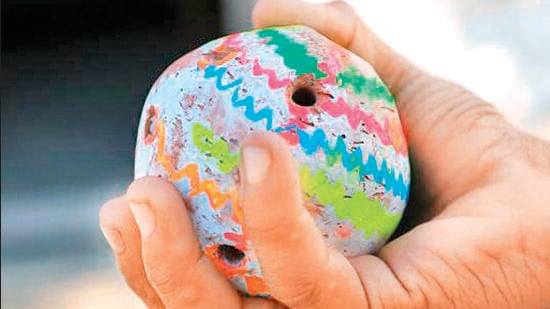 The boreendo. (Credit: faraz ahmed, sindh culture dept)
The meeting, hosted at Delhi’s Red Fort, is reviewing 67 global nominations this year. It will also take up India’s proposal to inscribe Deepavali on Wednesday – a nomination backed by a large set of community endorsements from cultural institutions, universities and practitioners across India.
The Boreendo’s inscription highlights mounting global concern over vanishing micro-traditions that survive with only one or two bearers. Pakistan’s dossier describes the Boreendo as a small, egg-shaped flute of baked clay, fitted with a single air inlet and three to five finger holes. It produces a mellow, breathy tone that once accompanied pastoral songs, courtship melodies and seasonal gatherings across the Thar region.
But today, according to the nomination, only one master musician and a single potter in Keti Mir Muhammad Lund retain full knowledge of crafting and playing the instrument – a level of threat the committee termed “severe”. The inscription now obligates Pakistan to implement a time-bound safeguarding plan: training apprentices, documenting repertoire, improving local clay-processing skills, and ensuring that the instrument becomes economically viable for artisans who might otherwise abandon the craft.
Researchers at the session noted that the Boreendo has deep archaeological roots. Terracotta vessel-flutes excavated at Mohenjo-Daro share striking visual and structural similarities with today’s instrument, suggesting a sonic lineage extending back millennia. Ethnomusicologists have also recorded variants in Kutch, Gujarat, where pastoral and potter communities once interacted regularly with Sindhi groups across a porous frontier. Such findings indicate that the Boreendo may once have been part of a wider cultural soundscape spanning western India and Sindh, long before borders halted this exchange.
Experts attending the Delhi meeting said the inscription underscores the need for more cross-border research into ancient sound cultures of the region, many of which survived only through oral practice and now face imminent disappearance.
The Boreendo decision was part of a cluster of south and central Asian inscriptions this cycle. Bangladesh secured recognition for the weaving of the Tangail saree, celebrated for its fine cotton, extra-weft motifs and luminous colour palettes. Afghanistan succeeded in advancing the Behzad-style miniature painting nomination despite formidable political constraints, with delegates noting that the survival of miniature ateliers amid conflict made safeguarding assistance urgent. A multinational Gulf nomination for the bisht – the traditional cloak worn in several Arab states – also passed.
Attention now turns to India’s Deepavali nomination, among the most closely watched dossiers of the session. India describes the festival as a civilisational observance celebrated by Hindus, Jains, Sikhs and several regional communities, each embedding distinct stories and rituals into the overarching theme of light overcoming darkness.
The dossier outlines practices ranging from northern Ramayana retellings to Karnataka’s Balipadyami traditions and the Narakasura narratives of Tamil Nadu, arguing that the festival’s breadth, inclusivity and pan-Indian participation make it a strong candidate for inscription.
Officials familiar with the process said the file stands out for the sheer diversity of community endorsements attached to it. Letters reviewed by HT show support from performing-arts institutions, religious bodies, regional cultural organisations and leading universities.
Meitei cultural practitioners from Manipur submitted a detailed note describing the lighting of earthen lamps in the Meitei month of Wakching as an expression of prosperity and spiritual renewal, emphasising the festival’s close alignment with indigenous cosmology. Jawaharlal Nehru University, in a letter signed by its registrar, said Deepavali reflects India’s “cultural continuity and inter-community dialogue”. National Law University Delhi wrote that the festival’s vibrant presence on campuses shows how the tradition adapts to contemporary settings while retaining its core significance. The Sangeet Natak Akademi, India’s apex arts body, said Deepavali’s reach across classical and folk performance traditions makes it one of the country’s most widely recognised cultural expressions. Jamia Millia Islamia, Miranda House and other universities sent similar letters.
Delegates indicated that Wednesday’s examination could draw intense interest, given the festival’s scale and the diplomatic weight of a potential inscription. If approved, Deepavali would join more than a dozen Indian elements already on UNESCO’s heritage lists, including Kumbh Mela, Kolkata’s Durga Puja and Ladakh’s Buddhist chanting.