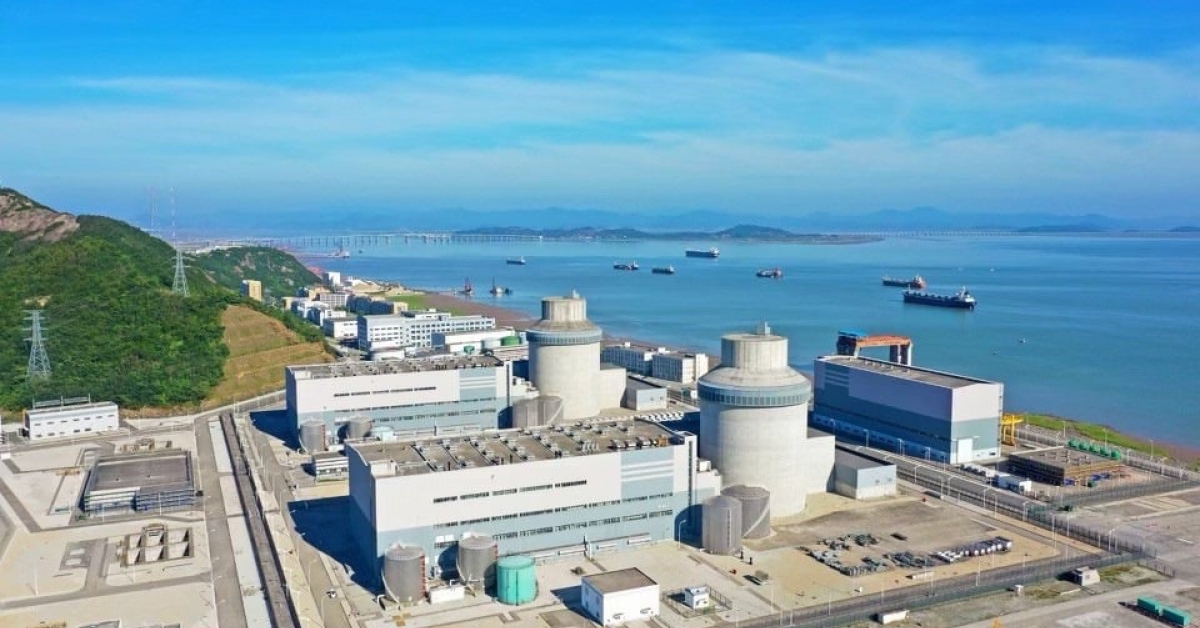
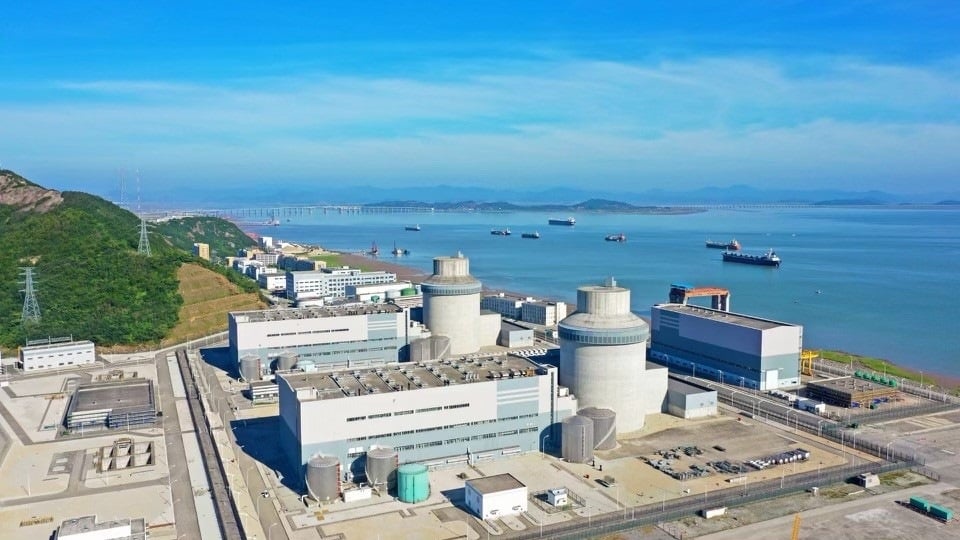
Small modular reactors are emerging as an option as the world faces growing pressure to secure stable, low-carbon electricity. (Photo: Westinghouse)
Taiwanese president Lai Ching-te (賴清德) has signaled that new nuclear technologies may be considered in the island’s future energy mix, allocating about USD 3 million (NTD 1 billion) for small modular reactor (SMR) research amid rising pressure to secure stable, low-carbon electricity.
At the International Forum on Advanced Nuclear Technologies on Dec. 9, experts and industry representatives from the United States, France, and South Korea showcased the latest developments shaping the next wave of nuclear innovation.
Across the sessions, speakers repeatedly underscored safety, operability, and compatibility with renewables as defining advantages of advanced nuclear systems. While noting that public acceptance remains limited, they emphasized that credibility hinges on delivering designs that prevent past accidents from happening again.
“The public is getting more comfortable with the idea of nuclear power, but they haven’t fully accepted it yet,” said Scott Roberts, Chief Engineer at Westinghouse Electric Company. He stressed that industry players must advance cautiously and collectively. “One mistake could set public acceptance back two decades in a heartbeat,” he noted.
Westinghouse: Scaling proven designs and accelerating delivery
Westinghouse emphasized its expanding collaborations with global partners, including Taiwan’s National Tsing Hua University (NTHU), which has selected the company’s eVinci microreactor as the target design for its next research reactor. These partnerships, said Tsung-Kuang Yeh (葉宗洸), professor at NTHU’s Department of Engineering and System Science, illustrate how future nuclear development will increasingly rely on shared learning and standardized technology pathways.
.jpg)
Scott Roberts of Westinghouse stressed that safety must remain the foundation for public trust and future nuclear deployment. (Photo: Wendy Lo)
At the core of Westinghouse’s strategy is the AP1000, a Generation III+ reactor with seven to eight years of operational experience in China and the United States. Six units are running across both countries and have achieved capacity factors above 92%, with outages as short as 19 to 25 days. The design simplifies equipment layouts and uses passive safety systems capable of maintaining core cooling for 72 hours without external power. Westinghouse aims to shorten construction to 48 months, or potentially 42 months, by integrating artificial intelligence, developed in partnership with Microsoft, into modular factory operations and global supply chain planning.
To complement the AP1000, Westinghouse introduced the AP300, a 300 MW SMR derived directly from the larger design. By removing one cooling loop and shrinking the reactor vessel, the AP300 fits onto roughly half a football field while retaining the same licensing basis, fuel type, and passive safety systems.
Westinghouse is positioning the AP300 for the data center market, where demand from hyperscale facilities is expanding so quickly that dedicated nuclear capacity is increasingly being discussed. “We’re talking about unprecedented demand on energy coming into the world,” said Roberts, noting that one Texas data center alone may require the equivalent of four AP1000 units.
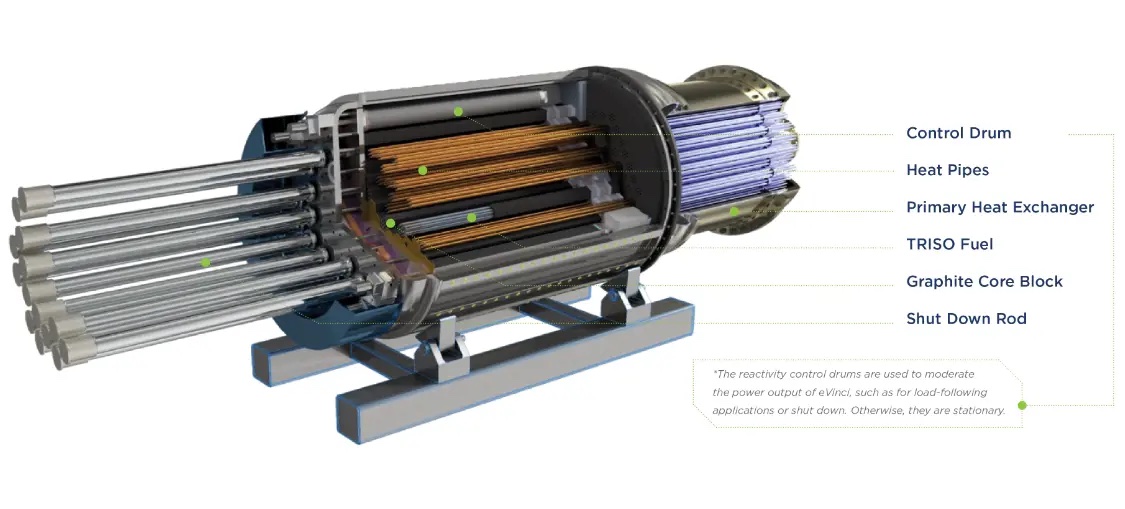 Westinghouse’s eVinci microreactor is designed to be “inherently safe,” using TRISO fuel to keep any accident condition contained within the fuel itself. TRISO stands for TRi-structural ISOtropic particle fuel. (Photo: Westinghouse)
Safety remained the thread connecting Westinghouse’s message. Roberts said that every major nuclear accident shares one characteristic: materials escaped the expected containment boundary. New reactors, he said, must be engineered so that “the accident never gets outside.”
South Korea: Natural-force safety design positions i-SMR for commercialization
South Korea’s i-SMR program echoed Westinghouse’s view that safety is the foundation for public trust and regulatory progress. Developed from the licensed SMART reactor, the i-SMR adopts a fully integrated configuration in which major components are enclosed within a single pressure vessel. Yongse Kwon, Principal Researcher at the i-SMR Development Agency, explained that the reactor’s essential safety functions rely entirely on natural forces rather than powered equipment. Its passive emergency cooling is driven by gravity and natural circulation, allowing heat to be removed without pumps or electricity.
In addition to safety, Korea highlighted modularity and deployment readiness. Each module produces 170 MW of electricity, and a four-unit plant can reach 680 MW with an operating life of 80 years. South Korea aims to secure Standard Design Approval in 2028 and commercial operation in 2035. Kwon noted that global SMR demand could reach 65 to 85 GW by 2035.
France: Nuclear–renewables integration and long-term waste management
France’s CEA (Commissariat a l’energie atomique et aux energies alternatives) presented an approach centered on combining nuclear and renewables within an integrated, multivector energy system. Jean-Christophe Bonté, Representative in Taiwan for CEA’s Technological Research Division, said that reaching net-zero by 2050 will require linking electricity, heat, and hydrogen production through flexible grids and hybrid energy hubs. In this model, nuclear provides firm capacity and industrial-scale heat, while renewables offer rapid deployment and distributed generation.
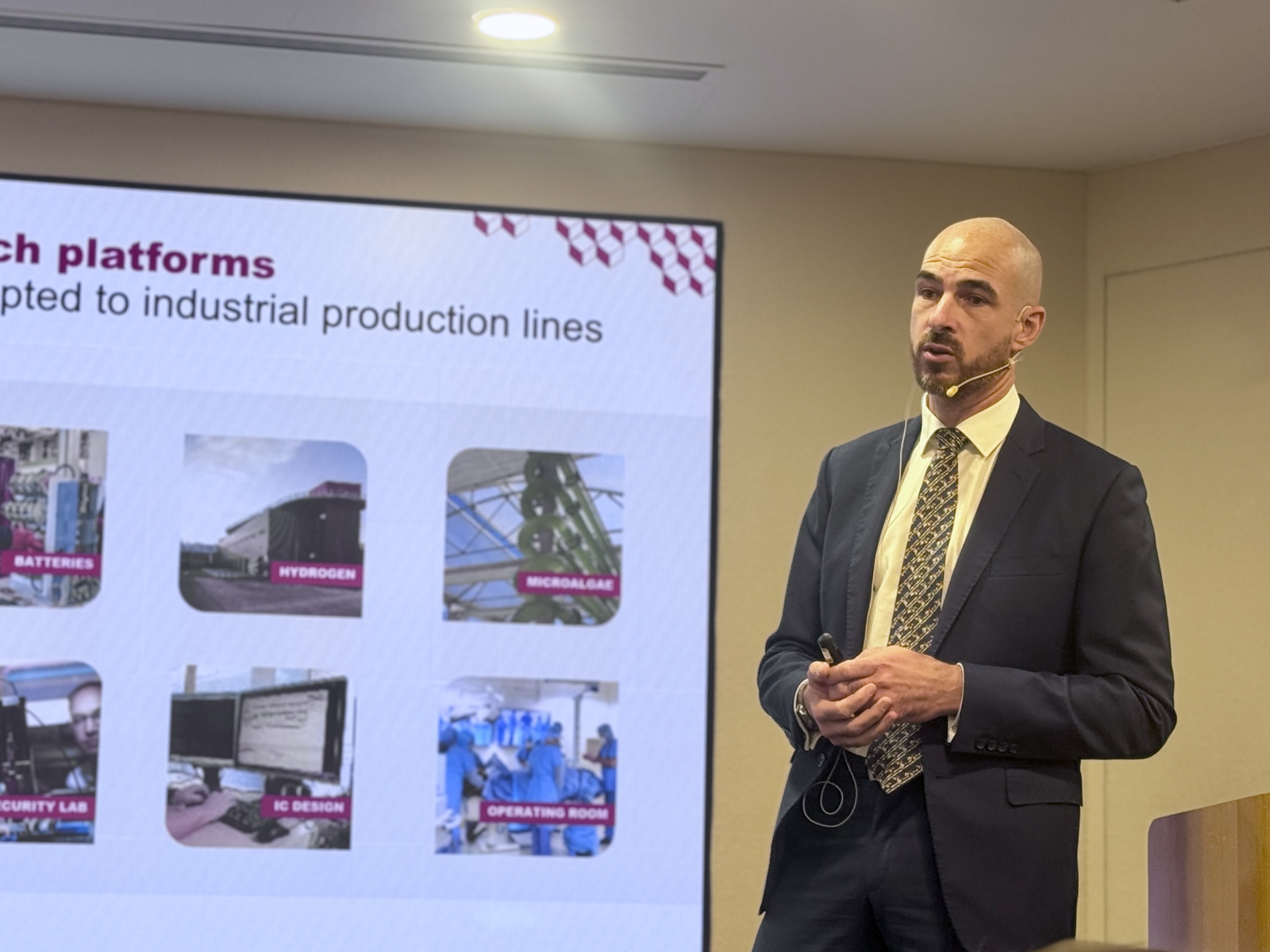
Jean-Christophe Bonté of CEA said achieving net-zero by 2050 will require integrating nuclear and renewable energy into one coordinated system. (Photo: Wendy Lo)
Alongside system integration, Bonté emphasized that a robust nuclear future requires credible waste-management solutions. France updates its national radioactive waste plan every five years, with the current 2022–2026 cycle outlining disposal strategies for very low-level and intermediate-level long-lived waste, as well as plans for the Cigéo deep geological repository for high-level waste.
The underground facility, designed for 120 years of operation and a depth of 500 meters, is progressing toward construction following multiple public consultations and decades of research. Bonté noted that effective waste management is central to public confidence, and long-term repository development is advancing in parallel with new reactor designs to ensure the entire fuel cycle remains accountable and transparent.
As Taiwan evaluates whether to reopen nuclear discussions, the forum highlighted that advanced reactors are being designed to be safer, smaller, and more flexible, but their success depends on earning sustained public confidence.