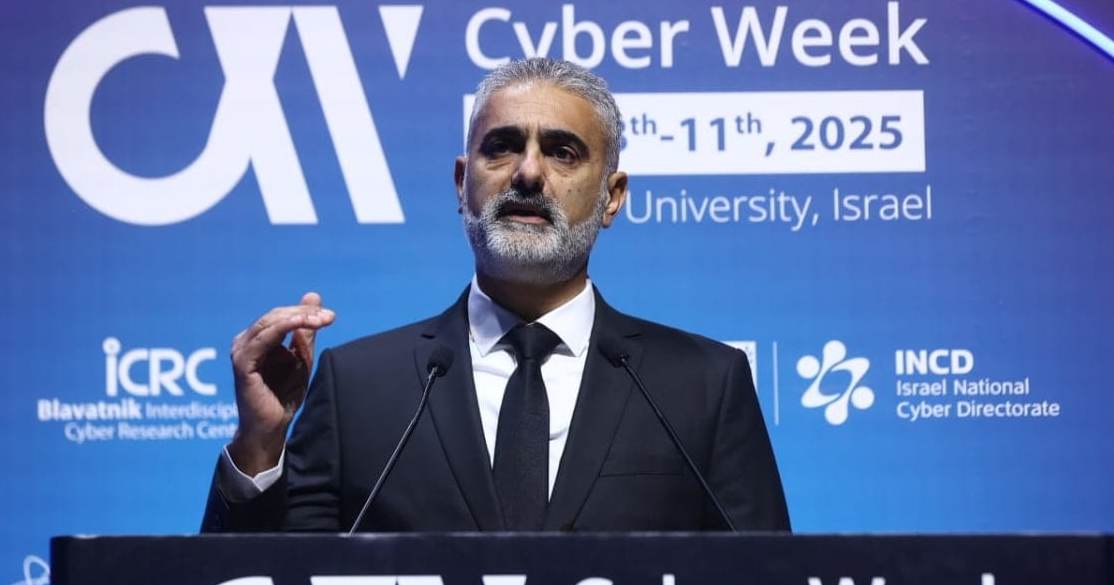
While the presumed murder of Mohammad Hossein Tajik had been previously reported by Iranian dissidents, details published by the magazine’s reporter Shane Harris with whom he corresponded provide new information about his motives and actions.
Harris wrote that he first made contact with Tajik after an Iranian hacker group called Parastoo posted its email address on a message board inviting people to make contact.
It had previously posted details about how a stealth US drone flying over Afghanistan had been commandeered and seized by Iran in December 2011.
The report cited Tajik as saying that his father, who goes by the honorific title Hajji Vali, had been a veteran agent of Tehran’s security apparatus after storming the headquarters of the Shah’s secret police amid the 1979 Islamic Revolution.
His family ties and facility with math and computers earned him a position at the intelligence ministry at age 18 and Tajik reportedly said he eventually came to lead an elite cyber-warfare unit.
Cyberattacks
Harris said Tajik told him Iran focused its operations on Israel and Saudi Arabia, adding that he had played a role in a 2012 cyberattack on the Saudi state oil company Aramco in which information was wiped from three-quarters of its office computers.
Tehran, Tajik said, had shared techniques with Russia’s GRU intelligence service and had attacked the electrical grid of NATO member Turkey in 2015.
Iran had also played a secret role, he went on to allege, in a February 2016 attack on the central bank of Bangladesh in which $81 million was stolen, for which the United States later indicted three North Korean hackers.
Tajik alleged that Tehran had instructed its Lebanese ally Hezbollah on how to penetrate the SWIFT international banking network and the group had passed the information on to Pyongyang in exchange for missiles.
Torture, death
For reasons which remain unclear, Tajik began collaborating with the CIA around times in which the agency scored major intelligence success against Iran and its allies, Harris reported.
His relationship coincided with the assassination of veteran Hezbollah military chief Imad Mughniyeh in Damascus in a joint US-Israeli operation in February 2008 and the discovery of Iran’s secret underground uranium enrichment facility Fordow in September 2009.
Tajik did not take credit for either, Harris reported. Fordow was among three Iranian nuclear sites bombed by the United States on June 22.
The CIA, Tajik told Harris, had declined to work with him further but had said it would extract him from the country should he wish. But Tajik said he either wanted to rekindle his relationship with the agency or he would expose their secrets on Iran.
Tajik expressed strong dissatisfaction with Iran’s ruling system in their conversations.
US intelligence ultimately severed the relationship. “The CIA had cut ties because the risk of working with him became greater than the value of his information,” Harris wrote. “My sources told me he didn’t follow instructions. One day he’d be clearheaded; the next he’d be acting paranoid, imagining conspiracies.”
“Some officers wondered if he was taking drugs that impaired his judgment. It’s a handler’s job to manage sources,” he added. “And Mohammad, one US official told me, had become ‘unmanageable.'”
Tajik had departed from the agency’s protocols by using a personal phone to take pictures of communications on his CIA-issued laptop. Authorities arrested him and by September 2013 he was transferred to Tehran’s Evin Prison where he was tortured by having boiling water poured on his penis and being forced to lie in a grave-like hole.
“Being still a double—turning into a triple and later to a nothing/everything/ticking-bomb,” the report quoted Tajik as confiding, in a possible indication that his bid to get reconnected to the CIA via the journalist was forced by his interrogators as a condition of his freedom.
Harris reported that Tajik had introduced him a month before his death to Ruhollah Zam, an Iranian dissident journalist living in Paris. Zam told him that Tajik was murdered on July 5, 2016, in his home by his father in a move to preserve family honor as his son was preparing to leave the country.
His death records on Tehran’s Behesht-e Zahra cemetery website says he died on July 7.
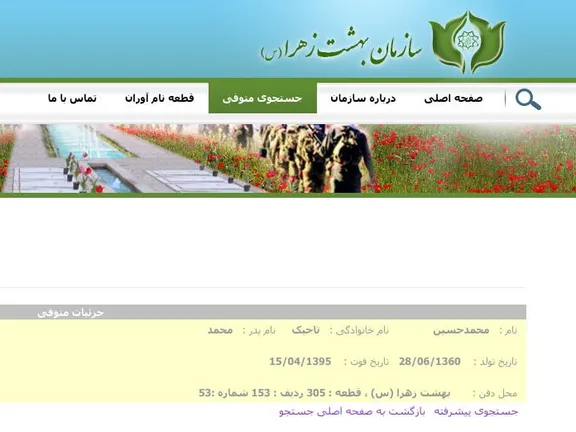
According to the Atlantic report, Tajik received no autopsy nor did his death certificate list a cause of death.
Friends cited by Harris said he had become addicted to painkillers after his torture, but that the cause of his death was never confirmed. He was 35 years old when he was murdered.
Zam was lured to Iraq with the promise of an interview with a senior cleric only to be abducted by Iranian agents and hanged in Tehran in 2020.