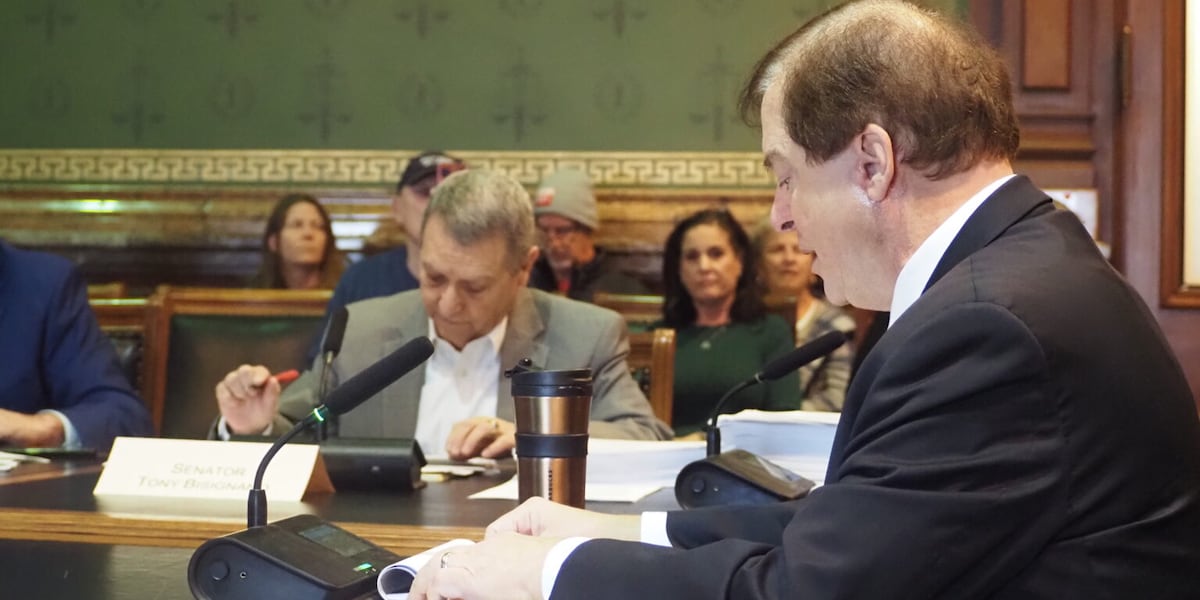
DES MOINES, Iowa (IOWA CAPITAL DISPATCH) – Leaders on a public retirement system oversight panel said Tuesday that lawmakers were largely not motivated to make any major changes to Iowa Public Employees’ Retirement System, or IPERS, in the coming 2026 legislative session, but said studies on the system and potential changes may be requested.
The Tuesday meeting of the Public Retirement Systems Committee comes following months of concerns about changes to IPERS. The concerns were largely spurred by suggestions discussed by the Iowa DOGE task force, the group of private industry leaders convened in February with the goal of finding ways to make Iowa state and local government more efficient. The task force was modeled on the federal Department of Government Efficiency led by Elon Musk.
One of the proposals included in the task force’s final report, submitted to Gov. Kim Reynolds and legislators, was a recommendation that state leaders conduct a study on public employee benefits. The report also said, “where feasible, offer employees a choice among benefit plans.”
This suggestion is a scaled-back recommendation from an earlier DOGE task force suggestion to move the IPERS system from a defined benefits program to a defined contribution program, in which both employees and employers would contribute to retirement benefit plans. This proposal was met with significant backlash from labor organizations and advocates who said the plan would endanger the system and retirement benefits for current IPERS members.
As the meeting began, Sen. Tim Kraayenbrink, R-Fort Dodge, who co-chairs the committee, emphasized DOGE’s suggested changes to IPERS are not concrete. He referred to the task force report suggestions as ideas from nonelected officials, and said there is not “any written legislation waiting to be passed.”
However, Kraayenbrink said lawmakers are willing to consider proposed changes to IPERS and move forward proposals if they would potentially improve the system.
“There are some positive things out there that I think myself as an IPERS contributor and many others in the room here today … want to maybe take a look at some of those things — that are not currently what’s happening, but things that could possibly be part of IPERS,” Kraayenbrink said.
Speaking with reporters, Kraayenbrink said there is not an “appetite” to make large changes to IPERS among Republican lawmakers immediately. However, he said if employees on the retirement system advocate for a change, lawmakers would consider it. He pointed, for example, to the cost of living adjustments recently added to the calculations of Sheriffs and Deputy Sheriffs retirement benefits.
He said a study on some of the proposed changes, such as the viability of a move to a defined contribution program for future employees, may be conducted, and said he would support getting more information on the impact of these proposals.
“Why wouldn’t you want a study done that would either verify that, ‘yeah, we need to stay where we’re at, and it’s too costly … it’s not worth it.’ If it comes back and says, ‘by gosh, this would be great,’ and everybody agrees it’s great, then why wouldn’t you want to know that?” Kraayenbrink said. “I don’t think there’s any harm in knowing something, being educated on something.”
Kraayenbrink said “having a study doesn’t mean that we’re going to go down the hole and change things drastically.”
“I think everybody’s just so close-minded at certain times — that they don’t want to look at anything else — because they think everything’s going to just be destroyed,” he said. “And that’s not the intent. The intent is just to know what it is, so that we can make Iowa more competitive.”
The DOGE report suggests IPERS would not change for existing public employees, but that if financially viable, future workers could choose to move to a defined contribution plan instead of a pension. However, organizers said this proposal would still compromise IPERS’ solvency in the future.
Tammy Gertsen, an organizer with the nonprofit group Indivisible Iowa, said the money coming into IPERS through current and new employees is needed to support those who are retired and ensure the system continues to work in the future. IPERS needs “the money coming in at the top to flow all the way through, for those that are going to earn it,” she said.
Gertsen also said she was skeptical of lawmakers who said they do not plan to make changes to IPERS under the DOGE task force recommendations.
“That plan could change in a heartbeat,” Gertsen said. ” … What they say today may not be what’s in the plan, because once it reaches Reynolds’ desk, they may have another discussion. She may want it a different way, so to say what they are laying out is in concrete — I don’t trust that. Whereas IPERS can’t change what they’ve done, that’s set, even the Legislature have set how they can do things.”
Some officials with IPERS also spoke about their support for keeping the system as-is during the meeting. Matt Carver, chair of the IPERS Benefits Advisory Committee, said his committee voted unanimously to approve a resolution during their Oct. 28 meeting encouraging IPERS to remain under its current legal framework.
“I’m not here to shoot arrows at the DOGE commission,” Carver said. “I think they were just trying to do their best to come up with different ideas, say ‘well, where can we save some money,’ that happened to be one of them. But that is very concerning, as you can imagine.”
He thanked the lawmakers who had responded to the DOGE task force’s suggestions saying the Legislature was likely uninterested in moving forward on IPERS changes, saying their public statements “helped settle things down somewhat.”
Gregory Samorajski, chief executive officer of the Iowa Public Employees’ Retirement System, and other officials with public employee benefits systems for Iowa, all said the funds did better than projected in 2025 and were in good condition heading into the upcoming year. Rep. Adam Zabner, D-Iowa City, who serves the committee said the Tuesday meeting “made it clear that IPERS is one of the strongest retirement systems in the country.”
“The proposed changes from the Governor’s D.O.G.E. committee are dangerous, unnecessary, and would put the retirement of hundreds of thousands of Iowans at risk,” Zabner said in a statement. “I urge my Republican colleagues to join me and commit to keeping IPERS strong and untouched. I will always fight to protect the earned retirement security of Iowans.”
Copyright 2025 IOWA CAPITAL DISPATCH. All rights reserved.