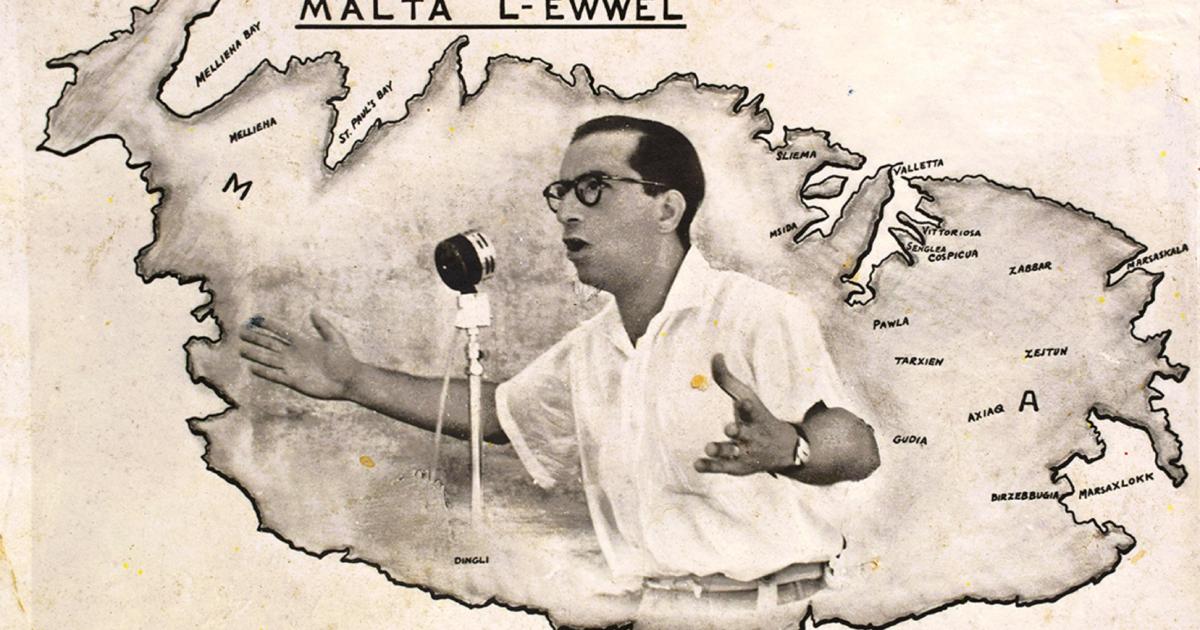
The labour movement in Malta organised itself and turned into a political party in the very early 1920s.
Like any militant ideology, its main objective remained that of asserting its beliefs and programmes and gaining popular traction.
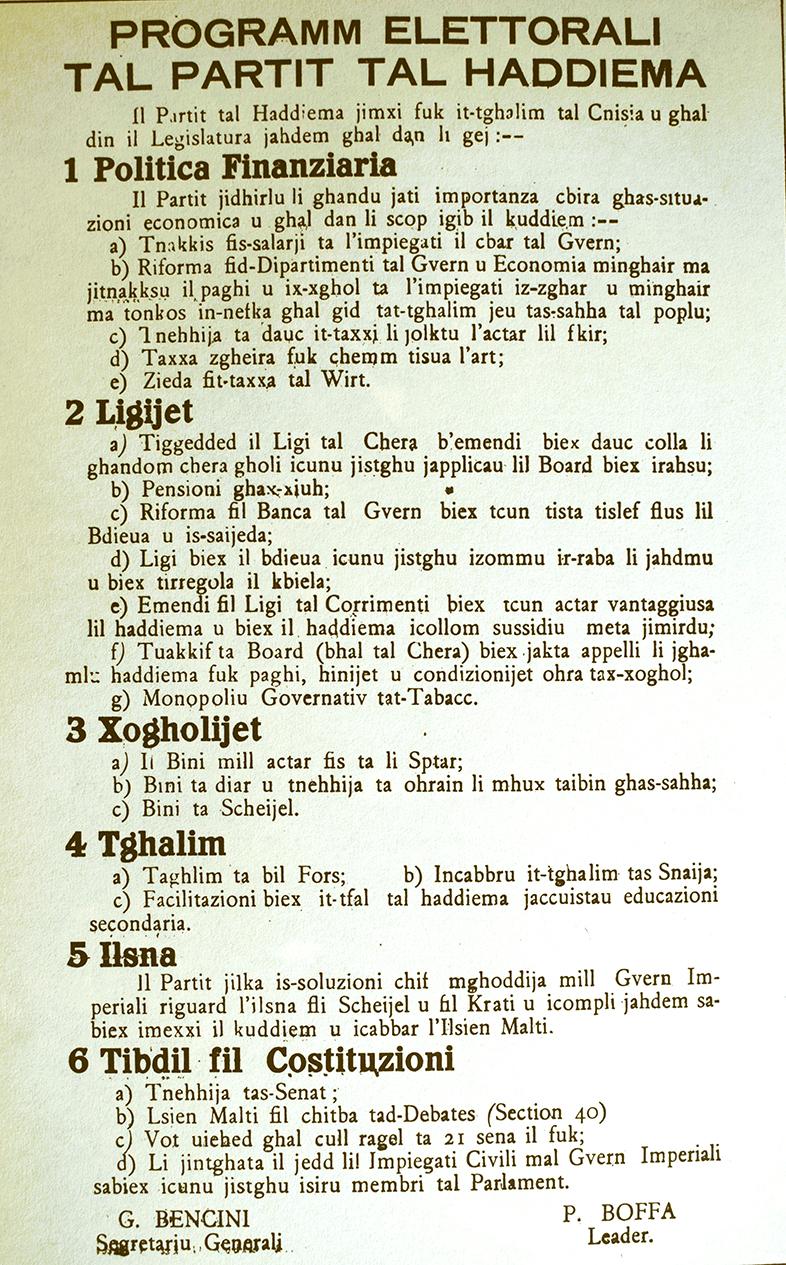
The Labour Party manifesto for the 1932 elections

The first badge of the Malta Labour Party
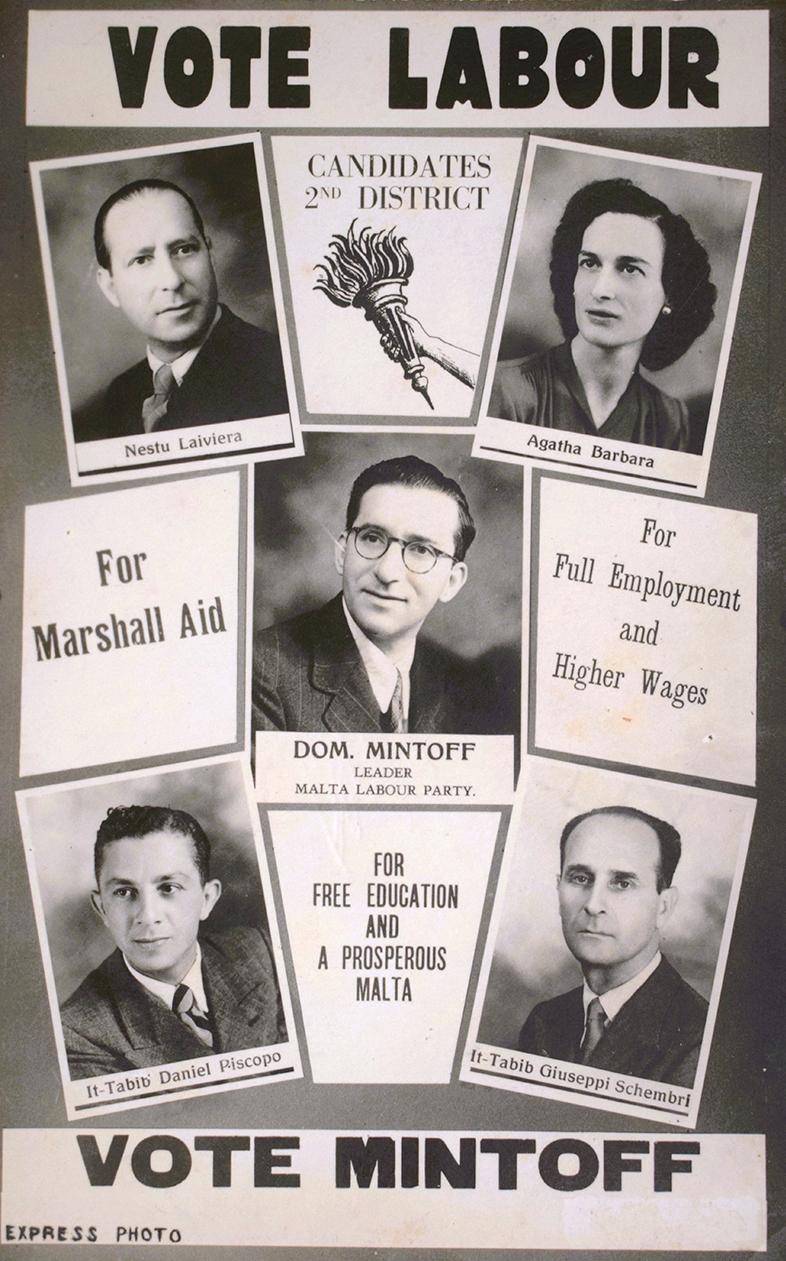
A 1960s Labour election postcard for the second district
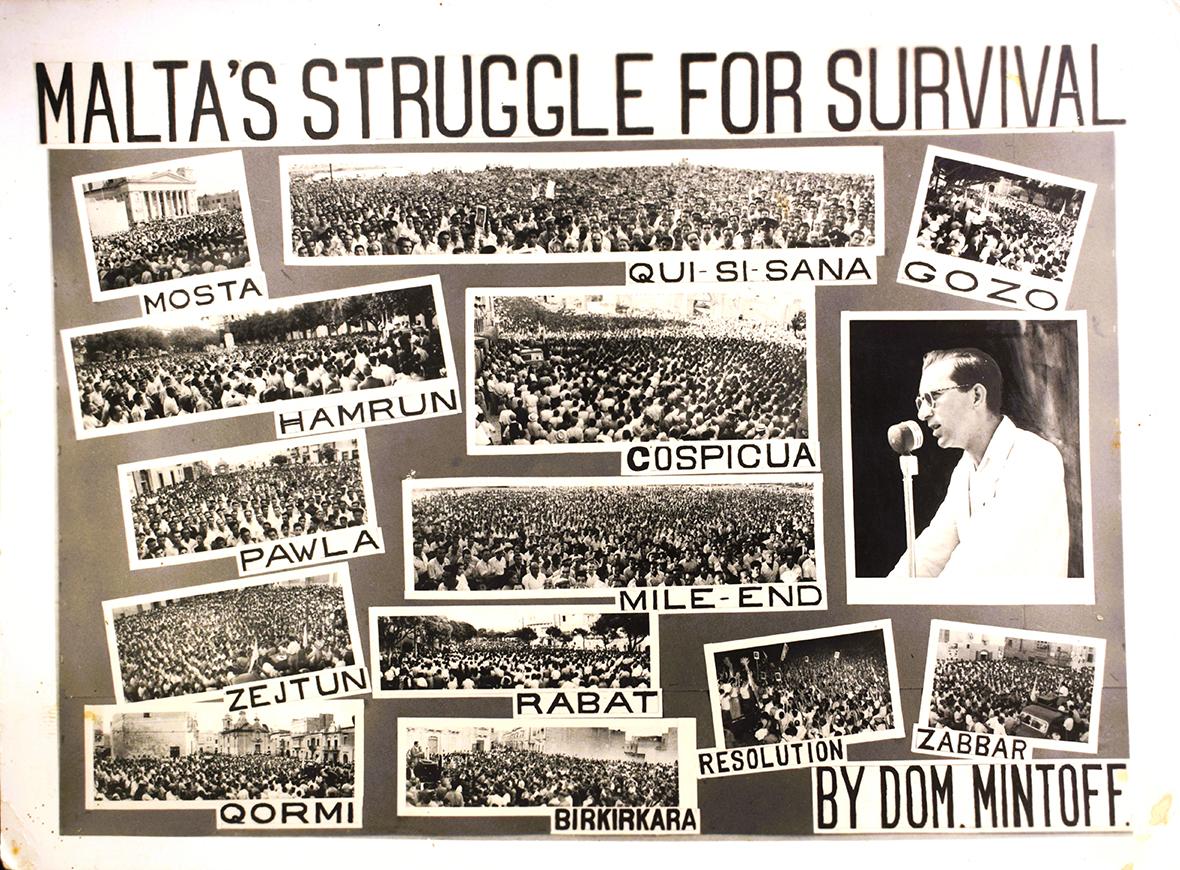 A Labour Party postcard, with the message: ‘Malta’s Struggle for Survival’
Passionate supporters manned its promotion machines through public meetings and conferences, opening of clubs and the distribution of newspapers, pamphlets, broadsheets and posters; not much in the way of postcards.
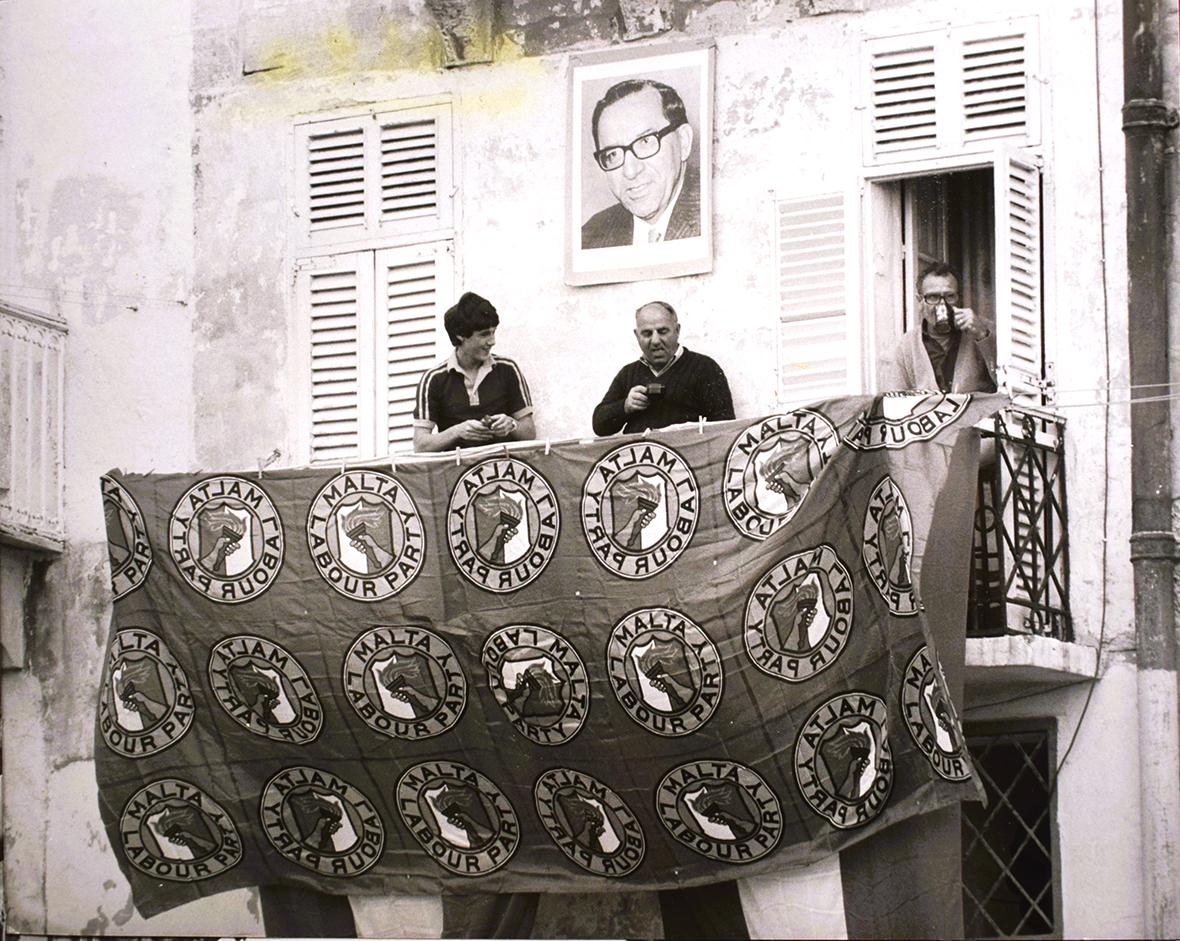 The balcony of a Labour Party supporter in Valletta. ‘1985’ was written on the back of the card.
In fact, in my collections, I did not find one single pre-war Labour Party postcard. If it produced any at all, they must be rare indeed.
The ubiquitous figure of il-Perit dominated most post-war Labour political imagery
All that changed drastically after World War II.
Under the forceful leadership of Dom Mintoff, quite a number of propaganda postcards and labour-inspired photographs started circulating, either produced by the party itself or distributed privately by election candidates or by fervent front-line supporters.
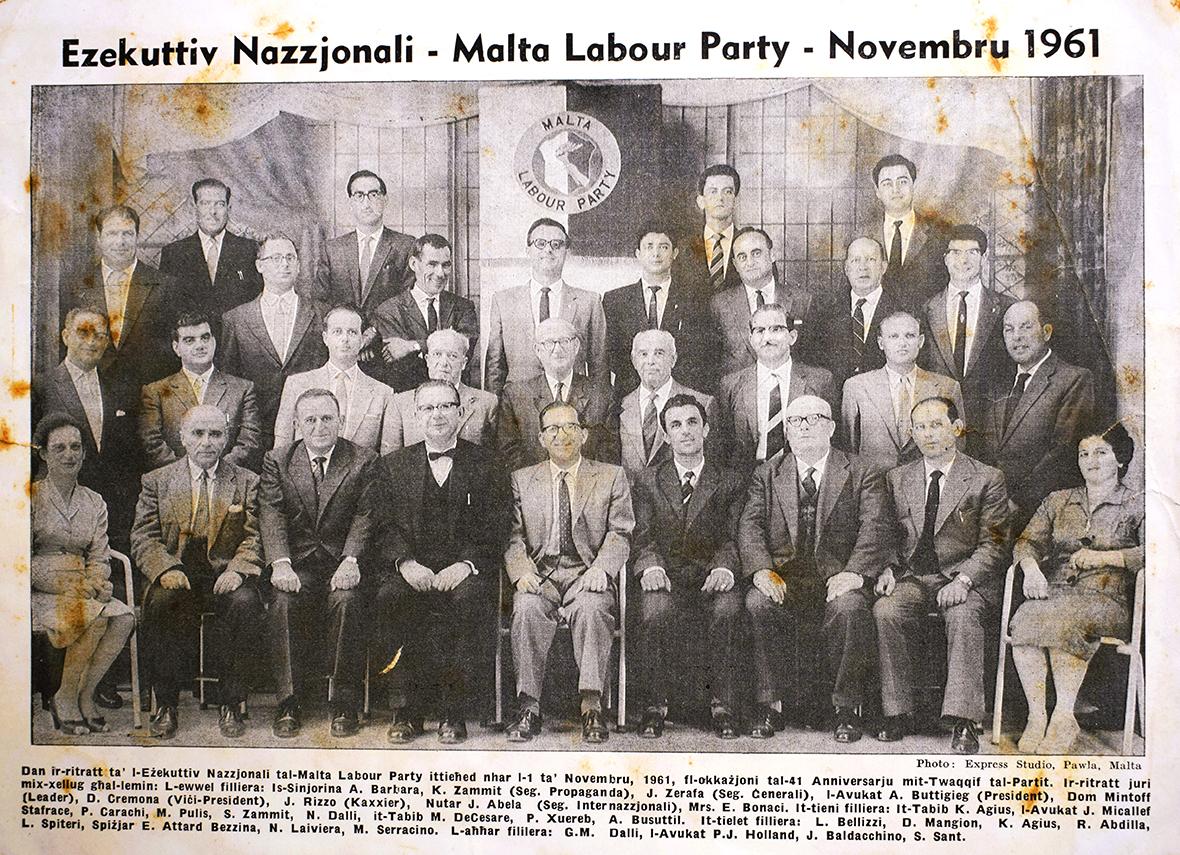 Card showing the Malta Labour Party executive committee in 1961.
The ubiquitous figure of il-Perit dominated most post-war Labour political imagery.
And charismatic occasions rarely found themselves wanting.
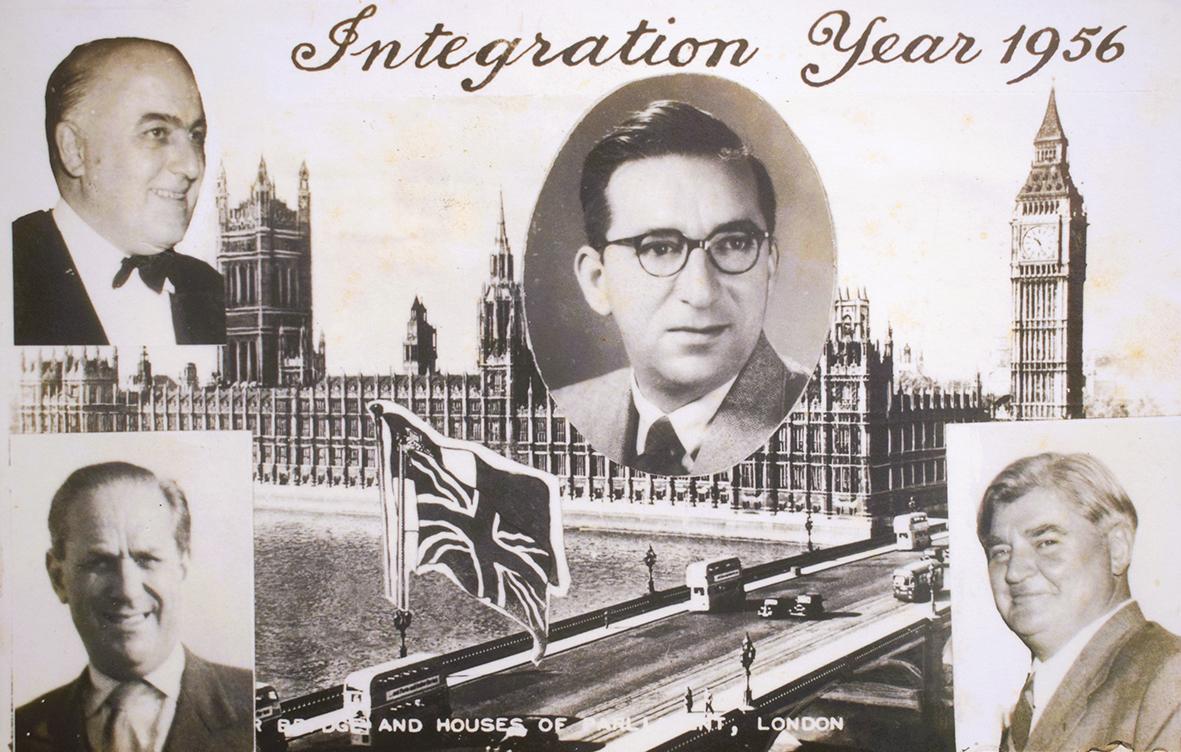 Labour Party postcard promoting ‘Integration with Britain’ in 1956.
The integration-with-Britain campaign, the resistance to the Independence constitution, the sparring with the Church, the turbulences of the dockyards and services rundown, the high-profile children’s Brigata Laburista, the confrontations with private schools, the university and public-service doctors, the beauty pageants and song festivals, the party’s electoral victories, the vociferous opposition to joining the European Union and other highly controversial moments when emotions ran high left their graphic imprint that this feature attempts to reconstruct, if very faintly.
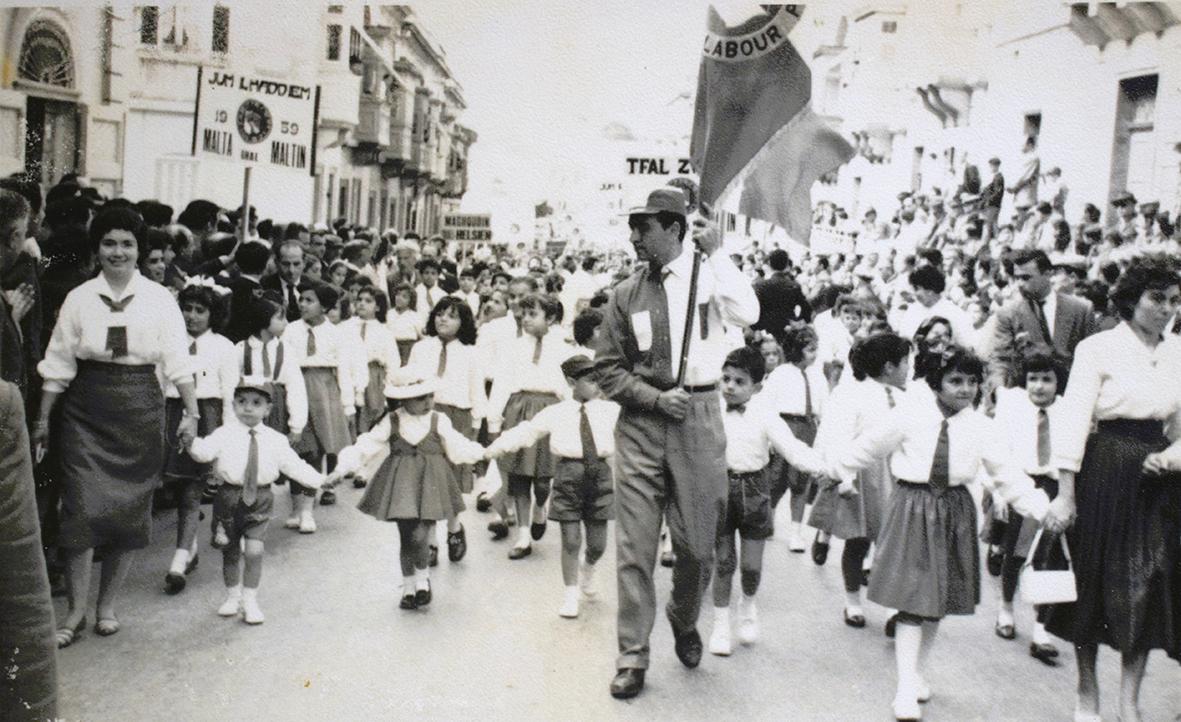 A card of the children’s ‘Brigata Laburista’ that was prominent in the pre-Independence political scenario.
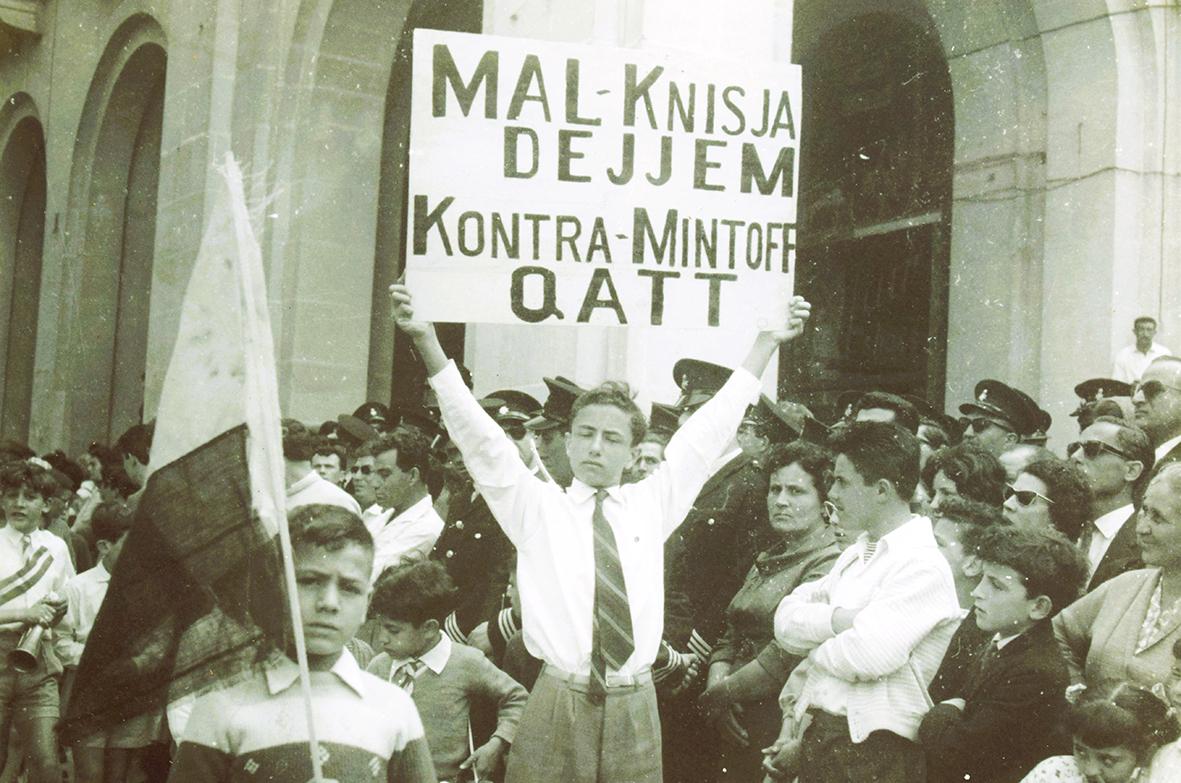 Postcard of a demonstrator during the 1960s confrontation between the Labour Party and the Church.
So many were the compelling events that compressing them in a few lines and images today appears impossible.
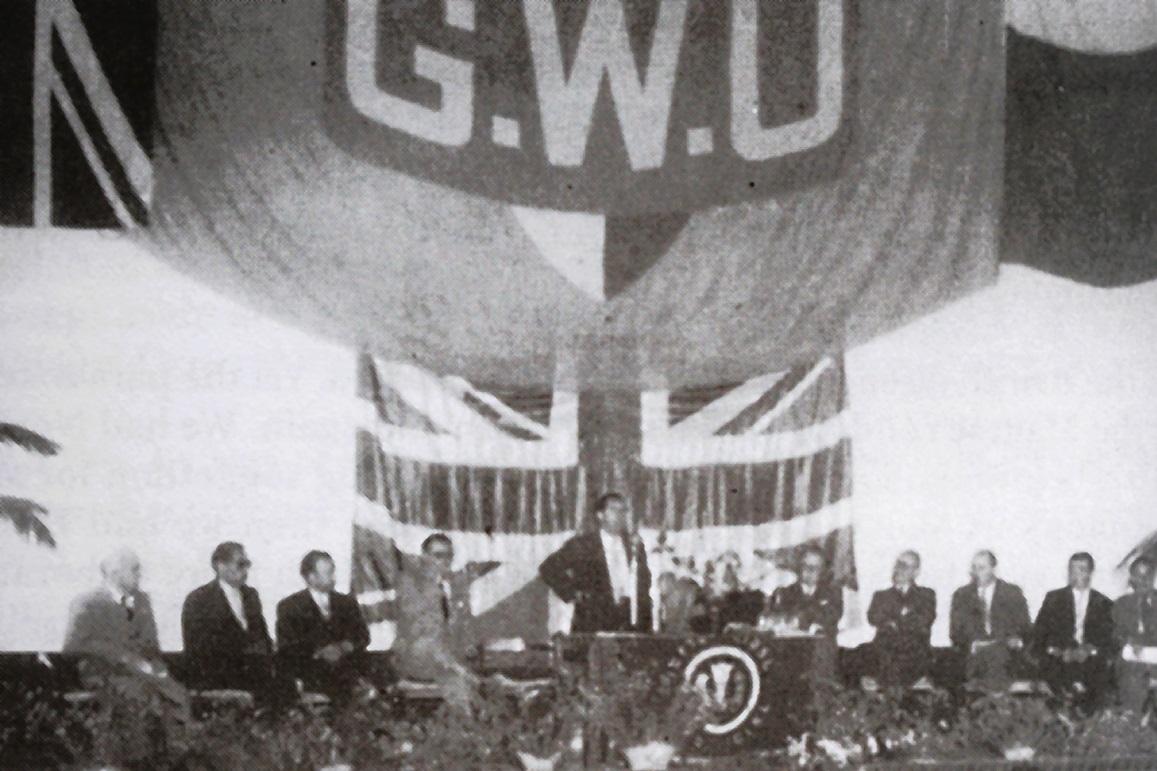 A public rally by the General Workers’ Union in favour of integration with Britain, 1956.
On the other side of the spectrum stood the far earlier Nationalists, with their own promotion factories but with fewer concessions to personality cults.
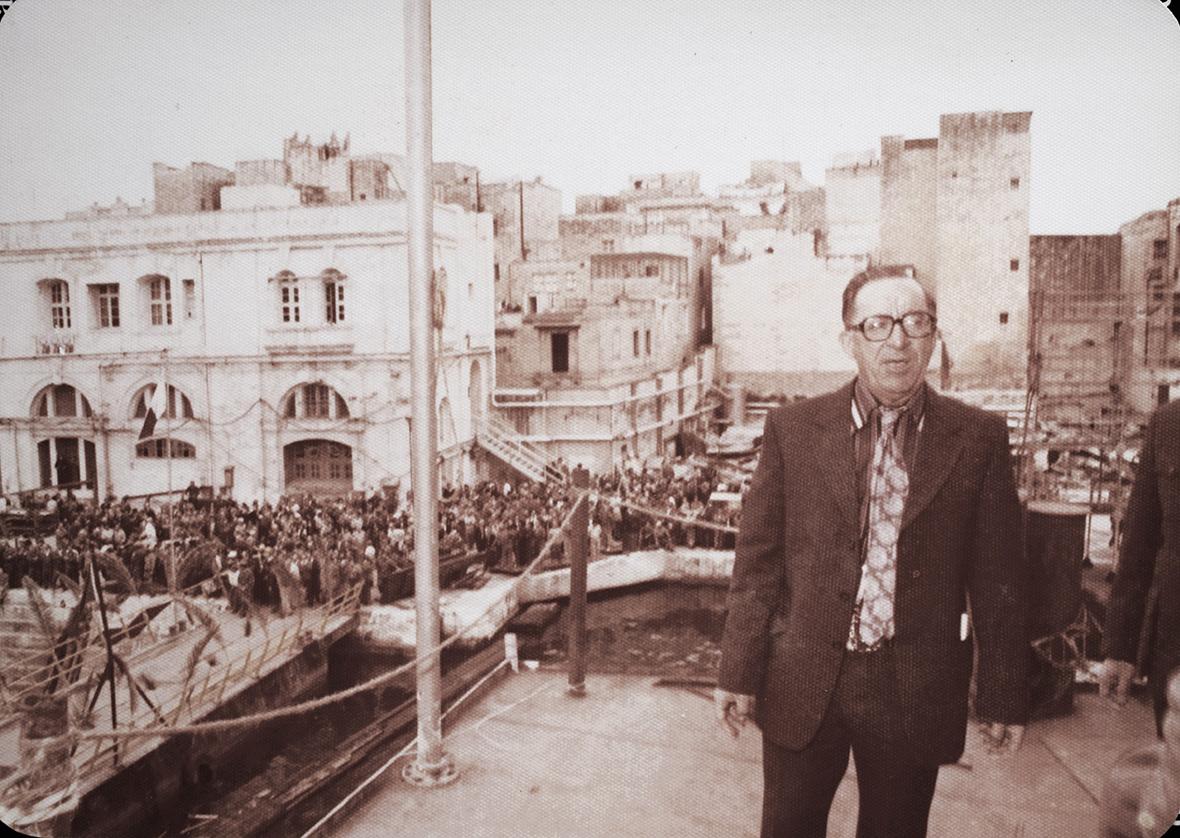 A Labour Party postcard of Dom Mintoff
I may dedicate a future pictorial to their early postcards and other political ephemera.
Most images from the author’s collections