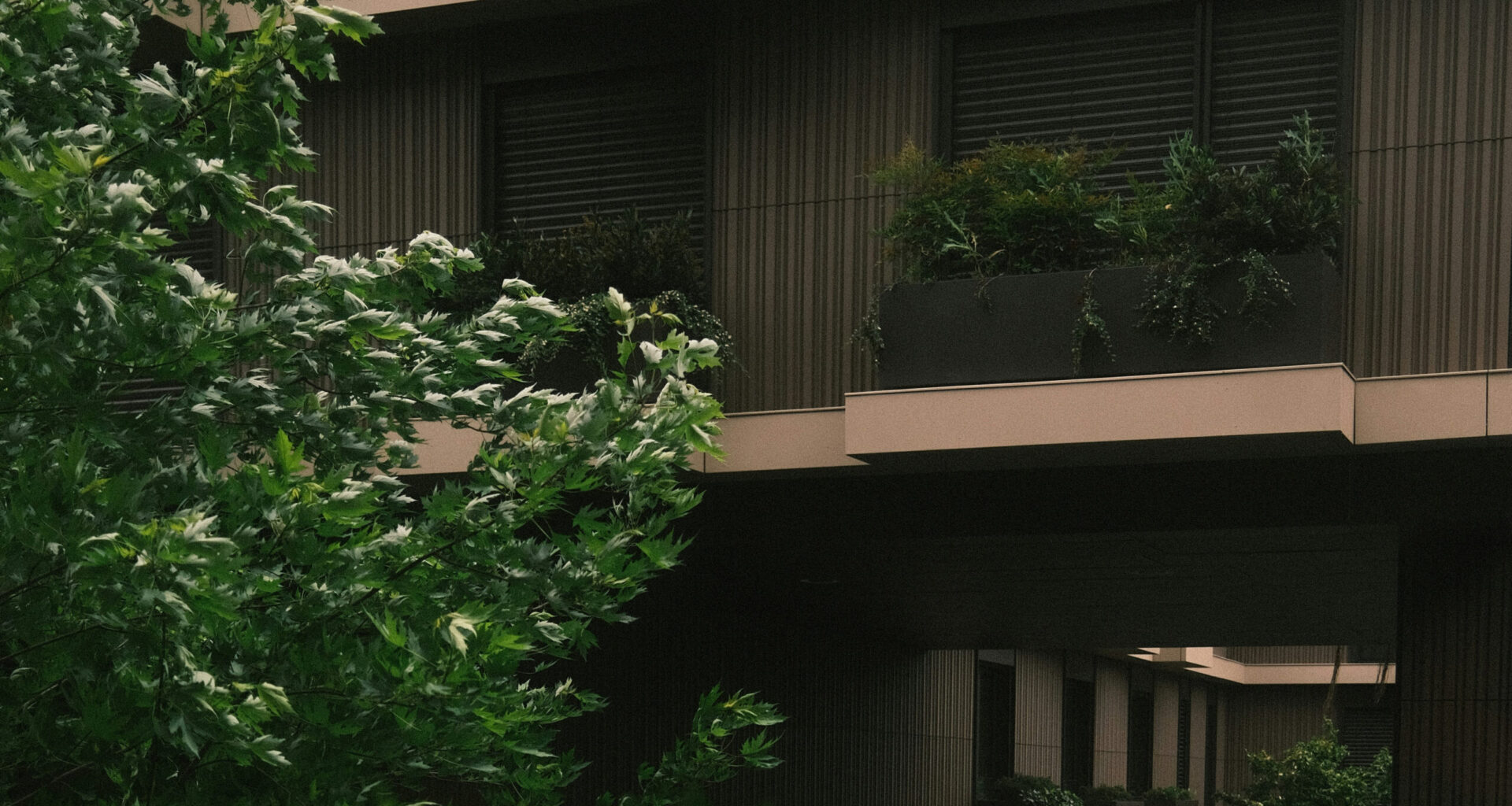
December the 10th, 2025 – A brand new “Green City” is set to be constructed not far from Zagreb, with large apartments intended for about 300 to 400 people only.
As Poslovni Dnevnik/Hana Ivkovic Simicic writes, the future so-called “Green City” not far from Zagreb will reportedly be an oasis where urbanism and nature are integrated in an almost imperceptible way. The residential buildings will be built in pairs, with parks, playgrounds, and walking and cycling paths winding between them. The apartments on the ground floor will have access to a large garden, while those on the upper floors will be able to soak up the sun in loggias and on balconies, according to Večernji list.
the new “green city” near zagreb will be home to just 300-400 people
The concept is how a talented team of Spanish architects and urban planners imagines the future affordable housing district Klara Nova, located not far from a kindergarten in a settlement in Novi Zagreb. It’s worth mentioning that their project, entitled “The Common Green” won the recent international urban planning and architectural competition Europan 18.
The plan to construct affordable rental apartments on a large plot of land measuring 4.62 hectares along Sisačka Road and Burićeva junction in Sveta Klara was initially announced back in March by Deputy Zagreb Mayor Luka Korlaet. Back then, it was revealed that it would be home to families and singles, as well as for people in need of support, such as children leaving the social welfare system. It would be a desirable place to live, filled with greenery, adding that they do not want it to be a “uniform area” inhabited only by members of one group of people, but a home for people of different ages and socioeconomic circumstances. The project was submitted to the Europan 18 international competition, which encourages young authors and focuses on innovative residential building projects. It was implemented simultaneously across 12 European countries in a total of 47 locations.
the plan for croatia
The evaluation team for Croatia consisted of architects David Mikhail, Josip Jerković, Alan Kostrenčić, Jana Čulek and Nataša Bošnjak, economist Zoran Paunović and journalist Ivana Antunović Jović, and in the first round they selected four solutions. The winner was “The Common Green” by Alejandro Caramballo Llorente, Carlos Rebol Maderuel and José Lacruz Vela from Spain.
“The residential units are organised into small groups of paired buildings, interconnected to ensure that each object receives enough sunlight, optimal orientation and efficient ventilation. Each group of buildings shares an underground garage,” the authors of the winning solution detail how Klara Nova, in their opinion, should be designed.
Though small, it is being widely referred to as a “green city”, in which the focus will primarily be on integration with the nature that surrounds it. Although each cluster of buildings will be physically separate, the new neighbourhood will function as a large community of families and individuals. Roads will surround the settlement on the outside, in the south of the new zone there will be a public park with a playground and a small lake, and in the north there will be a kindergarten, another playground, a sports field, a library and a neighbourhood square.
“These two “anchors” of the future “green city” near Zagreb will be connected by a central green corridor, or a linear park that extends along the longitudinal axis of the neighbourhood. That has been conceived as its ecological and communal heart. Medium-sized deciduous trees will provide shade during the summer, and in the winter, they’ll still allow enough sunlight to reach the apartments, according to the text of this winning solution.
As for the buildings themselves, they’ve been carefully designed within a modular network, and according to the architects’ ideas, there is enough space for 139 apartments in which between 300 and 400 people would live. The buildings are being designed for “dry construction” using wooden materials, which is an environmentally friendly solution and allows for much faster work. As required by the guidelines for the authors, buildings with a maximum of four apartments are planned in the residential zone, with up to five percent of them being studios, most of them two- and three-room apartments, and between 15 and 30 percent one-room apartments. The apartments will be very spacious, from 48 to a maximum of 12 square metres, with the latter primarily designed for living in so-called “co-living” communities.
plans for borovje
It’s precisely at this location that apartments for socially supported housing construction, more popularly POS, were first planned. Back then, the city administration was headed by Milan Bandić, and the idea was that they could build a typical settlement for members of the Roma minority in Sveta Klara. Unsurprisingly, local residents there rebelled very fiercely against the plan, and after the March 2020 earthquake, the former government decided to build apartments for the affected families instead.
The city then stated that affordable apartments were also being planned in Borovje, on a green area east of the local elementary school and kindergarten. According to Luka Korlaet, it will be a settlement with about 600 housing units for 1,700 people. Together with the A11 building in Podbrežje, the construction of which is currently underway, the city administration plans to build 1,000 affordable apartments for about 3,000 people over the next four years.
Subscribe to our newsletter
the fields marked with * are required