The European steel industry is currently experiencing another crisis. Declining demand for steel, tariff wars, and geopolitical tensions are leading to reduced production and adjustments to investment programs, including decarbonization projects. Another recent trend has been the intervention of national governments in situations involving problematic steel assets that belong or belonged to various large steel groups, mostly steel mills with a long history and unique “symbolic” value.
Rescue plan
Perhaps the most striking example of such interventions is Liberty Steel’s European assets (Romania, Hungary, Poland, the Czech Republic, Belgium, and Luxembourg). The Italian government is currently looking for a new investor for Acciaierie d’Italia (ADI), formerly Ilva. In France, there is a heated debate over the nationalization of ArcelorMittal France’s assets. Recently, the lower house of parliament passed a bill proposed by the LFI party on its first reading.
The UK is also fighting for its steel industry. In April this year, the country’s parliament passed an emergency bill at an extraordinary meeting to give the government control over the British Steel steel company. Earlier, in March, Chinese owner Jingye Group rejected a £500 million ($644 million) government support package for environmental transition.
The group had been in talks with the British authorities since 2023, but, according to government officials, was seeking an excessive amount. According to press reports, Jingye requested at least £1 billion in state investment, twice as much as the support for Tata Steel approved last year.
From Greybull to Jingye
The recent history of British Steel has been marked by a change of ownership, a rapid, and dramatic crisis in 2019, and a subsequent dispute over the cost of decarbonization and the advisability of closing the blast furnace under Chinese ownership.
In 2016, Tata Steel sold the loss-making part of its British long products business (transport rails, steel profiles for construction). These assets were acquired for a symbolic £1 by investment firm Greybull Capital, a private and somewhat extravagant joint-stock company specializing in the purchase of distressed assets. The new owner revived the historic British Steel brand, and the deal was accompanied by a promise to invest £400 million in the business.
In 2017 and 2018, Greybull managed to return British Steel to profit. However, everything changed in 2019.
In early May 2019, the British government announced a £120 million loan to British Steel so that the company could make payments under the European ETS, which was an unusual government intervention. Otherwise, the country’s second-largest steel producer faced a £500 million fine from Brussels. The situation was caused by the Brexit delay, which led to a shortage of carbon credits at the company.
That same month, Greybull asked the government for a £75 million loan, but later reduced the amount to £30 million to keep the steelmaker afloat as it was rapidly losing the support of its shareholders. However, neither the latter nor the British authorities came to the rescue. On May 22, 2019, a court ruling was issued on the compulsory liquidation of British Steel Limited, which was transferred to the control of the government’s insolvency service.
The following year, certain parts of British Steel’s business and assets were sold to China’s Jingye. The deal included the steelworks in Scunthorpe, plants in Teesside and Skinning grove, and the TSP Engineering business based in Cumbria.
The new Chinese owner promised to invest around £1.2 billion over the next 10 years in modernizing the plants and equipment.
The Chinese company later claimed that since acquiring British Steel, it had invested this amount in supporting the UK assets. However, according to British media reports, part of this was in the form of interest-bearing loans that were repaid to the parent company.
According to British Steel’s financial statements filed in September 2024, the company’s pre-tax losses increased eightfold in 2022, to £408.4 million compared to £49.5 million in 2021. It was also noted that the losses continued in 2023 and 2024.
Searching for a solution
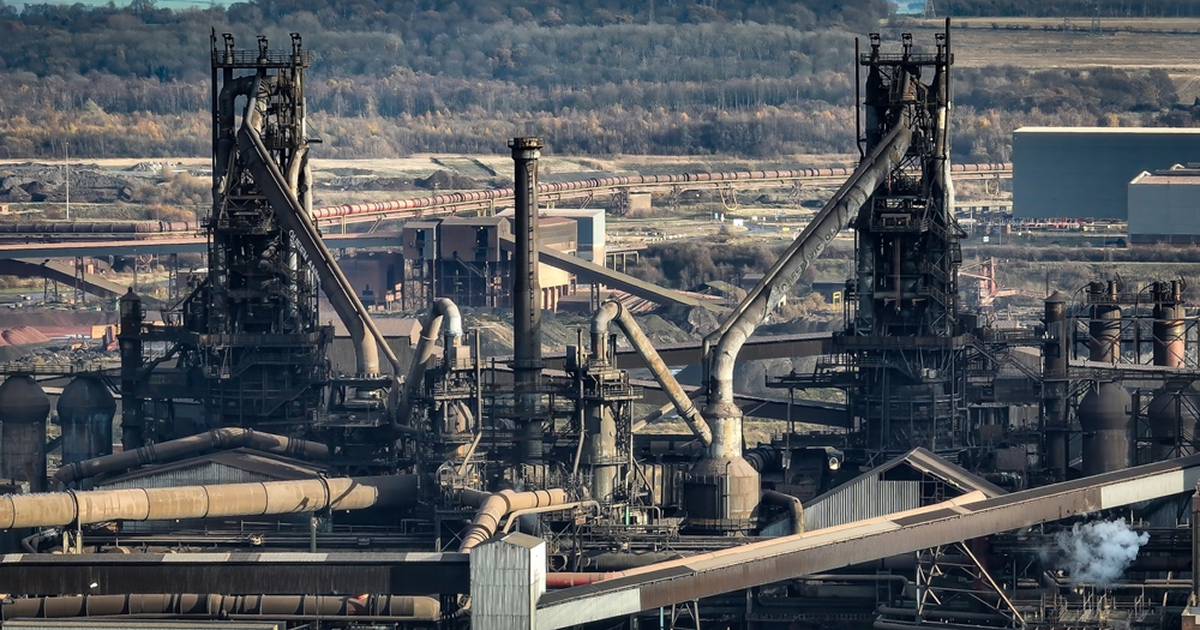
An emergency bill passed by Parliament in the spring of 2025 gave the British government the power to manage British Steel’s staff and operations and order raw materials to continue production in Scantorp, home to the country’s last blast furnaces that produce steel from primary materials.
The desire to preserve these blast furnaces was the reason for this move. Jingye had announced its intention to close them, arguing that they were no longer financially viable and citing difficult market conditions, tariffs, and decarbonization costs. At the end of March 2025, the company announced that the plant was losing around £700,000 per day and began consultations on its closure.
The law did not provide for the complete nationalization of British Steel. However, in the spring, government officials acknowledged that this could be the next option.
As of mid-November 2025, the government had spent approximately £274 million to keep the company running. UK Industry Minister Chris McDonald said in a statement that the government was continuing to work with Jingye to find a realistic solution for the future of British Steel, as the Chinese company technically still owns the assets.
British Steel has recently received several large export orders in the railway sector. One of them is from Australia for the supply of 20,000 sleepers to Arc Infrastructure, which operates a 5,500 km railway network in Western Australia.
In November, Prime Minister Keir Starmer also announced a major contract to build Turkey’s high-speed rail network. Under the contract, British Steel will supply £35 million worth of railway products for the project connecting Mersin, Turkey, with the cities of Adana, Osmaniye, and Gaziantep, which is an addition to a similar agreement announced by the company in 2024.
In addition, at the end of November, the British steelmaker signed a memorandum of understanding with Hitech Construction Africa for a port infrastructure project in Nigeria.
British Steel supplies up to 95% of the rails for the British rail network and also produces wire rod, sections, special profiles, and semi-finished products. The company’s main facility in Scantorp has four blast furnaces, but only two remain in operation. Its annual capacity for steel and iron production as of 2023 was 3.2 million tons and 3 million tons, respectively.
Problem sector
According to UK Steel, British steelmakers produce 5.6 million tons of steel per year, which is equivalent to 70% of the country’s annual demand. The industry is going through difficult times, facing significantly higher electricity prices than its European competitors, oversupply in the global market, etc. It has also been affected by US tariffs, although these are lower than for other exporting countries, at 25% under the agreement between the parties. In September 2025, the British government postponed negotiations with the US on a zero tariff for exports of its steel products within certain quotas, focusing on maintaining it at the current level.
The British government currently has financial influence over all three of the country’s largest steel producers – apart from British Steel, this includes support for Tata Steel and the situation with Specialty Steels UK (SSUK), which was part of Liberty Steel and is now under the control of an official administrator.
The country is working on a new strategy for the steel industry, which is expected to be announced in December or early 2026. The British authorities hope to find a private buyer for British Steel and are seeking to involve bankers in the sale process. There is also a separate view on the advisability of merging the steel producer with other companies in the sector, in particular Sheffield Forgemasters (a heavy engineering company), which is also under government control.