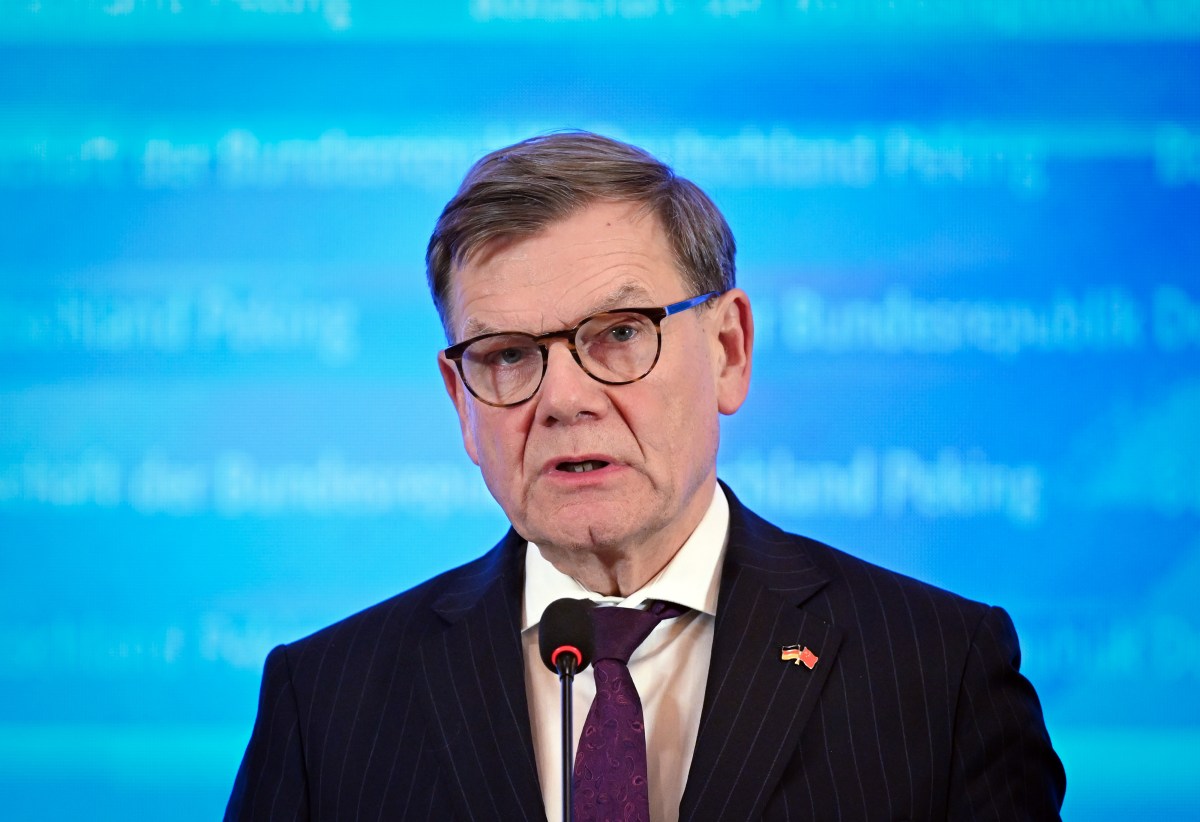
Germany’s Foreign Ministry has issued a statement opposing escalation in the Taiwan Strait in a thinly veiled warning to China.
“The security of Asia and Europe is closely intertwined. Free movement of goods in the Taiwan Strait is important for prosperity in Europe and worldwide. Any escalation there would also affect us. Any change to the status quo must be non-violent and consensual,” the German Federal Foreign Office said in its statement on Tuesday, the second day of Foreign Minister Johann Wadephul’s two-day China visit.
Newsweek reached out to the Chinese Foreign Ministry via email for comment.
Why It Matters
Germany has sought to balance its economic ties with China, which earlier this year replaced the United States as the European nation’s top trade partner, with its traditional alliance with the U.S., even as that relationship is tested by President Donald Trump’s criticisms of Europe and demands related to trade and defense spending.
Wadephul’s visit comes against a backdrop of tensions in the Taiwan Strait, one of the world’s busiest trade conduits, over China’s threats toward Taiwan. Beijing claims the island democracy as its territory, and has vowed to unify with it, through force if necessary.
China is also engaged in a diplomatic crisis with Japan over Prime Minister Sanae Takaichi’s suggestion that a Chinese blockade of Taiwan would constitute a “survival-threatening situation” and justify military intervention alongside U.S. forces.
What To Know
In his discussions with Chinese Vice President Han Zheng, Wadephul reiterated Germany’s commitment to the “one-China policy,” according to a Chinese Foreign Ministry readout. Han called on Germany, one of the most influential member states of the European Union, to promote the “sound development of China-EU relations.”
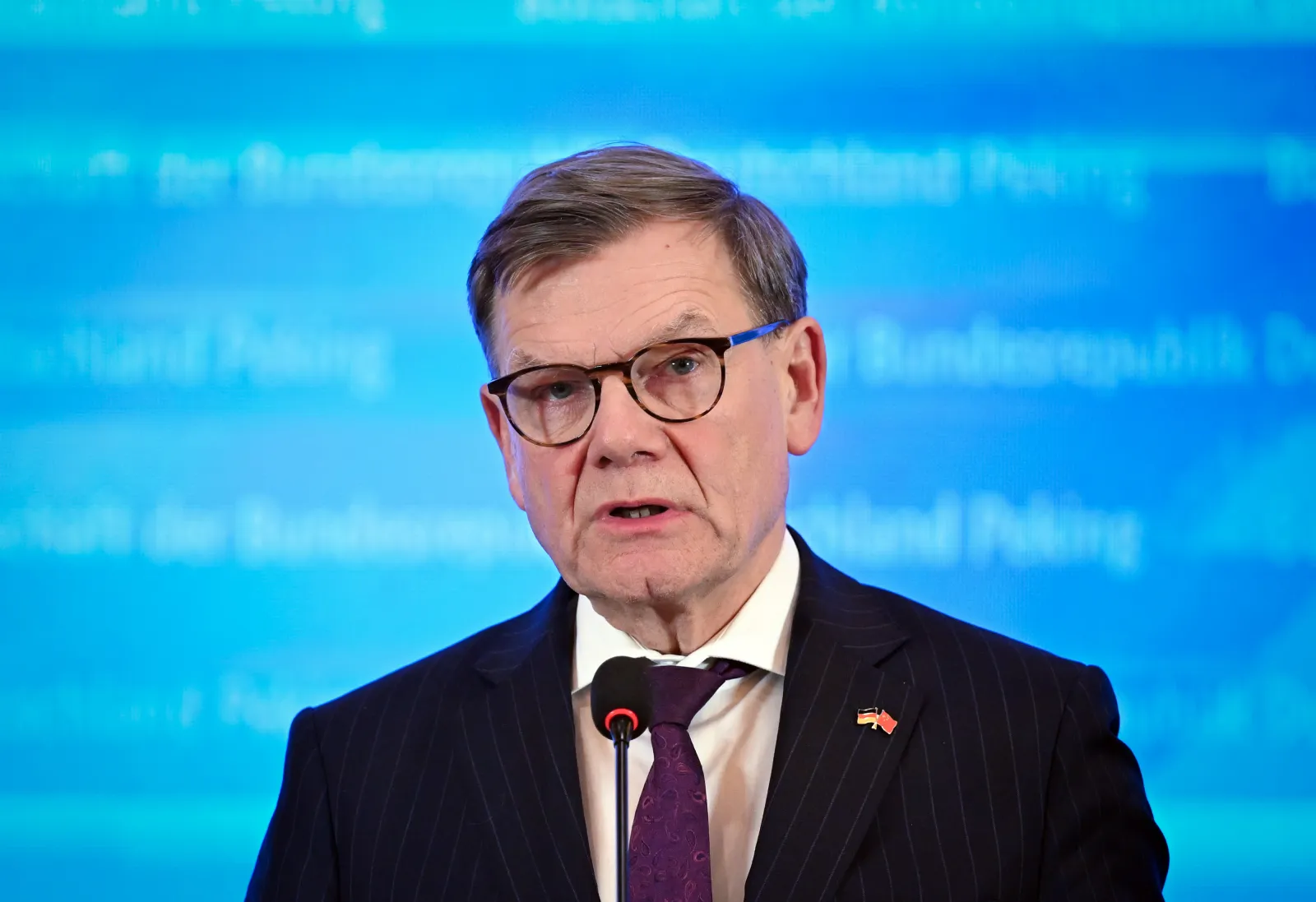
During Wadephul’s talks with his counterpart in Beijing, Wang Yi, the Chinese diplomat said the recent comments by Japanese Prime Minister Takaichi on Taiwan had caused “serious harm” and urged Germany to oppose “any words or deeds advocating ‘Taiwan independence,” according to a separate foreign ministry readout.
As a prerequisite for diplomatic ties, China requires partners to commit to the “one-China policy,” which recognizes Beijing, and not Taipei, as the legitimate government of China. Taiwan’s government—officially the Republic of China—fled the mainland after losing to communist forces in 1949 and today operates as a sovereign state with its own elected government, military, and diplomatic relations.
What People Are Saying
German Foreign Minister Johann Wadephul said Monday ahead of his departure for Beijing: “We want and need in-depth discussion with China in order to advance on all of these issues. When it comes to the major challenges facing humanity, such as climate change, too, we can only make progress together. We want to cooperate with China – but we also expect to see understanding for Europe’s key concerns and interests.”
Joseph Wu, secretary-general of Taiwan‘s National Security Council, wrote on X: “[We] appreciate Germany for stressing the importance of Taiwan’s security to Europe’s prosperity. We will work with like-minded partners to uphold the status quo across the Taiwan Strait. We oppose any escalation & unilateral attempt to change it by force or coercion.”
The U.S. State Department said in a statement: “China’s actions are not conducive to regional peace and stability. The U.S.-Japan Alliance is stronger and more united than ever. Our commitment to our ally Japan is unwavering, and we are in close contact on this and other issues.
What Happens Next
It remains to be seen what kind of deal Berlin and Beijing will reach on allowing German businesses to expand their presence in China’s market and to fast-track exports of rare earth materials—both key agenda items during Wadephul’s visit.
In a joint press statement earlier this year, NATO Secretary-General Mark Rutte and Japan’s then-Prime Minister Shigeru Ishiba stressed the importance of “maintaining peace and stability across the Taiwan Strait as an indispensable element in security and prosperity in the international community.”