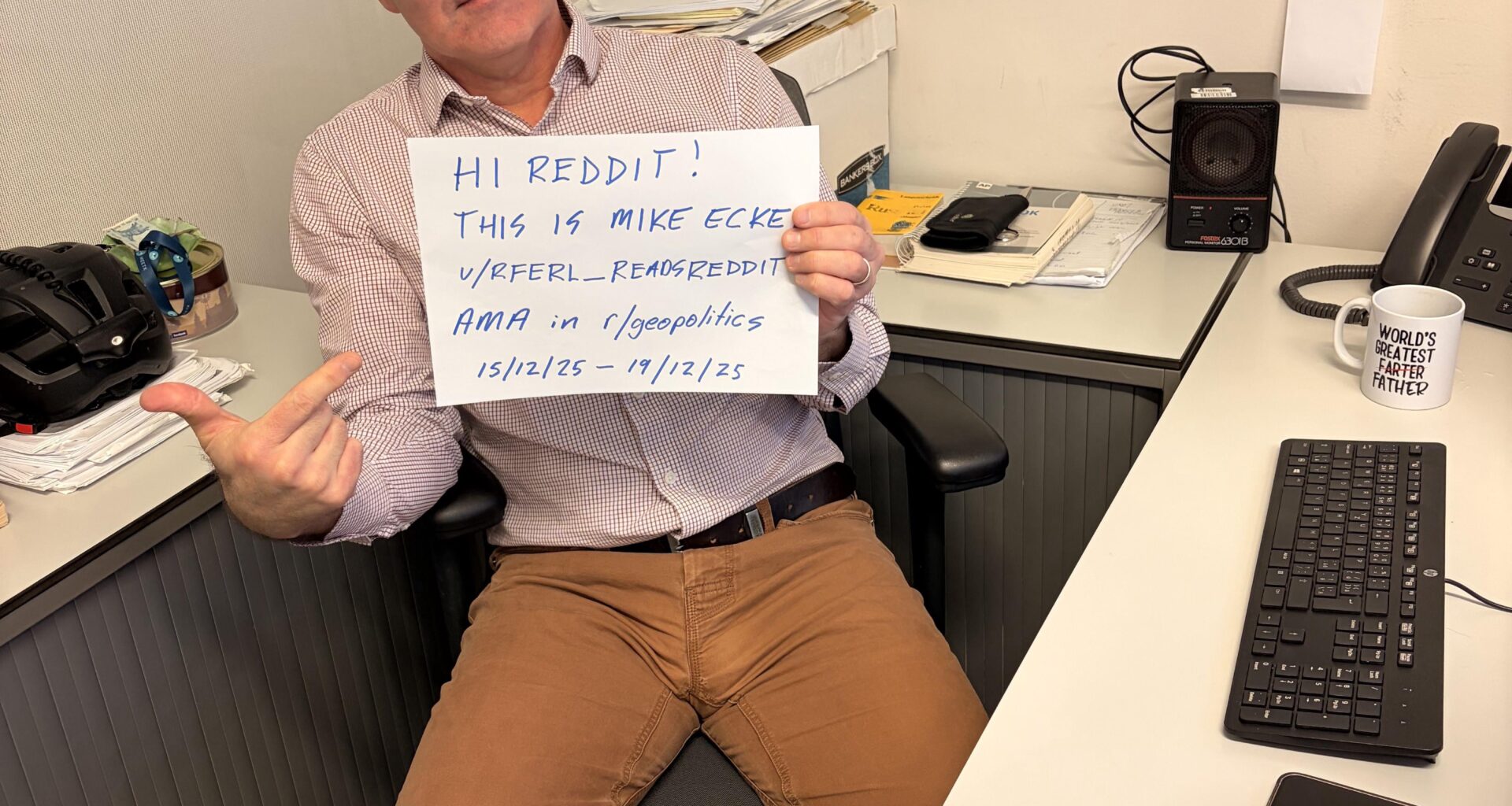

Hello! Здравсвуйте! Вітаю!
I’m Mike Eckel, senior international correspondent for Radio Free Europe/Radio Liberty, covering, reporting, analyzing, and illuminating All Things Russia, Ukraine, Belarus, and pretty much across the former Soviet Union: from St. Petersburg to Vladivostok, from Lviv to Kyiv; from Tbilisi to Baku, from the Caspian Sea to Issyk Kul, and all places in between.
I’ve been writing on Russia and the former Soviet space for more than 20 years, since cutting my teeth as a reporter in Vladivostok in the 1990s and continuing through a 6-year stint as Moscow correspondent with The Associated Press, and stints in Washington, D.C. and now Prague.
Russia’s brutal war on Ukraine, and the Kremlin’s authoritarian repression inside Russia, sucks up most of my reporting brain space these days, but I also keep a hand in investigative work digging into cryptocurrency/sanctions evasion, Russian businessmen who break out of Italian police custody, former Russian oligarchs in trouble, and a subject I can’t let go of: the mysterious death of former Kremlin press minister, Mikhail Lesin.
Feel free to ask me anything about any of the above subjects and I’ll do my best to share insights and observations.
Proof photo here.
You can start posting your questions and I will check in daily and answer from Monday, 15 December until Friday, 19 December.
Hi I'm Mike Eckel, senior Russia/Ukraine/Belarus correspondent for RFE/RL, AMA!
byu/RFERL_ReadsReddit ingeopolitics
Posted by RFERL_ReadsReddit
4 comments
How can European nations reshape their defense industry in order to support Ukraine’s long-term defense needs as well as strengthening Europe’s collective defense capabilities?
Also, which European countries are most vulnerable to Russian aggression or influence and therefore have the strongest incentives to assist Ukraine in its defense?
I find it difficult to parse a lot of the pro-Ukrainian news coverage concerning the “imminent collapse” of the Russian economy, domestic discontent, ethnic conflicts within the Russian Federation, etc. Much of it seems to be a combination of some promising statistics, a couple of isolated incidents, and a lot of wishful thinking. Some of the more prominent voices seem to be new to the scene, but are getting a lot of attention, especially in English speaking circles. Kremlin digital control and repression obviously complicate the issue.
As someone who has been diligently covering Russia for many years, are you seeing the desperation and economic crisis that’s frequently being cited by some commentators? Is there an element of ethnic strife starting to emerge? Is there the kind of growing dissatisfaction with Putin’s leadership, or with his circle of supporters that’s often touted on pro-Ukrainian social media circles? Or is it business as usual in Russia?
Additionally, besides yourself, who would you point to for diligent, fact based coverage of the Russian economic and domestic situation?
Edit: Missed a word.
How would you rate the effectiveness of RFERL spinoffs (Idel and especially Krim realia in particular) on winning hearts and minds on the ground?
What can make Russia stop the war? Combat casualties, economic recession, the war becoming unpopular in Russia, some ceasefire talks or somethi ng else?
Comments are closed.