
The U.S. has seized a sanctioned oil tanker off the coast of Venezuela, U.S. President Donald Trump said on Wednesday, a move that sent oil prices higher and sharply escalated tensions between Washington and Caracas.
“We’ve just seized a tanker on the coast of Venezuela, large tanker, very large, largest one ever, actually, and other things are happening,” Trump said, who has been pressuring Venezuelan President Nicolás Maduro to step down.
Asked what would happen with the oil, he said: “We keep it, I guess.”
Trump has repeatedly raised the possibility of U.S. military intervention in Venezuela. This incident was the first known action against an oil tanker since he ordered a massive military buildup in the region. The U.S. has carried out strikes against suspected drug vessels, which raised concerns among lawmakers and legal experts.
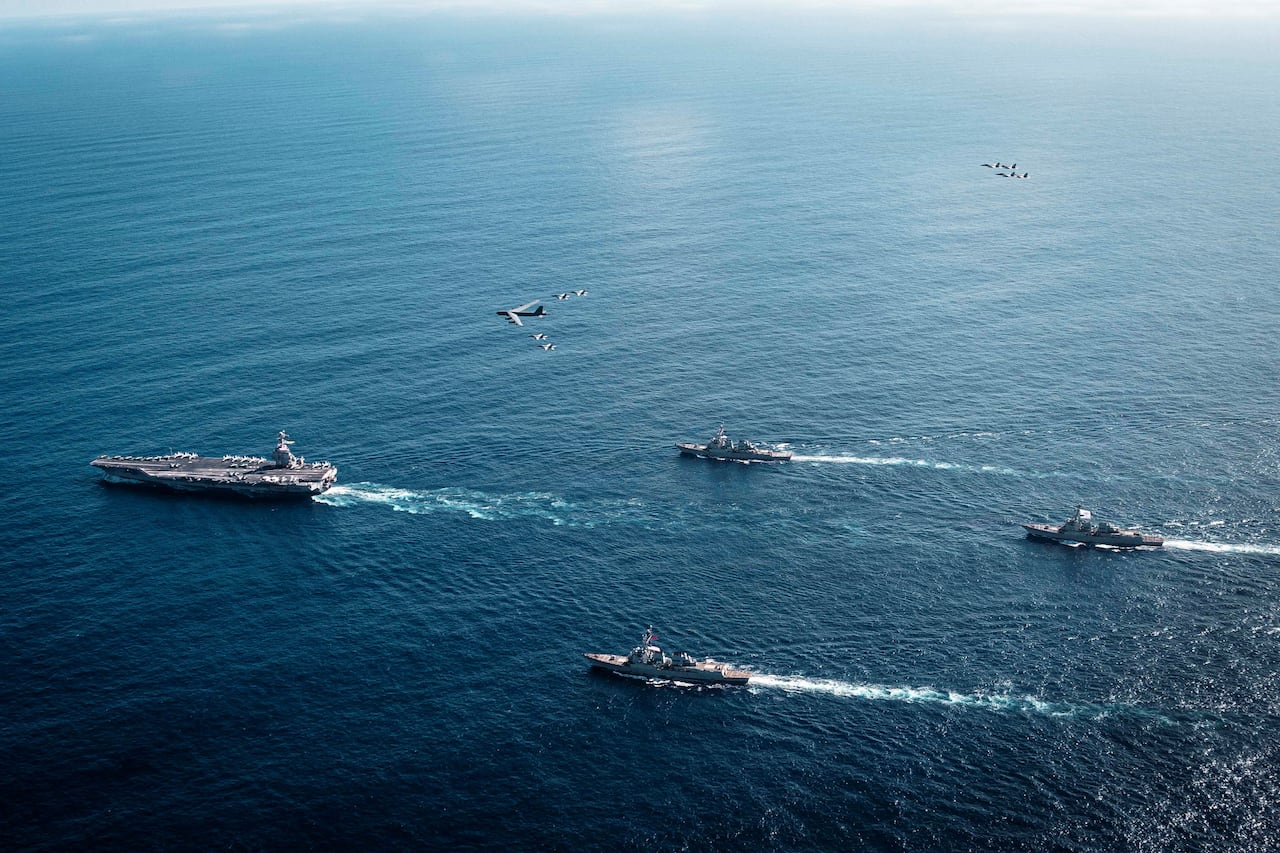
The U.S. navy’s Gerald R. Ford Carrier Strike Group is shown sailing toward the Caribbean Sea last month. U.S. President Donald Trump has ordered a massive military buildup in the region, including an aircraft carrier, fighter jets and tens of thousands of troops. (Petty Officer 3rd Class Tajh Payne/U.S. Navy/Reuters)
U.S. Attorney General Pam Bondi posted on X that the FBI, Homeland Security and Coast Guard, along with support from the U.S. military, carried out a seizure warrant for a crude oil tanker used to transport sanctioned oil from Venezuela and Iran.
A 45-second video posted by Bondi showed two helicopters approaching a vessel and armed individuals in camouflage rappelling onto it.
Today, the Federal Bureau of Investigation, Homeland Security Investigations, and the United States Coast Guard, with support from the Department of War, executed a seizure warrant for a crude oil tanker used to transport sanctioned oil from Venezuela and Iran. For multiple… pic.twitter.com/dNr0oAGl5x
Trump administration officials did not name the vessel.
British maritime risk management group Vanguard said the tanker Skipper was believed to have been seized off Venezuela early on Wednesday. The U.S. has imposed sanctions on the tanker for what Washington said was involvement in Iranian oil trading when it was called the Adisa.
The Skipper left Venezuela’s main oil port José between Dec. 4 and 5 after loading Venezuela’s Merey heavy crude, according to satellite information analyzed by TankerTrackers.com and internal shipping data from PDVSA, the state-run oil company.
Oil futures rose following news of the seizure. After trading in negative territory, Global Brent crude futures rose 27 cents, or 0.4 per cent, to settle at $62.21 US a barrel, while U.S. West Texas Intermediate futures gained 21 cents, also 0.4 per cent, to close at $58.46 US per barrel.
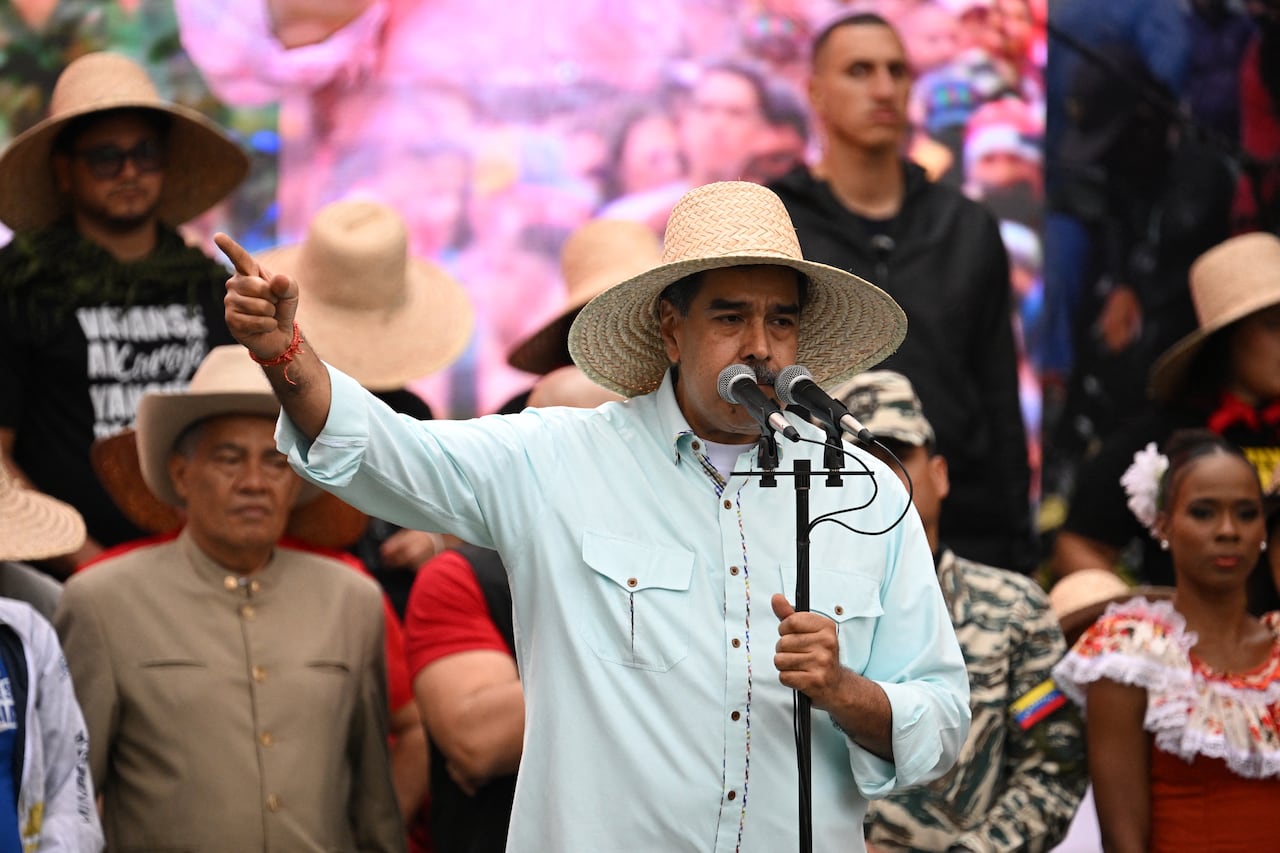
Venezuelan President Nicolás Maduro spoke Wednesday at a march commemorating a military battle, without addressing reports of the tanker’s seizure. (Federico Parra/AFP/Getty Images)
Maduro on Wednesday spoke at a march commemorating a military battle, without addressing reports of the tanker’s seizure.
The seizure comes a day after the U.S. military flew a pair of fighter jets over the Gulf of Venezuela in what appeared to be the closest that warplanes had come to the South American country’s airspace.
U.S. wants to control oil reserves: Maduro
Venezuela exported more than 900,000 barrels per day (bpd) of oil last month, the third-highest monthly average so far this year, as PDVSA imported more naphtha to dilute its extra heavy oil output.
Even amid increasing pressure over Maduro, Washington had not moved to interfere with the country’s oil flows.
Venezuela has had to deeply discount its crude to its main buyer, China, due to growing competition with sanctioned oil from Russia and Iran.
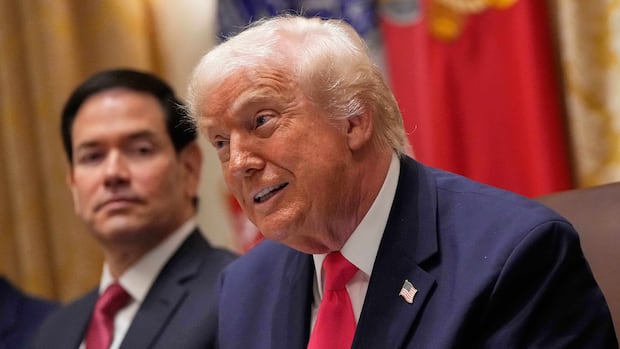
U.S. President Donald Trump threatened to expand his crackdown on drug trafficking during a cabinet meeting, suggesting he’d order land strikes on Venezuela and attacks on any country transporting illegal drugs into the U.S.
“This is just yet another geopolitical/sanctions headwind hammering spot supply availability,” Rory Johnston, an analyst with Commodity Context, said.
“Seizing this tanker further inflames those prompt supply concerns but also doesn’t immediately change the situation fundamentally because these barrels were already going to be floating around for a while,” Johnston said.
Chevron, which partners with PDVSA, said on Wednesday that its operations in the country are normal and continuing without disruption. The company, which is responsible for all Venezuelan crude exports to the United States, last month increased crude exports to the U.S. to some 150,000 bpd from 128,000 bpd in October.
Maduro has alleged that the U.S. military buildup off Venezuela’s coast is aimed at overthrowing him and gaining control of the OPEC nation’s vast oil reserves.
Since early September, the Trump administration has carried out more than 20 strikes against suspected drug vessels in the Caribbean and Pacific, killing more than 80 people.
Experts say the strikes may be illegal, since there has been little or no proof made public that the boats are carrying drugs or that it was necessary to blow them out of the water rather than stop them, seize their cargo and question those on board.
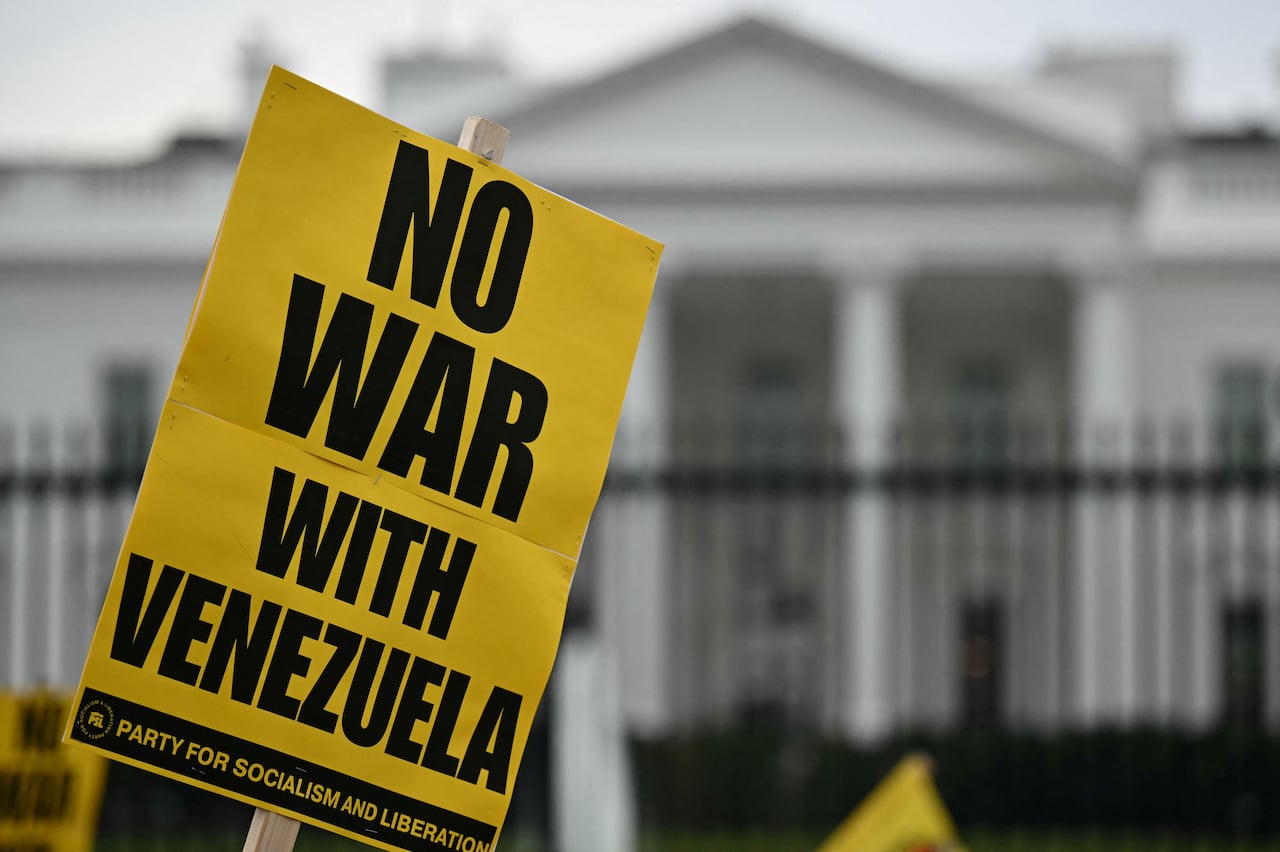
A sign opposing U.S. military intervention in Venezuela is held aloft outside the White House, during a protest last month. (Drew Angerer/AFP/Getty Images)
Concerns about the strikes increased this month after reports that the commander overseeing the operation ordered a second strike that killed two survivors.
In a sweeping strategy documeant published last week, Trump said his administration’s foreign policy focus would be on reasserting its dominance in the Western Hemisphere.
Democratic Sen. Chris Van Hollen, a member of the Senate Foreign Relations Committee, said the U.S. seizing of the oil tanker cast doubt on the administration’s stated reasons for the military buildup and boat strikes in the region.
“This shows that their whole cover story — that this is about interdicting drugs — is a big lie,” the senator said.
“This is just one more piece of evidence that this is really about regime change — by force.”