Editor’s note: Moses Becker is a special political commentator for News.Az, a PhD in political science, and an expert on interethnic and interreligious relations. The article reflects the author’s personal views and does not necessarily represent the position of News.Az.
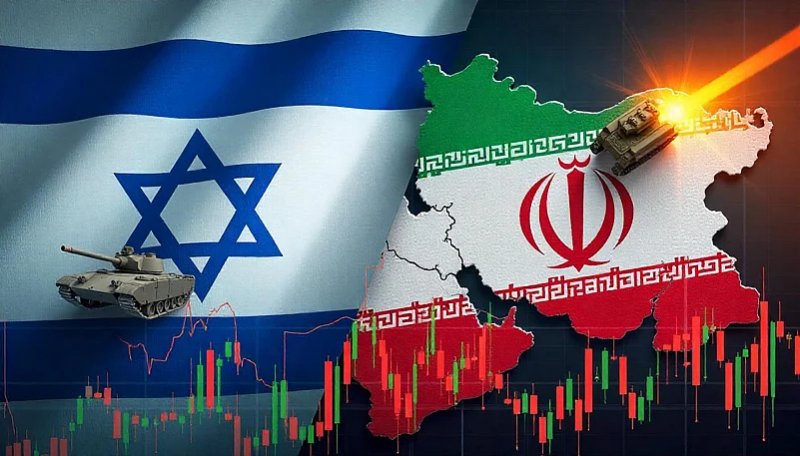
The June 2025 war between Israel and Iran demonstrated the unlimited capacity of a modern army to strike its enemy with impunity without deploying ground forces. The much-praised Iranian armed forces remained unused and helpless in the face of an unreachable opponent. Air defense systems and missile units built over decades proved powerless against modern aviation. Yet the war ended inconclusively. The regime did not capitulate and is even attempting to restore its regional position, directing its remaining scarce resources toward this goal. The country’s leaders are frantically searching for a way out of the dead end they have reached.
On one hand, voices in Iran are growing louder, demanding negotiations with the United States on dismantling the nuclear program and the ballistic missile project in order to cope with economic problems and water shortages that threaten the survival of the regime in Tehran. On the other hand, conservatives are trying to avenge their humiliation in the confrontation with the Jewish state. They insistently urge Ayatollah Ali Khamenei to begin a “rapid reconstruction” of lost military capabilities so that Iran can once again threaten Israel.
Source: Reuters
Within both camps in Iran – the moderate and the conservative – there are serious fears that Israel will take advantage of the fact that nearly the entire Iranian air defense system was destroyed in the war and will attempt to finish what it started by overthrowing the ayatollahs’ regime and freeing the Middle East from the Iranian threat. In Israel as well, developments in Iran are being closely monitored, with the understanding that an undefeated enemy will seek revenge for the defeat it has suffered.
According to available information, Khamenei currently leans toward adopting the hardline conservative course promoted by the Islamic Revolution Guard Corps, which itself is fighting for survival in this difficult situation. Despite the significant covert and overt efforts of the Trump administration to resume negotiations on the nuclear and missile programs, the Supreme Leader is not prepared to send his representatives to talks, even secret ones. Khamenei justifies this by claiming he has lost trust in the United States after it attacked the Fordow facility together with Israel. But these are merely excuses. In reality, because of its ideological rigidity, the regime cannot abandon its nuclear ambitions or its struggle against the “illegal Zionist entity.”

Source: Newlinesmag
Based on this, Israel believes that if negotiations are not resumed and no long-term political agreement is reached to prevent Iran from arming itself with nuclear and ballistic weapons, a new round of military confrontation will be unavoidable. As one Israeli security official stated: “We are closely monitoring what is happening in Iran and checking daily whether the Iranians are crossing our red lines or preparing something that could provoke an escalation. If they cross those red lines we have set, we will not hesitate to take measures to neutralize the threat.”
It should be noted that for now, neither Washington nor Jerusalem sees the need to act in the immediate future. Moreover, there is still no clear intent from Iran to retaliate against Israel for the humiliation suffered during the ‘People of the Lion’ war.
Regarding the nuclear program, according to American and Arab media, the Islamic Republic has not resumed uranium enrichment efforts. Although Iran’s Foreign Minister Abbas Araghchi and other politicians constantly assert that Tehran’s right to enrich uranium is non-negotiable, the Iranians in reality have no need to do so: they already possess about 400 kilograms enriched to 60 percent, and several hundred kilograms enriched to 20 percent. Tehran is currently continuing work at a new uranium enrichment facility that remains closed to IAEA inspectors. According to the New York Times, Iran’s stockpile of highly enriched uranium is sufficient to produce 11 nuclear weapons.
Source: Middleeasteye
Although Iranian officials claim that most of their raw materials were buried under the ruins of bombed facilities, Israeli officials believe the uranium was “moved to a safe place” in time and still poses a serious danger.
In addition, according to Araghchi, Tehran already possesses the necessary number of high-quality ballistic missiles, exceeding the arsenal it held before the June war. Israel and the United States doubt the accuracy of this claim, saying it is intended to deter a possible strike on Iran. It should also be noted that despite severe economic difficulties, Tehran has not neglected its proxies, particularly Hezbollah, and continues efforts to arm, maintain and finance them. All this does not contribute to peace in the region or to building trust between countries.
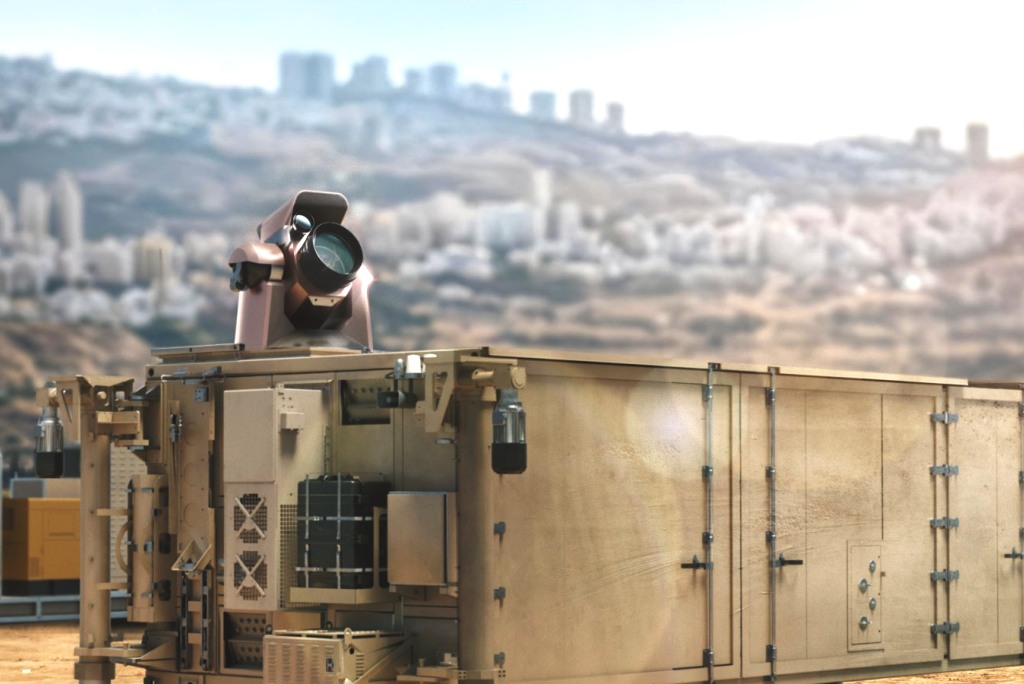
Iran’s actions cause particular concern to the government of Lebanon, which still cannot restore full sovereignty over the entire territory of this internally divided country. As a result of Iran’s activities, Israel is forced to enhance its national security system, investing billions of shekels in early warning systems, intelligence, air defense, and new offensive weapons. At present, the Jewish state is completing preparations for the deployment of the world’s first operational laser air defense system. The complex, called Iron Beam, will become a new element of Israel’s national defense shield — it has already passed field tests and entered service.
Unlike traditional missile systems, Iron Beam uses a directed laser with a power of 100 kilowatts and destroys targets in seconds. Its main advantage is the extremely low cost of a single shot: only a few cents’ worth of energy, whereas a single interceptor missile launched from Iron Dome costs tens or even hundreds of thousands of dollars. The system is designed to destroy rockets, mortars, drones and other aerial targets. According to Israel’s Ministry of Defense, during weeks of trials the laser demonstrated stable and precise performance, successfully striking airborne objects in conditions close to combat.
Source: Edrmagazine
Iron Beam will become the fifth tier of Israel’s layered air defense structure, which currently includes short- and long-range systems: Iron Dome, David’s Sling, Arrow 2 and Arrow 3. These systems effectively intercept rockets and ballistic targets — in some cases with up to 95 percent efficiency. Jerusalem hopes that the mere existence of such capabilities will deter Iran from offensive initiatives. However, given the psychology of Iran’s ruling elite, which relies on divine will in all matters, it can be assumed that the next round of war with Iran, although not expected soon, is nearly inevitable, and Israel must prepare for it quickly and forcefully, which it is already doing with no regard for supposed peacemakers.
Following the 12-day war, Israeli military-industrial products have become especially sought after in Europe and friendly countries of the Asian subcontinent. According to recent data, Israeli defense contractor Rafael Advanced Defense Systems will supply the German army with Spike anti-tank missiles under a deal worth about 2 billion euros. In addition, it has become known that the German government has reached an agreement with Israel to purchase Arrow-3 missiles — for an enormous sum of 4 billion euros.
During the two years of war, Israel’s economy not only did not suffer, but showed significant growth — something that cannot be said about Iran. For key sectors, wartime 2024 proved more productive than the peaceful years of 2022 and 2023. For example, the flagship TA-125 index outpaced the S&P 500 and posted exceptional returns (total yield over 28 percent, in dollars more than 26 percent versus 24 percent for the S&P 500). GDP growth in this period reached 3.8 percent. Foreign exchange reserves reached $215 billion, or 42 percent of GDP. Banks demonstrated stability and high profitability. Thus, any claims by the ayatollahs about the collapse of the “Zionist entity” are contradicted by Israel’s tangible achievements.
(If you possess specialized knowledge and wish to contribute, please reach out to us at opinions@news.az).