Thursday, December 11th, 2025
Welcome back to the MBN Iran Briefing.
This week, we’ll learn about a new front in the information war between Iran and Israel, catch up on the dispute over three tiny islands in the Gulf, and follow the travails of a group of Iranian nationals deported from the U.S. to Iran.
In this briefing, we’ll also learn how Iran and Egypt ended up being scheduled to play in an LGBTQ+ Pride soccer match and why one 300-page report concludes that Iran is kind of similar to … Iceland.
This is a new offering from the Middle East Broadcasting Networks, the Arabic-first media platform for and about the region. You can reach me at ailves@mbn-news.com. If you were forwarded the newsletter, please subscribe. Read me in Arabic here.
Quote of the week:
“Our advice to our neighbors is not to test the will of the Iranian nation to defend its territorial integrity and the Iranian islands of the Persian Gulf, which are part of Iran.”
– Mohammad Bagher Ghalibaf, speaker of the Iranian parliament
IRAN NEWS BRIEFS
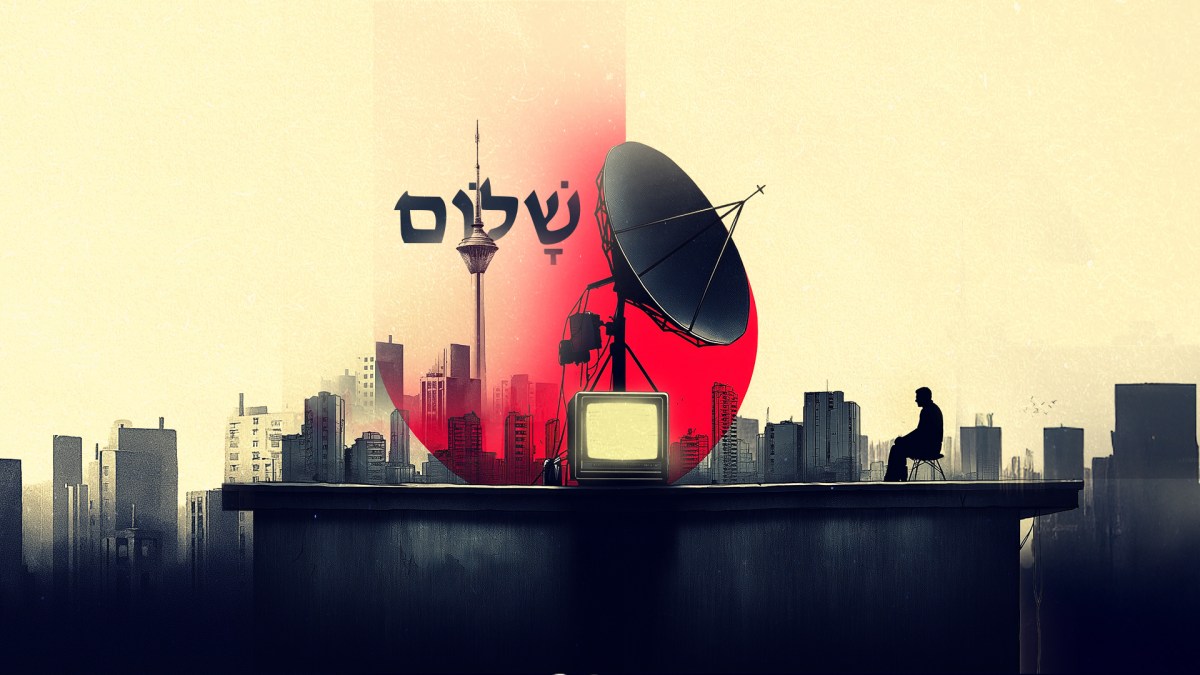
“Shalom from Tehran”
This is the Islamic Republic’s new message aimed at Israelis, courtesy of state-sponsored Press TV, Tehran’s flagship international television channel. Press TV now has output in Hebrew, albeit only through an account on X and a Telegram channel, “with a full website scheduled for launch in the near future.”
Ahmad Noroozi, the head of the World Service of Islamic Republic of Iran Broadcasting (IRIB), made the following comment, entirely without irony, in a post on X: “During the war with Iran, the Israeli regime imposed the highest level of censorship on the Hebrew media. It fears awareness of the truth. @PresstvHebrew will expose the facts.”
Press TV’s new Hebrew‑language service is the latest front in a long, multilingual information war. Tehran now wants to talk directly to Israelis in Hebrew, rather than just about them.
Iran’s state broadcaster IRIB claims to broadcast internationally in more than 30 languages across its radio and TV world services, including, unsurprisingly, English and Arabic, but also a wide range of global languages such as French, Spanish, and Portuguese, critical regional languages such as Pashto, Urdu and Turkish, and intriguingly, Albanian, Bosnian, and the West African language Hausa.
Iran has long sought to explain its narrative to the rest of the world and cultivate allies abroad, dating back to the time of the Shah and a modest shortwave “external service.” IRIB, created after the 1979 revolution as the Islamic Republic’s sole legal broadcaster, was tasked with carrying the revolution’s message beyond Iran’s borders via radio and later satellite TV.
Calling “information dominance” a priority for Tehran, an analysis published by the Atlantic Council observes that “Iran sees itself as engaged in a perennial information war: against Sunni Arab powers, against the forces of perceived Western neocolonialism, and particularly against the United States.”
The global shift to digital platforms has lowered the cost of these ambitions. The Atlantic Council report describes how, from around 2010, Iranian state and para‑state actors began running networks of Facebook and X sockpuppet accounts, posing as local outlets to push Tehran‑aligned narratives into foreign debates. That “guerrilla broadcasting” model now sits alongside brands openly identified as Iranian. Press TV Hebrew is social‑first by design. It is built for short video clips and shareable talking points rather than long‑form terrestrial television.
The X account has fewer than 900 followers to date. The “Israel in Persian” Instagram account, with 2.1 million followers, had this to say: “Press TV in Hebrew? Yum yum what fun days ahead. Thank you 🙂”
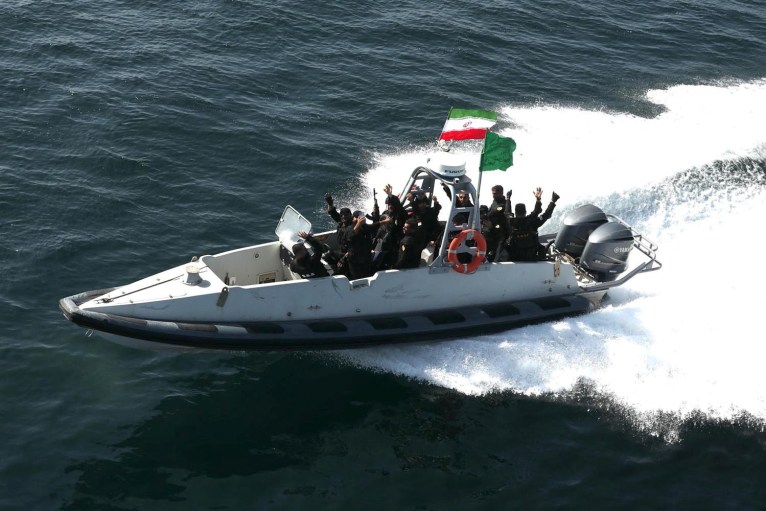 Members of the Iranian Navy attend the joint Navy exercise of Iran, China and Russia in the Gulf of Oman, Iran, in this handout image obtained on March 12, 2025. Iranian Army/WANA (West Asia News Agency)/Handout via REUTERS ATTENTION EDITORS – THIS IMAGE HAS BEEN SUPPLIED BY A THIRD PARTY
A Widening Gulf
Gulf leaders wrapped up the 46th Gulf Cooperation Council (GCC) summit in Bahrain last week, the latest round of an annual leaders’ meeting that’s been the main stage for intra‑Gulf politics since the bloc was founded in 1981. The final communiqué called Iran’s presence on three strategically vital islands in the Gulf an “occupation” and backed Saudi-Kuwaiti claims over an offshore gas field also claimed by Iran. Iranian forces have controlled the three small islands of Greater Tunb, Lesser Tunb, and Abu Musa near the Strait of Hormuz since they were taken over by the Shah’s navy in the 1970s. Iran insists the islands are historically and legally its territory, while the UAE calls this an illegal occupation of Emirati land and has pushed the GCC and others to back its sovereignty claim.
Durra (the name in Arabic) / Arash (the name in Persian) is an offshore gas field in the northern Gulf whose reservoirs straddle the Saudi-Kuwaiti Neutral Zone and Iran’s claimed waters.
The Bahrain GCC summit final communiqué went further than usual, calling the three islands an “integral part” of the UAE and flatly rejecting “all Iranian measures” there as null and void. On the Durra/Arash gas field, the leaders backed Saudi-Kuwaiti claims that the entire field lies in their divided maritime zone and insisted that “no other party” has any rights to it, directly undercutting Iran’s long‑standing claim to a share.
Sakinah Almushaykhis’s analysis for MBN describes this as the Gulf “raising the bar” on sovereignty, reviving old issues at summit level, and using the language of the Law of the Sea to cast Iran as outside international norms on both the islands and the field. Since the summit, the GCC secretary‑general and member states have doubled down, issuing statements earlier this week condemning Iranian leaders’ comments as “false claims” that infringe on Emirati, Bahraini and Saudi-Kuwaiti rights.
Tehran’s answer has come on two tracks. First, the Iranians have used diplomatic means to dismiss the GCC text as “baseless claims,” repeated references to “historical rights” over Arash/Durra and warned neighbors against crossing Iranian “red lines,” while inviting Kuwait to bilateral talks that would sideline the GCC framework. Iran continues to argue that roughly 40–45 percent of the field lies in its waters and that any Saudi–Kuwaiti development deal without its consent is invalid. Iran’s parliamentary speaker Mohammad Bagher Ghalibaf has now sharpened the tone further, accusing the GCC of echoing “baseless and absurd claims encouraged by outside actors” and warning Gulf capitals not to “test the will of the Iranian people.”
Second, Iran has also responded militarily. At the same time, the IRGC Navy staged a two‑day drill in the Strait of Hormuz and the Gulf of Oman, firing large salvos of cruise missiles and over 300 ballistic missiles at simulated sea targets in what commanders billed as a message to “foreign threats.” Video showed the missiles landing in Gulf waters, and IRGC officers stressed their readiness to close or threaten key chokepoints if necessary.
Arabic‑language coverage from GCC outlets like KUNA, Saudi Gazette and Bahrain’s News of Bahrain underscores how Durra/Arash and the islands are being bundled into a wider story that Iran is testing Gulf sovereignty from Bahrain to Kuwait. Persian‑language Iranian outlets, by contrast, highlight the legal ambiguity of maritime borders and portray the IRGC exercises as defensive, while amplifying hard‑line voices warning that Gulf “alignment” with Washington and Riyadh will incur costs. Taken together, old disputes over rocks and gas fields are now bound up with live missile drills and post‑war Iran-Israel tensions, giving both sides less room for quiet technical bargaining and more incentive to prove they will not back down.
It’s worth noting that maps and international treaties have overwhelmingly used the term “Persian Gulf” in the past, and this remains the term used by the UN, most atlases, and international bodies. Since the 1960s, however, several Arab governments have promoted the term “Arabian Gulf,” and many GCC states now use that term officially or simply say “the Gulf.”
Do territorial disputes over tiny islands matter? Falklands, anyone?
Back to Tehran
On Sunday, a chartered plane left an ICE facility in Arizona, carrying Russians, citizens of Arab countries, and over 50 Iranian nationals. The Russians and Arabs deplaned in Cairo, and from there the Iranians travelled on to Tehran via Kuwait.
This flight followed a planeload of Iranian deportees in late September of this year, after Washington and Tehran agreed to restart forced returns. Officials in both capitals now speak of “up to 400” people eventually being sent back.
After years in which Iran was treated as “non‑cooperative” on returns, the Trump Administration struck an understanding with Tehran in late September to restart removal flights of Iranian nationals with final deportation orders. U.S. agencies describe the passengers as people who overstayed visas, lost asylum cases or have past criminal convictions, portraying the flights as routine enforcement of immigration law. Unlike past deportations, in which the United States sent Iranians back individually on commercial planes, the new round features chartered flights.
According to pro-reformist site Rouydad24, Mojtaba Shasti Karimi, director general of consular affairs at the Iranian Foreign Ministry, said that the people in this group expressed their desire to return to Iran “due to the racist and anti-immigration policies of the U.S. government,” adding that Tehran has received reports of “inhumane treatment” of Iranians in U.S. Immigration and Customs Enforcement detention centers.
A different take on inhumane treatment was reported by the BBC, which referenced a clergyman from a Franciscan organisation that provides support to migrants saying that “he has been informed through his contacts inside an Arizona detention facility that Christian converts were among those removed. He also said some detainees had identified as LGBT.” According to the New York Times, some people on September’s flight faced abuse upon their return to Iran.
THREE BY THREE
In this section, let’s look at some of the most eye-catching stories from different Persian-language outlets in the past week.
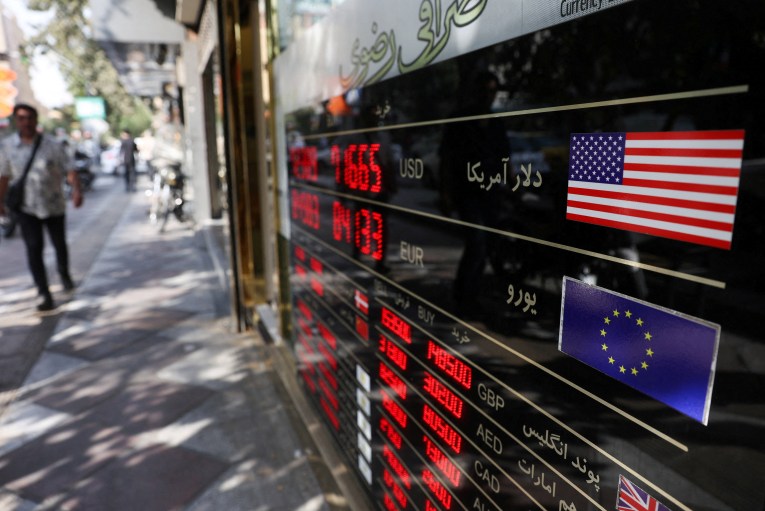 FILE PHOTO: People walk past a sign at a currency exchange as the value of the Iranian Rial drops, in Tehran, Iran, October 5, 2025. Majid Asgaripour/WANA (West Asia News Agency) via REUTERS ATTENTION EDITORS – THIS PICTURE WAS PROVIDED BY A THIRD PARTY/File Photo
The Dollar: General of Iran’s Economy! That’s the title of an opinion piece in the business daily Monaghesat Iran dubbing the U.S. dollar “the general of Iran’s economy,” arguing that the exchange rate effectively commands prices, expectations, and public mood. The writer says that “the Iranian economy needs a deep structural transformation to break free from the dominance of ‘General Dollar.’ Although this path is difficult and long, it can be achieved by implementing real reforms in various economic, political and international areas.”
“White Internet” and Broken Trust. In an editorial titled “Eliminating the ‘white Internet’ to restore public trust,” reformist daily Etemad argues that the government’s latest plan to create a tiered “clean” Internet for selected users deepens, rather than ameliorates, the rift within society. “White Internet” in this piece means the privileged, unfiltered Internet access given to selected officials and institutions inside Iran, in contrast to the filtered, restricted Internet available to the general public. The writer says that, on top of years of filtering and bandwidth throttling, the idea of a privileged fast lane for insiders turns access into yet another instrument of political hierarchy.
The Hijab as Style Choice: In a piece entitled “When hijab becomes ‘style’: Victory through business or through faith?” conservative, pro-Islamic Republic Jahan‑Banou (“Lady of the World”) presents an argument that contemporary veiling in Iran is increasingly shaped by the interaction of markets, media, and cultural policy, rather than by individual piety alone. The writer describes how social media trends and influencers turn dress codes into a profitable industry in which “hijab style” and other beauty ideals are packaged and sold, while deeper religious markers such as faith, halal livelihood, prayer and professional ethics remain largely invisible. The piece warns that this commodification can unsettle women’s sense of identity. It also argues that bans and crackdowns are ineffective, and instead calls for attractive cultural production, smarter policy and high‑quality “alternative products” that support informed, voluntary choices so that hijab functions as part of a broader, ethical way of life.
UNEXPECTED
Iran, Egypt, and an LGBTQ+ football match: Seattle’s 2026 World Cup “Pride Match” has turned a routine group game into a geopolitical test. Local organizers had long earmarked the June 26 event at Lumen Field as a celebration of LGBTQ+ communities, timed to coincide with Seattle Pride weekend, before the draw randomly produced Iran-Egypt as the pairing.
Both countries criminalize same‑sex relations. In Iran they can be punishable by death.
Seattle’s host committee stresses that the “Pride Match” branding is entirely its own initiative, not a FIFA designation, and says the game will go ahead with rainbow‑themed art, fan events and messaging around inclusion. Iran’s football federation and conservative Persian outlets like Tabnak have reacted, stressing that the match’s Pride-themed designation was launched “without FIFA approval.”
Check out the finalists in the design competition for the match.
Well, They Do Start with the Same Letter. With the catchy come-on “Isn’t it fascinating that Iceland and Iran have the highest similarity in expert migrations?, a glossy new report claims Iceland and Iran have a “52.1 percent Bilateral Similarity Index.” It’s quite a pitch: Diplomats and executives from Reykjavík and Tehran have far more in common than they think, the authors claim, charting 40 dimensions from trade to culture.
Bilateral Navigator is a data‑driven consultancy project that computes a single similarity score for any two states by aggregating dozens of comparable indicators, then sells glossy, country‑pair handbooks off the back of those rankings.
The site also features portraits of Iceland’s president, prime minister, and minister of foreign affairs, who are all women, as well as photos of Iran’s supreme leader, president, and minister of foreign affairs, who are not.
Presumably one aspect of the 47.9 percent non-similarity is the fact that the last execution on Icelandic soil was in 1830, while Iran has executed over 1,000 people in 2025 alone.