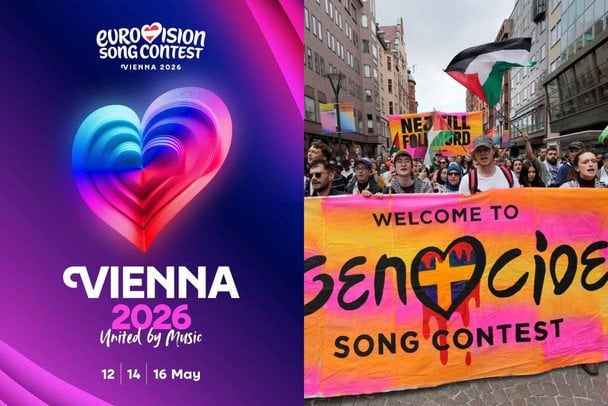
Iceland has officially confirmed its decision not to participate in the international competition ‘Eurovision-2026’. This is already the fifth country to boycott the event. Previously, the Netherlands, Spain, Slovenia, and Ireland also made similar decisions.
As reported by BBC, the main reason for the mass boycott was the decision of the European Broadcasting Union (EBU) to allow Israel to participate in the contest, despite appeals from some broadcasters to hold a separate vote on this issue. Iceland supported this initiative, becoming one of seven countries that demanded a review of the Israeli broadcaster KAN’s participation in ‘Eurovision-2026’.
Reasons for the boycott
The director general of the Icelandic broadcaster RÚV, Stefan Eiriksson, emphasized that the country cannot continue to participate in the competition under such conditions:
‘In the current situation, this competition brings neither peace nor joy. Considering this, we decided to take a step back until the circumstances change.’
Although new Eurovision rules, presented by EBU as a step towards greater neutrality and transparency, Iceland expressed doubts about their effectiveness. RÚV noted that the country’s participation was opposed not only by the public but also by local creative associations. The broadcaster also appealed to EBU asking for the exclusion of the Israeli broadcaster KAN due to previous precedents and reputational risks.
‘This is a complex issue that has already harmed the reputation of the contest and EBU. It is important to find a solution that satisfies all parties.’KAN’s response
The director general of KAN Golan Yochpaz responded to attempts to exclude Israel from the contest, outraged that it could be seen as a cultural boycott. He warned that such actions could have long-term consequences for the European music community.
‘The attempt to remove KAN from the contest can only be seen as a cultural boycott. Today the boycott may start with Israel, but no one knows who it will harm tomorrow. Do we really want the 70th anniversary of the contest to be remembered for this?’
Iceland’s decision has once again raised the issue of the political neutrality of Eurovision and its ability to remain a platform for music rather than geopolitical conflicts. Whether these refusals will impact the format of the contest in 2026 remains a mystery. However, the wave of boycotts is becoming increasingly noticeable and poses a serious challenge to EBU.
Currently, Ukraine is actively preparing for the national selection for ‘Eurovision-2026’. The organizers have already announced a list of nine finalists, one of whom may represent the country at the international song contest.
This boycott highlights the tension that arises when cultural events turn into political arenas. For the organizers of ‘Eurovision’, this is a challenge to find a solution that satisfies all participating countries and restores trust in the contest. Interest in how events will unfold remains high, especially given the historical celebrations of the contest in 2026.