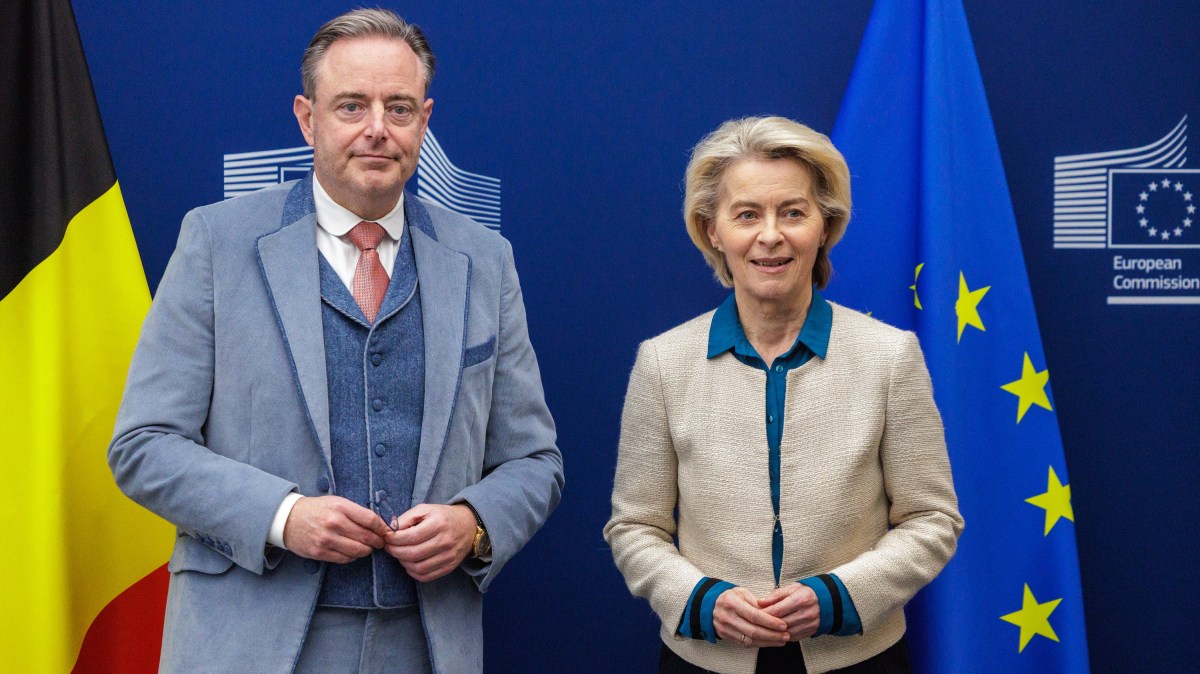
Belgium has threatened legal action if the European Union uses emergency powers to override its national veto to seize cash balances from frozen Russian assets to fund Ukraine.
Intensive diplomatic talks are continuing between European ambassadors before a summit deadline in a week’s time to decide on the use of €210 billion in “immobilised” Russian assets as a “reparations loan” for Kyiv.
Bart De Wever, the Belgian prime minister, has demanded additional guarantees and cash buyers to protect Belgium against potential financial liabilities if the EU seizes €185 billion in Russian assets held in the Euroclear securities house in Brussels.
“We are negotiating with the Commission to see if the proposal can be brought into line with the minimum conditions Belgium has set, which are generally recognised as rational, reasonable, and justified,” he told Belgian MPs on Wednesday evening.
• Can frozen Russian assets help turn the tide of the Ukraine war?
“A lot of goodwill has been shown, but between the goodwill to do something and actually being able to do it, there’s a gap that now needs to be bridged.”
De Wever did not rule out legal action, either by his government or Euroclear, if other EU leaders back a European Commission plan to use an emergency treaty article, meant in the event of severe economic disruption or exceptional circumstances, to transfer the assets. Usually EU countries have a national veto on sensitive areas such as foreign policy, defence, taxation and treaty changes.
“If a decision is made that, in my view, conflicts with legality and therefore doesn’t make sense and poses significant risks for this country, you can’t rule anything out,” he said.
“There are many legitimate objections regarding the legality of such an operation. This article is about a state of emergency. Where is the emergency? There is an emergency in Ukraine. But Ukraine is not in the EU.”
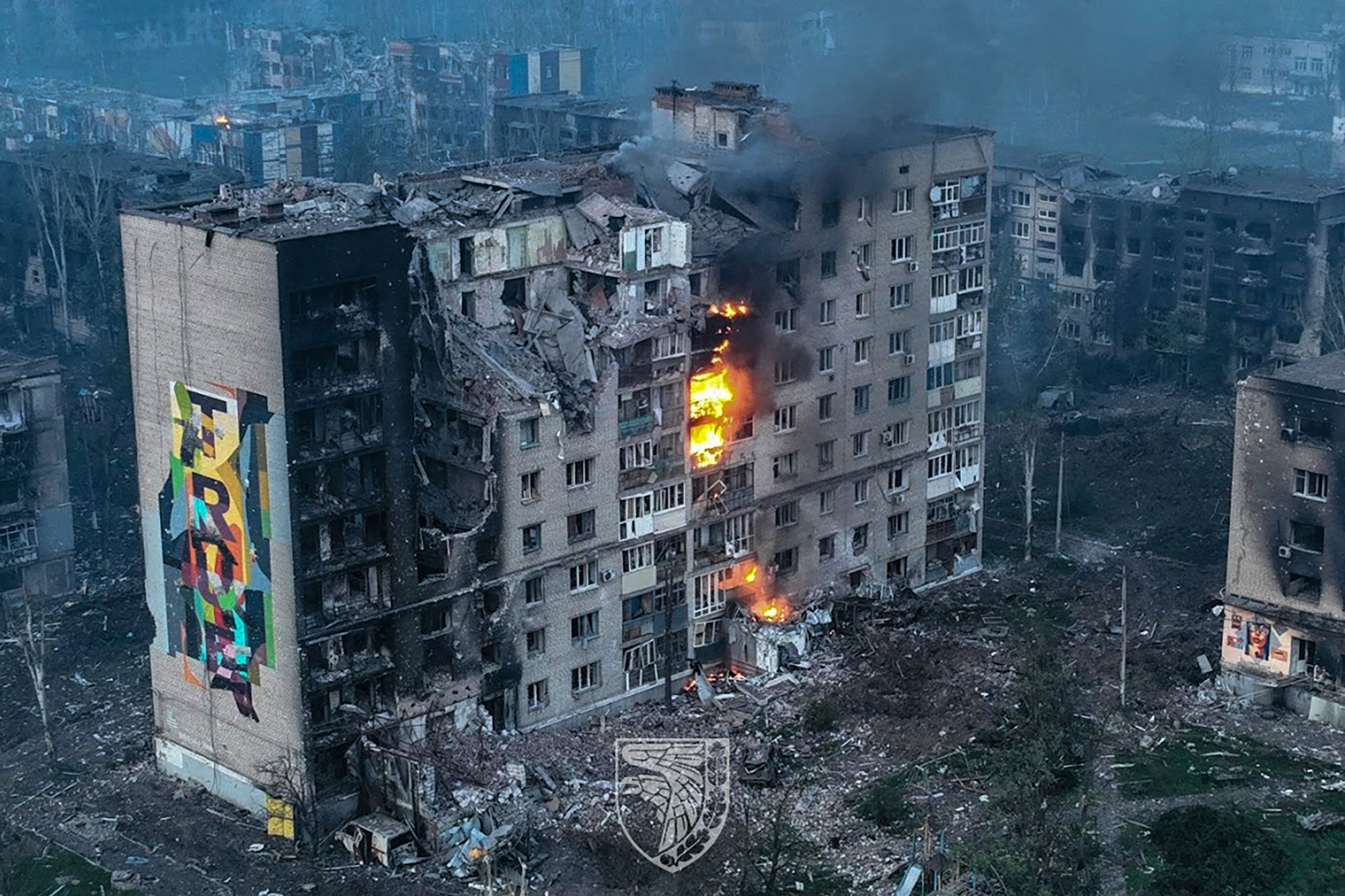
The city of Bakhmut, Ukraine, which fell to Russia in 2023
ARMED FORCES OF UKRAINE/AFP/GETTY IMAGES
The EU is in a race with President Trump, who has ideas for the assets under his preferred peace plan for Ukraine, but Belgium is still holding out on three demands.
The first is that the EU seizes all the assets held on its territory, totalling €210 billion, not just the €185 billion in Belgium.
• Ukraine sends out peace deal proposal on territorial concessions
Second, that financial guarantees must not only cover the value of the assets, but also any damages that Russia might be awarded in an international tribunal.
On top of the guarantees, the EU must provide a liquidity mechanism so that Euroclear has the funds to pay back Russia immediately if it has to do so.
De Wever argued that the EU had other options for financing Ukraine’s budget over the next two years, but acknowledged that such a plan would require unanimity among the EU’s 27 member states, which is blocked by Hungary and Slovakia.
“There are definitely better solutions than stealing the Russian central bank’s money,” he said. “This is a drastic step. I think it’s very unwise and ill-considered.”