Every time you ask a question of your AI assistant, it gets sent to a data center, where the response is generated before getting sent back to you. These data centers are critical to the AI revolution. The biggest data-center campuses occupy dozens of acres, span millions of square feet, and cost billions of dollars.
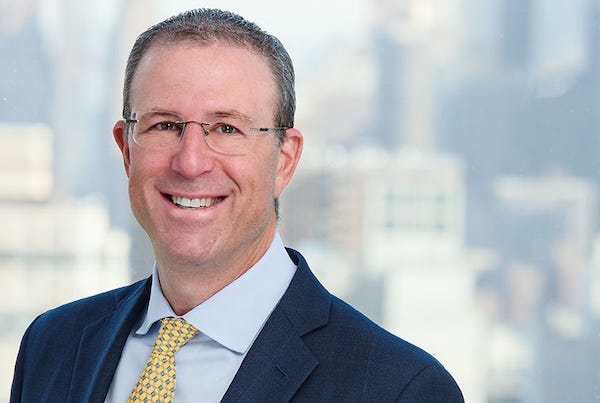
And they wouldn’t exist without the work of lawyers. For insight into the complex transactions that bring these data centers into existence, I interviewed Steven Messina, a longtime partner at Skadden Arps and global head of the firm’s banking group (soon to be renamed the finance group, reflecting the evolution of the sector beyond commercial banks).
In our conversation, Steve and I discussed how these billion-dollar data centers get financed. But we covered a number of other topics as well, including the evolution of both the finance industry and Biglaw over the past three decades. If you’re interested in technology, business, or law, this is an episode you won’t want to miss.
Show Notes:
Prefer reading to listening? For paid subscribers, a transcript of the entire episode appears below.
Sponsored by:

NexFirm helps Biglaw attorneys become founding partners. To learn more about how NexFirm can help you launch your firm, call 212-292-1000 or email careerdevelopment@nexfirm.com.
Three quick notes about this transcript. First, it has been cleaned up from the audio in ways that don’t alter substance—e.g., by deleting verbal filler or adding a word here or there to clarify meaning. Second, my interviewee has not reviewed this transcript, and any errors are mine. Third, because of length constraints, this newsletter may be truncated in email; to view the entire post, simply click on “View entire message” in your email app.
David Lat: Welcome to the Original Jurisdiction podcast. I’m your host, David Lat, author of a Substack newsletter about law and the legal profession also named Original Jurisdiction, which you can read and subscribe to at davidlat.substack.com. You’re listening to the eighty-seventh episode of this podcast, recorded on Thursday, December 4.
Thanks to this podcast’s sponsor, NexFirm. NexFirm helps Biglaw attorneys become founding partners. To learn more about how NexFirm can help you launch your firm, call 212-292-1000 or email careerdevelopment@nexfirm.com. Want to know who the guest will be for the next Original Jurisdiction podcast? Follow NexFirm on LinkedIn for a preview.
If you’re like me, you are constantly consulting with an AI assistant. I happen to use ChatGPT, and I rely upon it for everything from laundry tips to bedtime stories for my kids.
But have you thought about what makes these amazing AI tools possible? They’re powered by giant data centers, which can take up dozens of acres and millions of square feet. These massive data centers can also cost billions of dollars. How do they get financed?
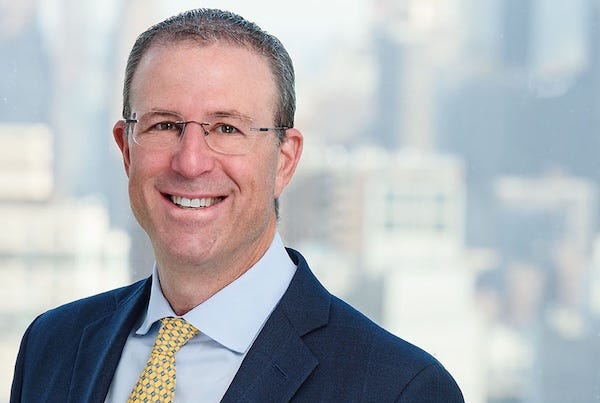
To delve into data centers, I interviewed Steven Messina, a longtime partner at Skadden Arps. Steve serves as global head of Skadden’s banking group—and he also happens to be a leading dealmaker in the data-center space, intimately involved in putting together the billions of dollars necessary to finance these massive projects.
In our conversation, we discussed what those deals typically look like. But we also covered a number of other interesting subjects, including current trends in the finance space, the evolution of acquisition finance over the years, and how Biglaw has changed in the almost 30 years that Steve has been in practice. Without further ado, here’s my conversation with Steven Messina.
Steve, thank you so much for joining me.
Steven Messina: Thank you for having me.
DL: Let’s begin with your background and upbringing. Where did you grow up?
SM: I was born in Queens, but moved to Rockland County in New York where I was about six years old, and grew up in North Rockland. I never thought I’d be a lawyer. My background is in meteorology, believe it or not. I always thought I was going to be the next Al Roker, or for those of you who are old enough, Willard Scott. My first passion is meteorology and the weather, believe it or not.
DL: How did you get interested in meteorology?
SM: I loved snowstorms when I was a very young kid. Like many kids, we used to get off from school when there was a snowstorm. But I was interested in why it was snowing and what was coming and predicting the weather. And then I found myself interested in not just snowstorms, but just generally in the weather—fascinated by it.
And kids I went to school with, even in high school, thought of me that way. I would sort of play a meteorologist in high school and tell people what I thought was coming; they knew me as “The Weather Guy,” even back then. When we would take certain classes and have presentations, I would do a weather forecast, for example. And I always thought that my future was on TV, whether it was Al Roker or someone like that, or even on the Weather Channel. And I pursued that when I went to college for a degree in meteorology.
DL: Oh, so you actually studied that in college?
SM: I did; that’s right. So if you would’ve told me when I graduated college that I’d be a lawyer, I probably would’ve been at the time on the floor, belly laughing, at the idea that I would be a lawyer.
I graduated from SUNY Oswego and then went on to work for a company called FleetWeather, which is very similar to AccuWeather (and back then it was a bit of a larger company). We did radio broadcast throughout the Northeast, including 1010 WINS here in New York. So I was on 1010 WINS back in the early to mid ‘90s, more so on the weekends. We also forecasted for the New York Yankees, the New York Mets, the USTA Tennis Center, and all different types of forecasts for around the country. It was very interesting, and I did that for a number of years before and during law school.
DL: I actually grew up in the tri-state area as well, so I grew up listening to 1010 WINS. Were you on air?
SM: I was, yes. I was on air on 1010 WINS here in the city, as well as a bunch of radio stations up in New England and down in Philadelphia.
DL: Oh, okay—your voice sounded familiar to me. That seems like a really cool and interesting career. How did you wind up in law?
SM: That’s a great question. So I was doing that for a couple of years. Unfortunately, I guess I had a face for radio, since I didn’t make it to TV—that’s my joke. And I realized very quickly that radio, and especially TV, was more show business. I was really interested in the science of the meteorology and the forecasting, and I really did enjoy that, notwithstanding that I wanted to be on TV as well.
But after a couple of years being on radio, at 22 or 23 years old, I started asking myself, now what? Am I going to do this forever? I started thinking about what’s next. I actually took a couple of classes pursuing a master’s in atmospheric science at NYU at one point. And I thought, okay, I’m going to go on and continue my studies. I took a few classes; I wasn’t that interested in the research part of it.
A good buddy of mine from college was going to law school. This was the early to mid ‘90s now—there have been different times in the last 50 or 60 years where environmental sciences and even environmental law have had peaks and valleys, in terms of interest in them—and at this time, there was a lot of interest. I thought I could take my science background, go to law school, and get into environmental law. And that’s what I decided.
So I wound up at Pace Law School, which at the time had the number-two environmental law program in the country. By my second year, I took my first environmental law course—and I was bored out of my mind. And as I like to joke, I sold out and became a corporate lawyer—it wasn’t exactly like that—but I just found that the regulatory basis for much of that practice didn’t appeal to me. And once I started doing a bit of transactional work when I was a summer associate, I said, “Oh, this is working on a ‘deal.’ This sounds like fun.” And I pivoted to the transactional side.
DL: That’s so interesting—how people will make these pivots. You went to law school thinking you’d become an environmental lawyer, and now you’re a transactional lawyer. Did you summer at Skadden?
SM: I actually summered at O’Melveny & Myers, and I started at O’Melveny my first year as well.
DL: And then how did you make your way to Skadden?
SM: I was at O’Melveny my first year, and back then the office was relatively new, maybe seven or eight years old, and a relatively small office. A couple of partners left around that time, and one of them was coming to Skadden with a few associates, and happened to be my mentor at the time. So I followed them a few months after they came over to Skadden, and that’s how I wound up at Skadden in my second year.
DL: Today, you’re the global head of Skadden’s banking group. When you lateraled over to Skadden, was your practice already focused on the financial-institutions sector, or were you doing other stuff?
SM: It was a general corporate group, so it was somewhat of a hodgepodge. I had done some banking work, including a bunch of Goldman Sachs deals at the time, I recall. But I also had worked on a little bit of M&A, a little bit of leveraged leasing, some capital markets work. So it was really a general corporate practice at the time over at O’Melveny; I did a little bit of everything. But the opportunity here at Skadden was to come into the banking group, which was an established banking practice here at Skadden at the time, and still is.
DL: So when you went over, you narrowed your practice focus then?
SM: I did. That’s right.
DL: Tell me a little bit about your practice today. What are most of the types of clients or deals that you work on?
SM: I always like to say our bread and butter work, and mine over the years, has been acquisition finance, with many of our public-company clients and private-equity clients. I’ve worked on both sides, both borrower-side and lender-side, at different points in my career. But I would say that for most of my career, most of the deals I’ve worked on have been more on the acquisition-finance side. We’re all general finance lawyers here at Skadden, and I think that most debt finance lawyers that I know across Biglaw tend to be more generalists.
And you work on everything from cradle to grave, because there are many deals where you see the life cycle of the acquisition: you do the initial acquisition financing, then the refinancings down the line. Sometimes a company gets in trouble, and you have a workout or a restructuring, and then, God forbid, a filing into bankruptcy and a DIP [debtor-in-possession] financing, and then ultimately an exit financing. So I’ve worked on many of those over my career, where I’ve seen the full life cycle of companies, from beginning to end.
My practice is actually a broad practice that’s dipped into infrastructure finance and data-center finance in recent years. To some extent, you go where the work is, and I’ve been doing this long enough where I’ve seen the various peaks and valleys of M&A. I remember the dot-com bust because I started during the boom, and then there was the financial crisis back 15 years ago. Especially when I was an associate, my buddies who were M&A attorneys were either full-out crazy working or had nothing going on, and it seemed like that was always the case. Whereas in the debt finance and banking practice, when M&A is busy, you tend to be very busy with the acquisition finance deals, and when things are going sideways in the markets, you tend to be very busy with restructurings. So it’s a pretty steady practice, and I actually like that. You tend to be busy consistently, but maybe you don’t have the extreme peaks and valleys that you would have in some other practices like M&A, for example.
DL: Would you say that your work is perhaps somewhat more recession-proof, to the extent that you have to do workouts when things go south?
SM: One hundred percent. In fact, some of the times when we were in a recession were the busiest times of my career. And I can remember, even in maybe a little bit different circumstances, but just after Covid, in the first month or two after Covid, I may never have worked as hard as I did in those first couple of months. There was a panic among most of our clients: liquidity concerns, financial-covenant concerns, just going-concern issues generally. Every or just about every credit agreement has an MAE clause—so what does that mean and how do we interpret that in the context of this thing called Covid, which we didn’t know was going to last for seemingly a year or two.
For example, a client of mine is Royal Caribbean, whom we’ve worked with for many years. For the most part, it was just working on investment-grade credit agreements every couple of years, a bit of a sleepy client, in a sense. And then Covid hit, and they were shut down. And you could imagine all hell breaks loose at that point, because you have a fleet of ships that are just sitting there and can’t be used, and you’re not generating any profits, and there was no timeline as to when they would get up and sailing again. So it was a very interesting situation, working with clients like that. And it was actually quite gratifying in a sense, because you wouldn’t have expected to do the type of work we did with a client like Royal Caribbean. It’s an investment-grade company, everyone loves cruising, so it’s throwing off lots of cash for many years—and then you just have this black-swan event. And coming in there and working with them was actually a very interesting experience, but also gratifying, because we saw them come out the other side as well.
DL: So I actually want to pick up on something you mentioned a little earlier. You were talking about MAE provisions—material adverse effect, right?
SM: Yep, that’s right.
DL: And there’s also MAC, material adverse change. I’m just curious—and I know that it’s going to depend on the particular wording of the particular agreement—but during Covid, how often were those triggered? Did you deal with a lot of situations where the parties agreed, “okay, it’s kicked into effect”?
SM: No, no, I did not….
DL: Because the COVID pandemic does seem like one of the biggest things that’s happened in our lifetime.
SM: I know that lawyers will argue over material adverse effect or change clauses, and there are many different types of reps and warranties in credit agreements and merger agreements and other types of transactional documents. But oftentimes when you’re looking at MAE, for example, there have been very, very few cases where a court has actually found an MAE. And in the context of a debt agreement, any substantial debt agreement, there’s never been an MAE that’s been found by a court.
Now, I’m not sure also that that’s actually been pushed in terms of litigation, because typically you come to some agreement. And what I try to explain sometimes to clients as well is, if you have an Enron-type fraud situation, where it’s so, so obvious that something has happened, yes, that’s probably an MAE—but absent that, it’s in the eye of the beholder. And when you look at the few court cases that are out there, it’s duration—which, by the way, during COVID, remember how in the beginning, no one knew that it was going to… It was like, “Oh, this will pass in a few months.” And then we kept thinking it would. But I think there was also an understanding at the time of the creditors that we’re all in this together to some extent, and everyone acted very rationally throughout the process. And I think for many of our clients, it wasn’t just, oh, they’re not operating well, the world blew up and how do we address this?
DL: I just wanted to probe on that. It’s something of interest to me because years ago, when I was at Wachtell Lipton, we litigated a case about whether or not a provision of this nature was implicated. So I was just curious about that.
Going back to your career, you are the global head of Skadden’s banking group. How and when did you come to assume that role?
SM: I have been the head of our banking practice here in New York for about seven or eight years, and actually was just named the global head a few months ago, at the end of the summer. One of our partners is retiring: Seth Jacobson, who’s been the head of our global practice for the last probably almost 10 years.
DL: Over the almost 30 years that you’ve been practicing, have you seen big-picture changes in the nature of acquisition finance? Have certain things fallen out of favor? Have certain things become ascendant? Or if you had to characterize today, is there a dominant approach or few approaches to financing a major acquisition?
SM: The actual approach I don’t think is much different than it was before. It’s the form of the debt or what I would say is really the debt commitments, and how they’ve changed over the years. So there was a time when I first started…. I still have on my shelf, right next to me here, a binder with sample commitment papers from a training back in, I think, 1998. And it’s fascinating to open up and see what a commitment letter looked like in the mid-‘90s—or even before, because I think there are a few in there from even the late ‘80s or early ‘90s.
In a way, those documents were kind of a “trust me” from the banks—and there was kind of an implicit “trust me” at the time. The folks that I grew up under, who practiced in the ‘70s and ‘80s, talked about how the relationships were such where a bank wouldn’t walk away from a debt commitment. There was a bit of an implicit trust there, but also just maybe not as much litigation as there has been in more recent years—certainly around the financial crisis, a lot of litigation came out of commitments at that point.
So it’s interesting to see the conditionality back then: the conditions were basically, “the bank will lend you money if the bank wants to lend you money.” It almost felt like that when you look at the conditions in some of these older letters—which, by the way, were also very short. And I think some of that was technology-related. When I started, we certainly had computers, but shortly before that, they were still typing on typewriters—and so documents just tended to be much shorter.
As we entered into the later 2000s, and certainly the financial crisis, there’s “Xerox language,” or limited-conditionality concepts that were built into commitment papers, which at first was kind of a shock to many people, like, “oh, you’re asking the banks to basically agree to the same conditionality that the buyer is agreeing to,” and just tying that together and not having any kind of other supplemental conditionality, which is pretty much what a commitment letter will say today. There are a few things—like MAE, for example, we just talked about that before—where a bank wants to have their own independent MAE clause in their commitment letter, but it mimics the clause that’s usually in a merger agreement or an acquisition agreement.
But otherwise, there’s very little ability for a bank or a financial institution that has signed up to a commitment letter to walk away from that commitment. And there were a number of cases back around, what, 2008 or 2009, when the music stopped during the financial crisis. There were billions and billions of dollars of debt commitments that were outstanding at that time. And some banks refused to fund and found different ways and reasons not to fund—including, for example, one deal where the bank said, “Well, we can’t agree upon the loan agreement—so therefore we don’t have to provide you with the debt to fund the acquisition.” In today’s world, we have things like documentation precedents that are agreed, term sheets that go on for sometimes 50 or 60 pages, and very, very detailed term sheets—as opposed to, again, the term sheets like the ones on my shelf, probably 10 pages, maybe less, maybe five pages.
DL: Are you the managing partner of a boutique or midsize firm? If so, you know that your most important job is attracting and retaining top talent. It’s not easy, especially if your benefits don’t match up well with those of Biglaw firms or if your HR process feels “small time.” NexFirm has created an onboarding and benefits experience that rivals an Am Law 100 firm, so you can compete for the best talent at a price your firm can afford. Want to learn more? Contact NexFirm at 212-292-1002 or email betterbenefits@nexfirm.com.
So it seems then that banking or finance, like pretty much every other field of law over the past few decades, has just become vastly more complex, and the parties have become incredibly more sophisticated.
SM: That’s right. It also feels like the leverage certainly shifted from—well, I’ll say banks because it truly was, back in the day, banks. Our group name—when I say I’m a “banking” lawyer, honestly, in two weeks, we’re going to roll out our new name, which is going to be “finance,” because really we’re a debt finance practice. And I use that term because we don’t necessarily represent only banks; there’s private credit, there are other players in the markets, and there have been for a very long time.
And so there have been all these different pools of capital that have come into this area over the last 20 to 25 years. Again, I think if you go back 30, 40 years ago, like the heyday of the ‘80s and ‘90s, it was mostly commercial banks who were providing debt commitments and providing debt to finance large acquisitions. Today, banks still do that to some extent, but the syndicated loan market came around later in the ‘90s, and the banks found that they could offload exposure and get paid some nice fees and find insurance companies and other institutional lenders to actually take the exposure, and take the risk off their books.
And now we’ve seen private credit in the last, I’d say, 10 years, certainly in the last five years; private credit has become so prominent. There are so many players in the market that I think there’s so much liquidity out there, and in terms of demand, maybe not enough deals. Again, the leverage shifted over time to, in many cases, private-equity sponsors, who are then able to drive terms. That’s what we’ve continued to see today. Again, there’s an ebb and flow there: when markets are good, you tend to get more borrower-favorable terms, and when markets start turning the other way, it’s the lenders start getting their way a bit more. And I think that will always be the case.
DL: Setting aside the substantive area of banking and finance law, you’ve been practicing law now for quite a bit of time. What are some of the biggest changes you’ve seen on that side of the coin—in terms of the practice of law, or the nature of the legal profession, setting aside the deal stuff?
SM: The biggest change has been technology. There’s no doubt. And technology continues to evolve. Today we have ChatGPT and Harvey, and we have our own systems that we’re working on here at Skadden, our AI systems as well, which does scare me a little bit, and maybe I’m just too old now, but maybe as it scares me, I think about some of the partners that I worked with when I first started at Skadden who wouldn’t use email and never got around to using email, which was always kind of shocking, when you think about that. Or more even back in the day—and depending, David, on when you started it—when we first had email and I started, we just got email, and clients wouldn’t trust email. You couldn’t send documents over email; you were still sending faxes and FedEx packages out. And it really took a number of years for clients to get comfortable that it was safe to email documents, which seems so funny now, to even think that.
But with that came a compression of timelines on transactions. I remember when I first started, a lot of the work you did as a junior associate was very manual. You were getting the fax cover sheet together. You were getting packages together to send out the hand deliveries and FedEx packages. But the one nice thing about it was, once something was out the door, it would take some time to get to the other side. And there was an expectation of, okay, you get a little bit of a break now; you’ll hear back on this deal in a couple of days. And I kind of miss that to some extent.
It’s hard also for teaching our more junior associates because everything is so fast-paced. And I get it, clients have certain demands, and we’re absolutely here to provide whatever they need. But at the same time, when everyone’s moving so quickly, you do somewhat lament not having as much time to spend on deals or even just sit back. And for me, getting excited about reading a credit agreement may sound funny—it can be when the emails stop, when the phone’s not ringing, and you can just sit back, read a document, and really dive into it and think. It could be a bit cathartic, just to have that ability to do that. I probably need to get a life—but this is what I do, and this is what I like. If you’re a banking or finance lawyer, this is what we enjoy.
So that’s how the practice has changed. I do worry about AI and what that means for our practice—and what does it mean for the learning curve for our associates? I do worry that there’s going to be this crutch of a ChatGPT-type system, and that again, you’re kind of watering down the lawyering that we all enjoy doing.
DL: Are you currently using AI tools to a significant degree in your practice, or is it really, at this point, more of a testing and training and trying-out phase?
SM: I would say it’s the latter. We have some initiatives internally. I’ve thought about legal opinions, for example, which for the most part are form documents. In our world of debt financings, they tend to be somewhat form documents. Years ago, we used to yell and scream and fight over legal opinions, but not as much anymore. But every deal’s different, and there’s a fair amount of work to do on those legal opinions.
Could a ChatGPT-type system punch out the first version of a legal opinion, saving hours of time that a more junior associate would take to punch that out? Now, that would be great. Of course, that junior’s now not learning about the legal opinion and what’s underlying the opinion in the first place other than, “oh yeah, we’ve given this opinion 1,000 times in the last 10 years”—but why are we giving this in the first place?
We’re trying to find certain tasks that can be, at least initially, done by an automated or an AI system, and we can be comfortable that it’s done in a way that’s not dangerous and won’t give any sort of false feedback or whatever it may be. I would say the more junior people in the group are more facile when it comes to some of this. I don’t want to say I’m reluctant, but again, it’s just not something that I’ve spent a lot of time with so far. But I think we all are going to. In fact, we partners here at Skadden are going through a mandatory AI training. I had an email today to remind me to sign up for it—so I have to do that, because it’s important that we all get up to speed.
DL: And that actually relates very much to the topic I wanted to focus with you on. Earlier this year, you wrote a very interesting client memo or alert, which I’ll put in the show notes: “Hyperscaler Data Centers: Financing Solutions for Large Scale Projects.” So just to set terms, what is a hyperscaler?
SM: A hyperscaler is a company that operates data centers to provide cloud computing services and data storage. Think of companies like Oracle and Amazon and Google.
DL: So these are in some ways the infrastructure of the AI revolution that we’re now seeing.
SM: That’s right—and that you read about almost every day, it seems like, in the newspapers.
DL: Yes, because when we type these things into our AI tools—I personally use ChatGPT for a lot of everyday stuff—we don’t think about the computing power that is powering these very convenient tools that we rely on. But it all kind of goes back to these giant data centers, right?
SM: That’s right. And there’s just a continuing need in the market, as these tools get built out. And the teaching of the AI: the interesting issues, as we were just talking about a moment ago, of teaching these models or AI generally. A lot of the data centers that are being built are just for that purpose—not necessarily for what you and I use, but to teach the computers, I guess, how the AI is going to learn over time and maybe overtake all of us one day.
DL: What are these data centers like? How big are they? Where are they typically located? How much do they cost? Because you are an expert in putting together deals to finance these data centers, which are these giant projects. What are these data centers all about?
SM: So these are just really large buildings with lots of computer servers. I know it sounds very simplistic, but they’re very large buildings. And when I say large buildings, they could be the size of a football field, or in the case of some of the newer projects that you’ve been hearing about in the newspapers, 10 football fields. And when you think of this, the massive size, it’s incredible.
The deal sizes have grown incredibly over the last just couple of years. I would say three or four years ago, we were working on deals that were in the hundreds of millions. And maybe you had a deal that was roughly a billion dollars, and that felt like a big deal and a relatively large data center. In the last year, we’ve worked on deals—we closed a deal just last week that was an $18 billion financing for a campus, which is a $22 billion campus that will be in New Mexico. There have been other reported deals of upwards of $37 billion. So the numbers have grown exponentially just over the last year or two. And it’s amazing as you have the Oracles, the Googles, the Metas of the world, all trying to find as much compute power as they can, to then service some of the folks like an Anthropic and ChatGPT, of course—and OpenAI.
So the projects have become just enormous, because when I think of some of the largest deals I’ve worked on in my career—I worked on the Twitter financing, for example, and that was almost a $20 billion financing, a $44 billion deal—these data center deals are eclipsing some of the largest M&A deals that we’ve all worked on in the past. It’s very interesting, and I’m not sure where it stops. I’ve asked the question of some of the bankers and the clients: how much bigger can this get? And no one really knows. But it’s been very interesting.
DL: A data center is typically multiple giant buildings, I’m guessing?
SM: They tend to be campuses with multiple buildings. You asked about where they’re located. Northern Virginia has been an epicenter of data centers for probably the last five-plus years. There’s been a ton of construction in that area—but also in places like Georgia, and now we’re seeing New Mexico, Texas, and Louisiana. I think data centers are located in probably every state of the country at this point, but there are concentrations of them. And Northern Virginia has been probably the biggest concentration of data centers in the country.
DL: That surprises me because I think of Northern Virginia, like New Jersey, as a pretty densely populated place, where maybe the land prices are higher. New Mexico made perfect sense to me. So I would’ve thought that these giant football-field-sized or 10-football-field-sized facilities would be in, I don’t know—no offense—Oklahoma or North Dakota or South Dakota. But you say they’re in every state.
SM: Yeah, I think that’s right. I would say that, at least from what I know, the data centers in, say, Northern Virginia are not as large as the ones that are in New Mexico, for example, where you have an open desert, and as long as you can find power and some water, you could build a big, massive data center and a place to connect. And I do think of Texas as another state, and Louisiana, apparently, has some room as well. So I think it is a function of these data centers or these campuses just getting larger and larger. But they don’t necessarily have to be a bunch of smaller buildings that just add up because some of these buildings are, again, quite large. I think we’re talking multiple football-field-sized buildings. I’ve been in some data centers before. I haven’t been in a big, mega data center; I’m kind of curious to see what that would look like. It feels like something out of a sci-fi movie, I imagine. But many of these campuses do have just very, very large buildings.
And there are other things that go into this as well; it’s not just a building with a bunch of computers. There are roads that have to be built to actually get there, there are sidewalks, and there’s landscaping. I always find it interesting when you see the budgets for these deals, and the landscaping is tens of millions of dollars. You’re like, “Wow—that’s a lot of landscaping.” But I guess there’s grass and trees and shrubs, and you’ve got to think about where these are and the aesthetics of them as well. And there are some concerns about, “Well, I don’t want that in my backyard.” And maybe if you’re in the desert of New Mexico, it might be different than if you’re in Northern Virginia. But you do, aesthetically, want these centers to look pleasant, for folks who are living in those areas.
DL: Turning to your work in the space, do you have a typical client or a common client in these deals? I know that over the course of your career, you’ve represented many different parties to financing deals. In the data-center space, do you tend to focus on one or the other?
SM: So we’ve done a lot of work with Blue Owl in the last several years. I’d say they’re our biggest client in this area, and very, very active in the space as well. They’ve been in the press quite a bit. So we’ve done, I would say, most of their financings over the last three or four years. They have been—through their various portfolio companies, which include STACK Infrastructure, for example, which is not a household name necessarily to someone like you or I, but to someone in the know in the data-center or infrastructure space, they would know STACK—they have been one of the largest developers of data centers across the country. And maybe there’s been 30, 40 deals in the last four or five years.
DL: I am not a tech or a finance person, but even I have heard of STACK. Is there a typical structure for the financing of a big data center? Or are there some themes that you notice running across these financings?
SM: They tend to be construction loan financings. In terms of themes, they’ve taken a little bit from project finance, from real-estate finance, and even leveraged finance. Because when you think of a data center deal, it’s not necessarily a big oil and gas project. It’s not a nuclear power plant, where there’s a lot of technical nature to it. In some ways—and I’m oversimplifying this to the extreme—but it’s a really, really large building with four walls and a roof and a bunch of computers inside of it. And again, I’m oversimplifying it, but it’s not much more complicated than that.
You certainly need to have power, and power has been an issue in the news recently; getting power is important. And you need to have some source of water—although water is not as significant, apparently. I’m not on the construction side, but I think water is not as significant as we think, but it’s significant enough to cool the systems, as you can imagine, having computers and having to keep them cool—to have an air-conditioning system to keep the computers running. And so that’s really it, when you think about it.
So these deals tend to be construction loan deals, where there are multiple draws over time. As the construction is progressing, each draw would fund a portion of the construction, normally on a monthly basis or so, sometimes on a more than monthly basis. But these are relatively short-term deals because these data centers are typically built within two to three years. So you’ll see that the tenor of these deals is maybe three to sometimes five years. And sometimes there could be delays, so it could take a bit longer to build these out, and sometimes in some cases it’s shorter. But typically we’ve seen a lot of the commercial banks have actually gone into the space—the SMBCs, MUFGs, SocGens of the world. And by the way, many of these are also prominent project-finance banks. So it’s no surprise that they have found themselves getting into data-center financings, because it is an offshoot of a project-finance deal. But you also have real-estate banks like First Citizens, JPM, their real-estate arm, they get involved with these deals, and they kind of think about it from a little bit of a different angle, more of a real-estate angle versus project-finance angle.
But like I said, the deals tend to be maybe three to five years. And then after that, once the construction is completed, the hyperscaler—or think of it as a tenant—starts paying rent, and that rent can actually start earlier than the completion of the data center. But if you think of it simplistically, construction ends, the tenant takes over the space, and they start paying rent. At that point, you call a facility “stabilized.” It’s generating cash flow. And typically you refinance into some other instrument at that point.
DL: And what might that other instrument be, at that point?
SM: Typically, in the last few years, there’s been securitizations, which make a lot of sense because, in many of these cases, you’ll have some of the large hyperscalers like Google or Amazon who are A-rated credits, or double-, triple-A-rated credits. And the lease terms also for these data-center leases tend to be quite long, 15-plus years, extension options of five or 10 years beyond that. So you have a long-term stream of lease proceeds. And so that’s perfect to go into a securitization where you’re looking for a fixed return, if you will. And you have little risk in the sense of, if it’s Amazon, you feel pretty comfortable with that.
But securitization has been one of the main ways of refinancing these deals. Private placements as well. And I’m kind of curious to see what the market comes up with over the next few years. Because the deals, as I mentioned before, the deals we were doing before were in the hundreds of millions, so it was manageable. Now where we’re talking about tens of billions of dollars, and those deals, when they eventually mature and they are stabilized in two, three, four years, is there going to be enough dry powder in the market to refinance them?
And I know every time in my career, we’ve always been worried about the “wall of debt”—maybe that’s something you’ve heard before. During the financial crisis, there was a worry that we would never be able to refinance all the debt that was out there. And somehow the market comes up with a solution; it always does. And so I don’t exactly know what that solution is going to be on a go-forward basis, but there’s a lot of smart bankers out there that I’m sure will come up with different products to refinance these deals into longer-term instruments.
DL: In terms of staffing these deals, you mentioned a lot of different disciplines—project finance, leveraged finance, classic banking and finance, of course. Do your teams at Skadden tend to be interdisciplinary, or do you tend to staff these almost entirely from your own department? How does that work?
SM: It’s a group effort here, across multiple practices. We work closely with our real-estate team; these deals have a huge real-estate component. And keep in mind that you’re in a variety of different jurisdictions, all with different regulations. New Mexico is different from Northern Virginia versus the suburbs of Atlanta. And so you tend to work with local counsel, but our real-estate team, we work hand-in-hand together.
We have a separate energy and infrastructure group here at Skadden. And on these deals, we tend to team up on them as well, so we work closely with them. On some of the larger deals, typically you’ll have some derivatives, swaps, or hedges on the interest rates. And so we have our capital-markets and derivatives folks come work with us on these deals. So we do work across the firm. It’s not just our banking and finance lawyers. It’s a nice way to work with different folks within the firm.
DL: Let me ask you one more question before we go to my little speed round of four standardized questions. Do you have any predictions about how this field might evolve, in terms of data centers, in business terms or legal terms or both? Or if not predictions, because some people are very loath to make predictions, what are some issues we should watch?
SM: I’m not going to make predictions because if you would’ve told me at the beginning of this year I would’ve closed an $18 billion deal, again, I would’ve laughed at you, saying, “Oh, come on, that can’t be.” Because earlier in the year, we had closed a $4 billion deal, and everyone, including the clients, thought that was amazing: “Oh, $4 billion, that’s incredible.” And then a few months later, we’re closing an $18 billion deal. So I won’t make predictions because it’s hard to do that.
But the one thing I would say is we should be on the lookout for the potential regulation around this industry and the political atmosphere that surrounds it right now. Recently, it feels like data centers have been in the news every day, on the front page of The Wall Street Journal or Bloomberg. There’s articles every day talking about these data centers and the potential risks. In some cases, there have been—without getting into it, because I’m certainly not the expert—claims of energy bills going up in certain jurisdictions because of data centers. And now is it because of them? I don’t know, and I’m not an expert; I won’t weigh in on that. But certainly from a public perspective, and in today’s world, I do think there’s going to be more focus on this area. And I wonder if that’s going to inhibit the ability to continue to build out in such mass, if you will, that we’ve seen the last couple of years. Or will there be additional regulation, whether it comes locally or from Washington or just from litigation.
The other thing on these deals is that there are so many data centers that are being built right now, and there are only so many contractors around the country to be able to do this. And so if you have a project, and you have a construction schedule, and these schedules tend to be very tight, and you have, say, litigation over some environmental issues, a week or two or a month of delay could wind up being years of delay on the back end. Because your contractor might say, “You know what? I don’t have time to wait for you. I have 10 other projects lined up. So I’m going to go there, and when I’m done with those 10 projects, I’ll come back and do your project.” I think we’re going to see more and more of that, especially on these big, mega data centers that happen to be in more populous areas. So I don’t know; we’ll see. It’ll be very interesting to see how this plays out.
DL: Interesting indeed. So turning to my speed around, these are four questions. They’re the same for all my guests. And my first question is, what do you like the least about the law? And this can either be the practice of law or law as an abstract system.
SM: I guess I would say, and maybe this goes back to something I mentioned earlier, just the deadlines and time pressures, and not having the ability at times to really spend the time working through what we do and the practice of law, and really lawyering our documents. And again, I do worry about our ability for the next generation to learn, as we talked about before, whether it’s AI or just the way the practice has changed or not being in the office as much. I’m in the office right now, as you can see. But it’s not like the days probably when you were working at Wachtell, and you spent 20 hours a day in the office and with the partners—and I’m exaggerating a bit—but there was a bit of learning by osmosis, because we were all just sitting around talking. Being at home, you don’t get that. Those organic learning opportunities are not there, and I do worry about that a bit.
DL: I think about how I would be on a conference call with a partner, and the partner could mute our line and kind of narrate the call. And I don’t know quite how you do that in Zoom.
But my second question is—and maybe we touched on this at the beginning, but maybe your answer has evolved—what would you be if you were not a lawyer?
SM: So you’re probably expecting me to say a meteorologist or to be the next Al Roker, but actually not. My dream job would be first base for the New York Yankees. I’m still waiting for them to call me. I’m sure I’m not too old, and maybe that will come one day. But as a big Yankee fan, yes, it would be first base for the Yankees.
DL: Okay, great. My third question is, how much sleep do you get each night?
SM: I’d say six and a half, seven hours.
DL: That’s good; that’s healthy. And my last question is, any final words of wisdom, such as career advice or life advice for my listeners?
SM: With our jobs as lawyers in Biglaw, sometimes it feels like work is our number-one priority—and I’m not suggesting it shouldn’t be a priority, because it certainly is—but I think we all need to sometimes take a step back and realize that family and friends are really more important than what we do. And I know that at times we and our clients might feel like what we’re doing is life and death, but thankfully we’re not doctors, and it’s not life and death. And the reality is there’s more to what we do and there’s a reason why we do this, to support our outside lives. I tell our associates all the time that family should be prioritized. Again, we’ve all gone through many times where you have to cancel plans, not see your kids, or can’t go to the recital or whatever it might be. But in today’s world, especially, there’s a very different mentality, and the ability to get away from the office is at least helpful in the sense that you could be with your family, you could spend time while working at the same time.
But the one piece of advice I would give to associates if they’re listening is to communicate with the more senior people you’re working with. Don’t feel like you need to cancel plans necessarily, but just have an open line of communication. Sometimes you do have to cancel, and sometimes you don’t. Just having a line of communication is very important. But just know that there’s life outside of the law firm and outside of being a lawyer, even though at times it feels like all you’re doing is working. There are other priorities out there—and I think, honestly, at times we all need to take a step back and realize that.
DL: Well, that is a great note to end on. I agree entirely with your advice—and I’m about to go deal with my kids, who are about to come home from school. So Steve, thank you so much. I really enjoyed this conversation.
SM: Thank you for having me. It was a real pleasure.
DL: Thanks so much to Steve for joining me. The next time you enter some query into your AI tool of choice, think about all the legal work that goes into making that possible.
Thanks to NexFirm for sponsoring the Original Jurisdiction podcast. NexFirm has helped many attorneys to leave Biglaw and launch firms of their own. To explore this opportunity, please contact NexFirm at 212-292-1000 or email careerdevelopment@nexfirm.com to learn more.
Thanks to Tommy Harron, my sound engineer here at Original Jurisdiction, and thanks to you, my listeners and readers. To connect with me, please email me at davidlat@substack.com, or find me on Twitter, Facebook, and LinkedIn, at davidlat, and on Instagram and Threads at davidbenjaminlat.
If you enjoyed today’s episode, please rate, review, and subscribe. Please subscribe to the Original Jurisdiction newsletter if you don’t already, over at davidlat.substack.com. This podcast is free, but it’s made possible by paid subscriptions to the newsletter.
Because of the holidays, the next episode will most likely appear on or about Wednesday, January 7. Until then, may your thinking be original and your jurisdiction free of defects.