The film industry has long been a vital weapon in America’s propagandistic arsenal. Projects that have received explicit script approval from the Department Of Defense include Birth Of A Nation, Top Gun, and even this year’s Pixar flop Elio. Hollywood and the DoD collaborated most conspicuously during WWII (when watching propaganda films was baked into the act of cinemagoing), but there was another period when this union was seen as downright necessary in response to an unprecedented attack on U.S. soil. Following the 9/11 attacks, Hollywood heavyweights—including then-MPAA president Jack Valenti—immediately took meetings with senior government officials. This resulted in a general commitment to collaborate, with both parties recognizing that manufacturing movies about heroic war efforts would boost patriotism not only among Americans, but also worldwide consumers of our media, which had become more readily accessible to a global audience.
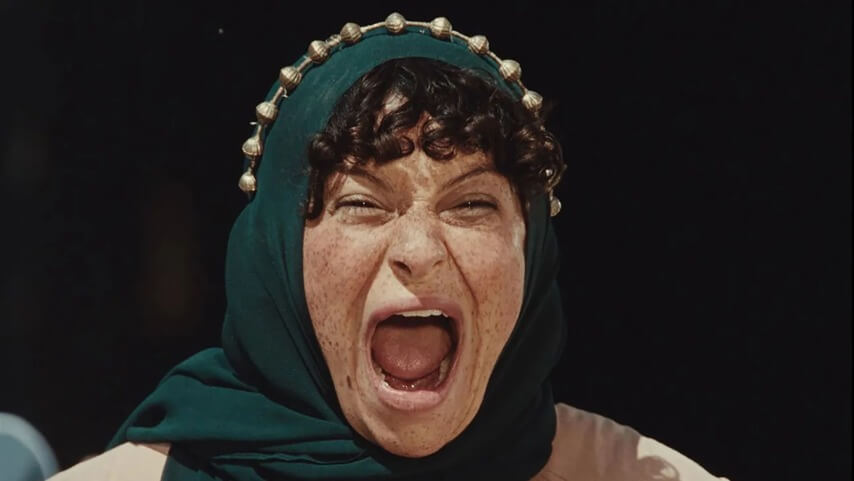
On paper, Hailey Gates possesses the necessary perspective to craft an incisive satire on this phenomenon. She is a seventh-generation Angeleno (her grandmother is celebrated filmmaker Joan Tewkesbury); she hosted the hit Viceland show States Of Undress about the intersection of fashion, women’s issues, and culture in countries considered political hot-spots; and, like most millennials, she came of age during the aftermath of 9/11 and the purposely vague “Global War On Terrorism” it prompted. Yet Atropia, her feature debut as a writer-director, is more of a scattershot riff on Hollywood’s complicity in the American imperial project than it is a salient investigation into the repercussions of this specific era of propaganda. While Gates wrote the film with Iraqi-American actress Alia Shawkat in mind for the starring role, its commentary on American Islamophobia stays on the surface.
Set in 2006, Atropia is based on a real-life training facility located just outside of Los Angeles, operated by the U.S. military and meant to mimic active combat zones. Recruits are sent in order to prepare themselves for the threats they will likely encounter on foreign soil, which here mostly involves suicide bombers (a donkey dummy among them), looters derogatorily dubbed “Ali Babas,” and uncooperative anti-Ameircan civilians. Not only are the cadets trained to spot these threats, but taught cultural norms—important phrases in Arabic and Kurdish, halal food restrictions, appropriate conduct between men and women—in order to curry favor with local officials and potential allies.
Bringing this mock village to life is an extensive troupe of performers tapped from L.A.’s vast pool of aspiring actors. Living on the compound for weeks on end, these roleplayers vary in shades of “authenticity” (some speak Arabic, but many are Mexicans deemed brown enough to play Iraqi), with many hinting that taking this gig is merely for green card purposes.