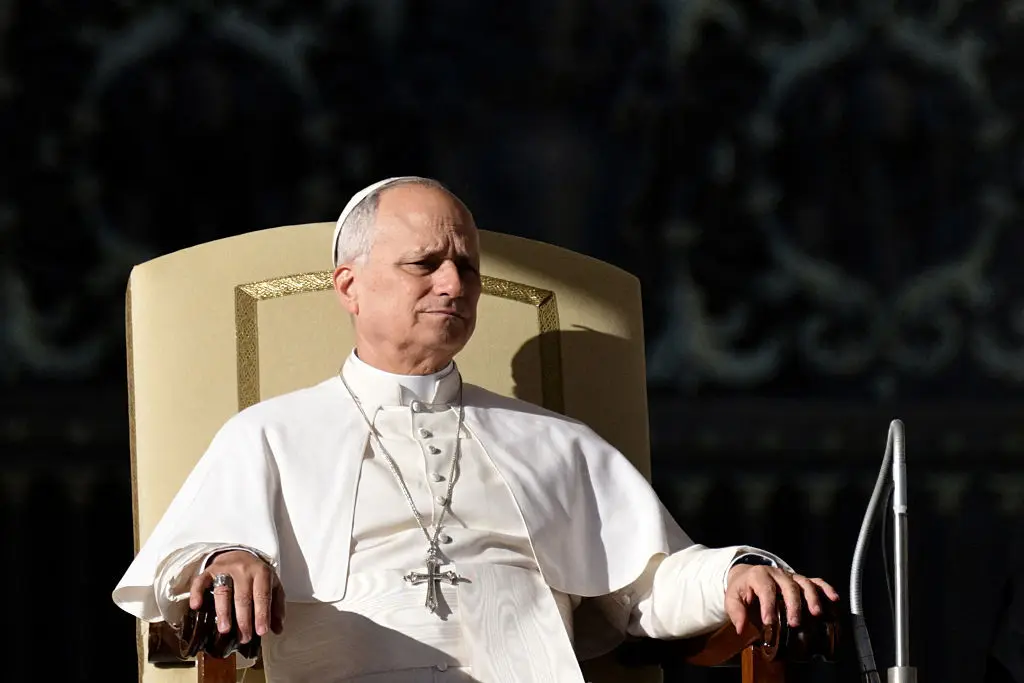
Pope Leo XIV urged faithful at his Dec. 10 general audience to confront death without fear by viewing it through the lens of Christ’s Resurrection, which reveals death as “the passage to eternal life.”
He emphasized that reflecting on death helps people discern their true priorities and live authentically, according to God’s will.
The Pope questioned modern attempts to escape or technologically overcome death, asking whether a deathless life would truly bring happiness.
He concluded his address by offering Advent blessings to English-speaking pilgrims and calling for a ceasefire between Thailand and Cambodia, decrying the effects of the war on civilians.
In his Wednesday General Audience address Dec. 10, Pope Leo XIV reflected on death and the modern world’s fear of it and presented the Resurrection as a lens that permits a proper view of the end of one’s life.
The Pope highlighted that humans have a unique capacity to fear or acknowledge death because they know they will die, while animals do not. He said that the knowledge of death can inspire a questioning of the “meaning, purpose and outcome of life.”
“Considering this aspect, one might then think that we are paradoxical, unhappy creatures, not only because we die, but also because we are certain that this event will happen, even though we do not know how or when,” he continued. “We find ourselves aware and at the same time powerless. This is probably where the frequent repressions and existential flights from the question of death originate.”
Citing St. Alphonsus Liguori, Pope Leo said that death should be looked at as a teacher — something that informs how daily life is approached.
“To know that it exists, and above all to reflect on it, teaches us to choose what we really want to make of our existence,” he said, adding that praying about priorities and what is important to God “is the secret to living authentically.”
Pope Leo also challenged the idea of “transhumanism,” warning that it is becoming a more prominent issue in the 21st century.
“[M]any current anthropological views promise immanent immortality, theorize the prolongation of earthly life through technology,” he said. “This is the transhuman scenario, which is making its way into the horizon of the challenges of our time. Could death really be defeated by science? But then, could science itself guarantee us that a life without death is also a happy life?”
He pointed to the Resurrection, saying that Christ’s conquering of death “reveals to us that death is not opposed to life, but rather is a constitutive part of it, as the passage to eternal life. The Pasch of Jesus gives us a foretaste, in this time still full of suffering and trials, of the fullness of what will happen after death.”
Pope Leo later concluded, “Thanks to Him, who died and rose again for love, with Saint Francis we can call death our ‘sister’. Awaiting it with the sure hope of the Resurrection preserves us from the fear of disappearing forever and prepares us for the joy of life without end.”
After his address, the Pontiff specially greeted English-speaking pilgrims at the audience, including those from the U.S., and extended his wishes for them to have a blessed Advent.
He then urged Thailand and Cambodia to call a ceasefire and return to dialogue about their border conflict, rather than continue their war, which he said “has claimed civilian lives and forced thousands of people to flee their homes.”
“I express my closeness in prayer to these dear peoples,” he said, “and I call on the parties to immediately cease fire and resume dialogue.”