
“I feel distressed,” Rosen told Iran International. “It seems as if I’m living the situation that I had as a hostage. My due process and the loss of my human rights now seem to be equal to those … who are now being sent back to Iran.”
Iranian officials say the United States has deported a second group of Iranians with a chartered plane carrying more than 50 nationals departing Mesa, Arizona on Sunday.
The first US deportation flight to Iran departed in late September with 120 deportees, representing a rare moment of cooperation between Washington and Tehran.
Many say they fled Iran fearing persecution including Christian converts, LGBTQ Iranians and dissidents. The Trump administration has defended its immigration crackdown as a measure to make America safer and remove what it deems “illegal alien criminals.”
Millions of immigrants entered the United States illegally under President Joe Biden and Trump’s pledge to seal US borders and conduct mass deportations helped deliver him re-election last year.
Iran is on a growing list of countries from which Trump has banned entry to the United States. In the wake of a deadly attack by an Afghan immigrant on national guard troops last month, the administration said even green card holders from the flagged countries might face expulsion.
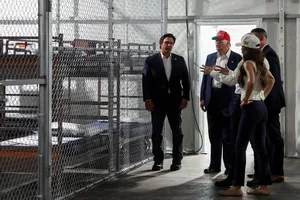 Trump admin’s green card review sparks fears of collective punishment
Some Iranians had already been deported to third countries earlier in the Trump administration.
Among them is 27-year-old Christian convert Artemis Ghasemzadeh who crossed the southern border seeking asylum but was instead handcuffed, shackled and flown by US authorities to a remote camp in Panama.
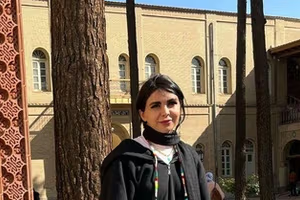 Deported by US, Iranian Christian convert stranded in Panama jungle camp
Iran International spoke to her in March. “We are not criminals,” she said in a voice message, explaining that she fears execution if returned to Iran.
Rosen, the co-founder of the research and information non-profit Hostage Aid Worldwide, said he was disturbed, alarmed and angry to learn about Iranians at risk of persecution being deported – not only religious minorities, but anyone who could be targeted by the state.
“I just read a story about two Christian Iranians who would be sent back and there seems to be no regard by the government that there would be persecution for them,” he said. “It really gets me. I’m very angry in in many ways because I feel there’s a sense of hopelessness.”
Faith leaders in Virginia have also raised alarms after US Customs and Border Protection arrested two Iranian Christian sisters — Mahan and Mozhan Motahari — in the US Virgin Islands despite the women having documents allowing them to remain in the country while their asylum cases proceed, according to Religion News Service (RNS).
Their attorney told RNS that CBP publicly posting photos of the sisters without
They remain detained in Florida while their lawyer seeks to expedite their case.
For Rosen the deportations conflict with values he believes the United States has long claimed to uphold.
“What’s happening right now is all these people who thought of America as the shining light on the hill, they’re losing their human rights in the United States, something that I could never conceive of in my entire life.”
Attorney Mahsa Khanbabai, an Elected Director of the Board of Governors for the American Immigration Lawyers Association (AILA) told Iran International that the United States is contravening its founding principles.
“The Constitution doesn’t apply sometimes to some people — it applies to all people, all of the time,” said Khanbabai, “It’s hypocritical for the US to criticize Iran for human rights violations while unfairly targeting Iranians here by weaponizing immigration laws to get around due process rights.”
Khanbabai underscore the broader systemic issue Rosen has been warning about.
Rosen served as a Peace Corps volunteer in Iran from 1967 to 1969, returned as press attaché in 1978 and was taken hostage during the upheaval of the revolution.
He says he never imagined he would one day defend Iranian refugees in the United States but feels compelled because of his connection to the country he once called his “second home.”
“I feel that we’re living in the dark ages in the United States right now,” he said. “It’s absolutely ugly.”
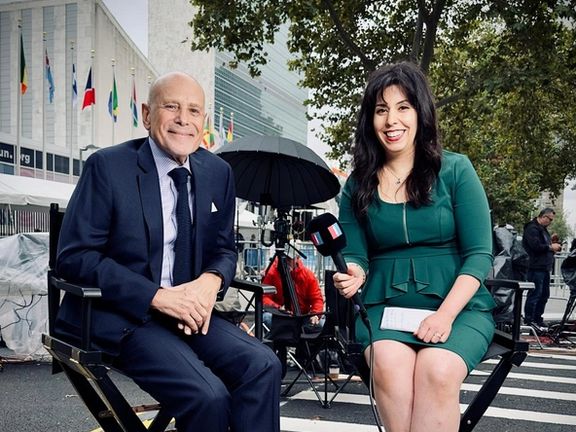 Barry Rosen in an interview with Iran International’s Negar Mojtahedi during the United Nations General Assembly (UNGA) in 2024.