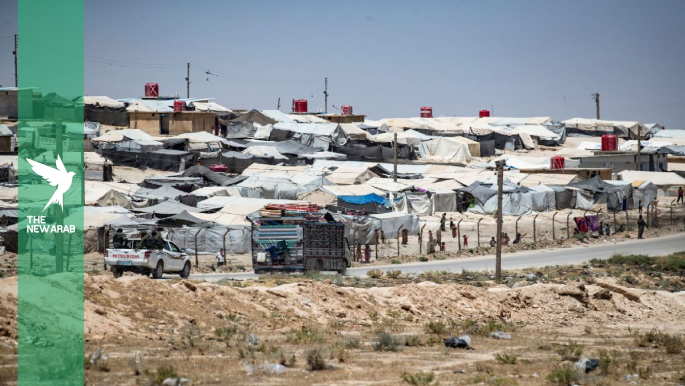
Al-Hol, which includes a high-security section for non-Syrian and non-Iraqi women and children, is northeastern Syria’s largest such camp [Getty]
More than a dozen women and children of various nationalities were caught trying to escape a northeast Syria camp that holds suspected relatives of Islamic State group militants, the facility’s director told AFP on Thursday.
Camps and prisons in Syria’s Kurdish-administered northeast hold tens of thousands of people, many with alleged or perceived links to IS, more than six years after the group’s territorial defeat in the country.
Al-Hol, which includes a high-security section for non-Syrian and non-Iraqi women and children, is northeastern Syria’s largest such camp, and its residents live in dire conditions.
Al-Hol’s director Jihan Hanan said 18 women and children “of various nationalities, including Russian” attempted to escape from the high-security area of the camp late Wednesday.
Without elaborating on how the escape attempt was carried out or thwarted, she said the region had been experiencing heavy fog for several days, and that the number of escape attempts “usually increases during bad weather”.
In September, Syrian Kurdish forces said they thwarted an escape bid by 56 residents from Al-Hol.
Hanan said the camp was currently home to more than 24,000 people – around 15,000 Syrians, 3,500 Iraqis and 6,200 other foreigners.
The Kurds have repeatedly called on countries to repatriate their citizens, but foreign governments have generally allowed home only a trickle, fearing security threats and a domestic political backlash, though Baghdad has accelerated repatriations to neighbouring Iraq.
In February, the Kurdish administration said it aimed to empty camps in the northeast of displaced Syrians and Iraqi refugees, including suspected relatives of militants, by the end of the year.
The following month, the Kurds signed an agreement with Syria’s new authorities to integrate their military and civilian institutions into the central government, but differences between the two sides have held up the deal’s implementation.
IS seized swathes of Syria and neighbouring Iraq in 2014, before being territorially defeated in Syria in 2019, but has since maintained a presence there, particularly in the country’s vast desert.