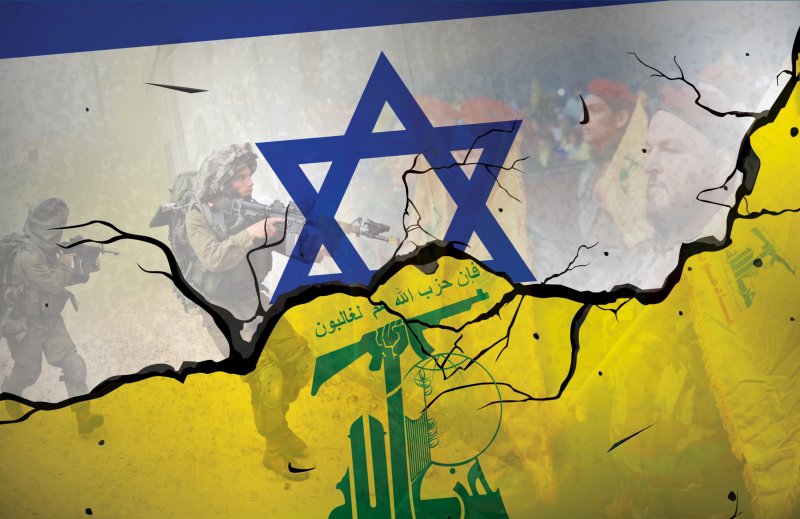
Israel has stepped up the pace, scope and intensity of its military strikes against Hezbollah targets along the Israel–Lebanon border and, at times, deeper inside Lebanese territory. These actions include air strikes, artillery fire and precision attacks aimed at Hezbollah positions, infrastructure and personnel. The escalation reflects Israel’s effort to increase pressure on the Iran-backed group amid ongoing regional instability and the broader fallout from the Gaza war.
Why is Israel increasing military pressure on Hezbollah now?
Israeli decision-makers argue that sustained pressure is necessary to deter Hezbollah from expanding hostilities and to prevent the group from turning the northern border into a permanent active front. Since October, repeated exchanges of fire have displaced tens of thousands of civilians on both sides of the border. Israel wants to restore a sense of security for its northern communities and signal that prolonged low-level conflict is unacceptable.
What role does Hezbollah play in Lebanon and the region?
Hezbollah is both a political actor and a heavily armed non-state military force. It holds seats in Lebanon’s parliament, provides social services, and maintains an armed wing stronger than the Lebanese national army in certain respects. Regionally, Hezbollah is a key part of Iran’s network of allied groups, often described as the “axis of resistance,” which also includes militias in Syria, Iraq and Yemen.
How are Israel’s strikes different from previous exchanges?
While border skirmishes have occurred before, the current phase is marked by greater frequency and more ambitious targeting. Israel is reportedly striking command centers, weapons depots and launch sites rather than limiting itself to immediate retaliation. The goal appears to be cumulative pressure, gradually degrading Hezbollah’s operational freedom without triggering a full-scale war.
Is Israel trying to provoke a wider conflict?
Israeli officials insist that escalation is meant to deter, not provoke, a broader war. However, critics argue that intensifying strikes risks miscalculation. Each attack raises the chance of civilian casualties or a high-profile incident that could push both sides beyond their stated red lines.
How has Hezbollah responded so far?
Hezbollah has answered Israeli strikes with rocket fire, drone launches and anti-tank missile attacks against Israeli military positions. Its leadership frames these actions as “measured responses,” emphasizing solidarity with Palestinians while claiming it does not seek a full-scale war. The group’s messaging aims to balance deterrence with restraint.
What impact is this having on civilians in Israel and Lebanon?
On the Israeli side, many residents of northern towns have been evacuated due to persistent rocket threats. In southern Lebanon, villages near the border have seen widespread displacement, damage to infrastructure and economic disruption. Schools, agriculture and local businesses have been severely affected, increasing humanitarian concerns.
Why is the northern front so sensitive for Israel?
Israel views its northern border as strategically critical because Hezbollah possesses a large arsenal of rockets and missiles capable of reaching deep into Israeli territory. Any sustained conflict there could overwhelm air defenses and cause significant civilian and economic damage. Preventing Hezbollah from entrenching itself near the border is therefore a high priority.
How does the Gaza war influence the Israel–Hezbollah dynamic?
The war in Gaza has reshaped regional calculations. Hezbollah presents its actions as part of a broader struggle against Israel, while Israel fears a coordinated multi-front confrontation. Each side is acutely aware that developments in Gaza can directly influence escalation or restraint on the Lebanese front.
What is Iran’s role in the current escalation?
Iran is Hezbollah’s primary sponsor, providing funding, weapons and strategic guidance. While Tehran publicly supports Hezbollah’s actions, it also appears cautious about provoking a direct confrontation with Israel that could draw in the United States. Many analysts believe Iran favors calibrated pressure rather than all-out war.
How is the Lebanese state responding?
Lebanon’s government has limited influence over Hezbollah’s military decisions. Officials have called for restraint and warned that a major war would devastate the country, which is already struggling with economic collapse and political paralysis. The Lebanese army remains largely sidelined, lacking both the mandate and capability to confront Hezbollah.
What is the international community’s reaction?
The United States and European countries have urged de-escalation while reaffirming Israel’s right to self-defense. At the same time, they warn that a broader conflict would destabilize the entire Middle East. Diplomatic efforts focus on preventing spillover while maintaining pressure on all parties to avoid miscalculation.
Are there diplomatic channels to reduce tensions?
Yes, but they are fragile. Indirect communication through mediators, including the United States and regional actors, seeks to maintain informal rules of engagement. These channels aim to clarify red lines and prevent incidents from spiraling into uncontrollable escalation.
What are Israel’s strategic objectives in pressuring Hezbollah?
Israel appears to be pursuing several objectives: restoring deterrence, pushing Hezbollah forces away from the border, limiting the group’s ability to launch attacks, and creating conditions that allow displaced Israeli civilians to return home. Whether these goals can be achieved without a larger war remains uncertain.
Can military pressure alone change Hezbollah’s behavior?
This is a central debate. Supporters of Israel’s approach argue that sustained strikes can impose costs that alter Hezbollah’s calculations. Skeptics counter that Hezbollah is ideologically committed and deeply embedded in Lebanese society, making it resilient to pressure and capable of enduring significant losses.
What risks does escalation pose to the wider region?
A major Israel–Hezbollah war could draw in regional and global powers, disrupt energy markets and trigger instability across multiple countries. Syria, already fragile, could become another battleground. Maritime trade routes and international shipping might also be affected if hostilities spread.
How does Hezbollah calculate its responses?
Hezbollah weighs domestic Lebanese considerations, regional alliances and deterrence against Israel. It must avoid appearing weak to its supporters while preventing catastrophic destruction in Lebanon. This balancing act explains its pattern of limited but persistent attacks.
What role does deterrence play on both sides?
Deterrence is central to the standoff. Israel aims to convince Hezbollah that continued aggression will be too costly. Hezbollah seeks to show it can impose pain on Israel without provoking full-scale war. The stability of this balance is inherently fragile.
Is a full-scale war inevitable?
Not necessarily. Both sides understand the enormous costs of an all-out conflict. However, the risk of unintended escalation is real. A single misjudged strike or mass-casualty event could rapidly change political calculations.
What scenarios could lead to de-escalation?
De-escalation could occur if a ceasefire or reduction in hostilities in Gaza lowers regional tensions, or if diplomatic efforts establish clearer separation along the border. International guarantees or renewed implementation of existing UN resolutions could also play a role.
How do UN resolutions factor into the situation?
UN Security Council Resolution 1701, which ended the 2006 war, calls for Hezbollah to withdraw north of the Litani River and for the Lebanese army to assert control in the south. Israel argues the resolution has not been fully implemented, while Lebanon and Hezbollah dispute Israel’s interpretation.
What is at stake for Israel politically and militarily?
Domestically, Israeli leaders face pressure to protect northern communities and restore security. Militarily, Israel must balance deterrence with the risk of overstretch, especially while engaged on multiple fronts. Politically, missteps could have long-term consequences for regional relations.
What is at stake for Hezbollah and Lebanon?
For Hezbollah, credibility as a resistance force is on the line. For Lebanon, the stakes are existential. A major war could devastate infrastructure, worsen economic collapse and deepen humanitarian crises, with recovery taking years or decades.
How might this escalation end?
The most likely outcome is neither decisive victory nor immediate war, but a prolonged period of heightened tension punctuated by periodic violence. Alternatively, a diplomatic breakthrough or a dramatic escalation could redefine the situation entirely.
Why does this situation matter beyond Israel and Lebanon?
The Israel–Hezbollah standoff is a key indicator of broader Middle Eastern stability. It reflects the interplay between state and non-state actors, regional rivalries and global power interests. How it unfolds will shape security calculations far beyond the immediate border.
What should observers watch in the coming weeks?
Key indicators include changes in the scale of Israeli strikes, Hezbollah’s choice of targets, civilian casualty figures, and diplomatic engagement by major powers. Developments in Gaza and Iran’s posture will also heavily influence the trajectory.
Bottom line: what does the current escalation signify?
Israel’s intensified strikes are a calculated attempt to pressure Hezbollah and restore deterrence without crossing into full-scale war. Hezbollah’s responses show determination to resist while avoiding total confrontation. The situation remains volatile, with high risks and limited room for error, underscoring how easily localized clashes can threaten regional stability.