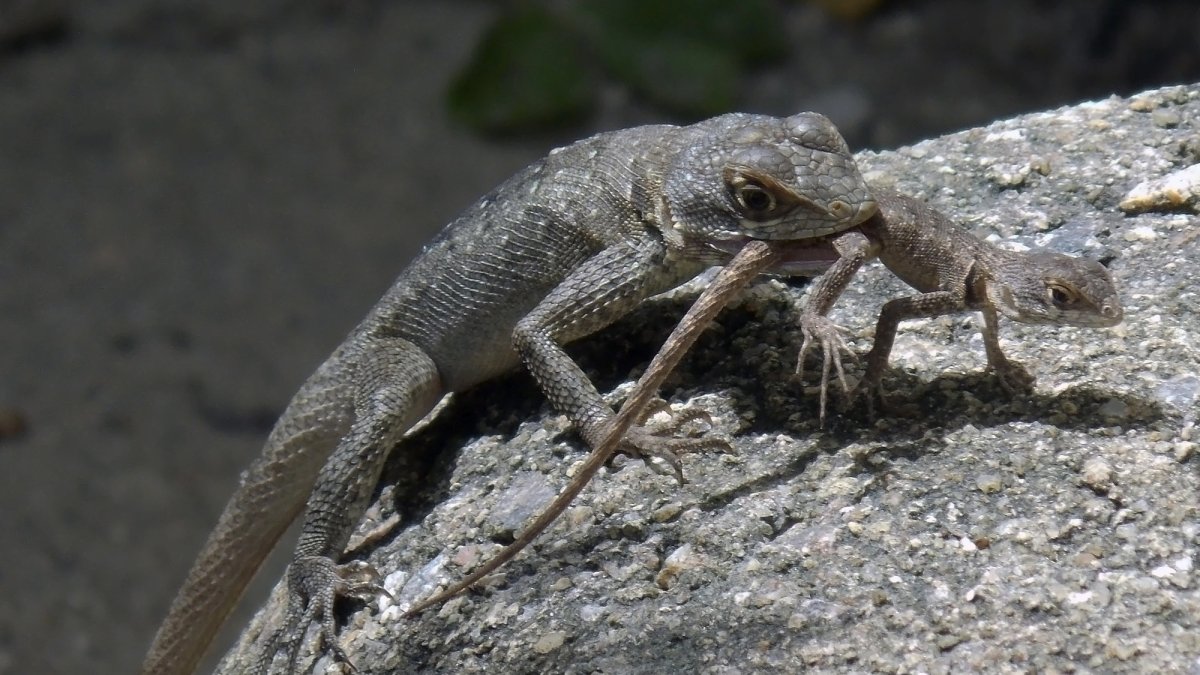
“In general, cannibalism of offspring is super widespread,” says Aneesh Bose, a behavioral ecologist at the Swedish University of Agricultural Sciences in Uppsala, Sweden. Bose has long studied the phenomenon of animals who turn from child-rearing to child-eating, and in 2022, he authored a review of prior research on the topic. “It’s a tool that’s in a lot of species’ tool belts,” Bose tells Popular Science; something that is “baked into their reproductive strategies.”
Of the more than 1,500 known cannibalistic species, parent-offspring cannibalism has been documented in creatures as diverse as sand goby fish, stag beetles, and domestic pets. Strangely, this behavior, also called filial or brood cannibalism, often coexists with parenting: Many of the species known to eat their young typically take care of them. It seems not only grisly, but illogical and counterproductive.
If animals have an instinct to reproduce and ensure survival for their offspring, what forces could drive them to destroy those same offspring? Though it might appear contradictory, there are many reasons why eating one’s offspring can actually benefit an animal’s long-term reproductive success.
Different animals have different reproductive strategies
Reproduction is an investment, and parenting an even bigger one, but different animals invest different amounts of time, energy, and resources into their babies. Those least likely to eat their young are slow-reproducing animals like elephants or whales, which raise only one baby over a long period of time. “If you’re stuck caring for a single offspring and putting a lot of effort into it, then you are less likely to expect cannibalism to arise,” says Bose.
Animals more likely to eat their young are those with faster reproductive cycles. “Species that have large broods might be more inclined to partial brood cannibalism, just nibbling on a few offspring here and there,” Bose explains, because the lives of each individual are less important to overall reproductive success.
Partial brood cannibalism means sacrificing a few to benefit many
Partial and total brood cannibalism (eating some babies vs. all of them) are really two different behaviors with different rationales. Partial brood cannibalism is most common in animals like insects, spiders, and fish, which may have hundreds or even thousands of babies at one time. Some of these parents eat a few offspring if there’s nothing else to eat. Others do so to ensure the offspring have enough food to go around. A 1987 study of carrion beetles suggested that when food is scarce, the insects eat some of their offspring so that the survivors are well-fed.
Some mammalian parents, including familiar animals like cats, dogs, and pigs, may eat individual members of a brood that are stillborn or have a low chance of survival due to illness. This may be a way to reabsorb the energy spent on producing the offspring in the first place—birth is always a draining affair for moms. Researchers have identified many other reasons for partial brood cannibalism, including reducing overcrowding, keeping an even sex ratio in the brood, or even the influence of a parasite infection.
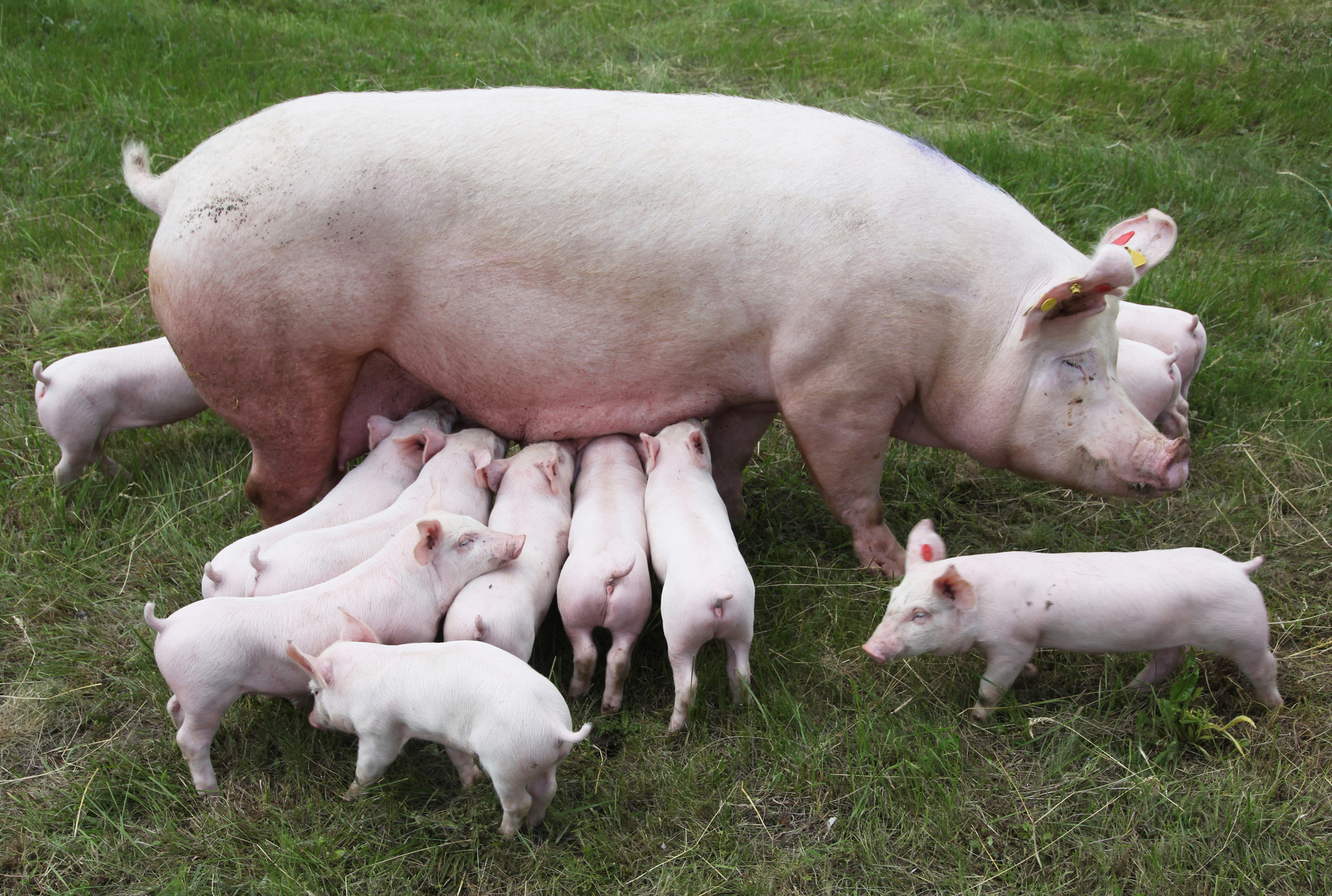 Don’t worry mother pigs don’t eat their young…usually. Image: DepositPhotos
Partial brood cannibalism is also observed in cases where one parent is reducing the number of offspring that are not their own genetically. Some father fish can “smell” whether babies are theirs or not from chemicals released during hatching, and a 2003 study of bluegill sunfish demonstrated that fathers who smell another male’s offspring in the brood eat more babies in response. However, Bose notes, “this goes against the wishes of the mother,” because she is still related to all of the offspring and wants to ensure their survival.
This can lead to fights breaking out between a mother fish who wants to protect her young, and a father who wants to snack on them. In fish species where males and females coparent, mothers often guard the eggs while fathers patrol the area for danger.
“This is a way that the female can keep a close eye on the brood and make sure that the dad doesn’t do anything that she doesn’t want,” says Bose. “The conflict [over cannibalism] is resolved by the female keeping the dad away from the offspring.”
Total brood cannibalism means starting over
Total brood cannibalism “tends to pop up in situations where brood size can vary dramatically from one reproductive attempt to another,” says Bose. “And if you get stuck with one reproductive bout where you just happen to have a small brood, or smaller than you are hoping for, then you might have cases where the parent consumes everybody in order to restart and try to get a new brood of a bigger, more valuable size, sooner.”
This type of brood cannibalism is seen in small mammals such as rodents and rabbits. Studies have identified stress as a factor that influences female rodents to eat their young. In a dangerous environment when the offspring’s chances of survival are low, total cannibalism increases the female’s own chance of surviving and reproducing again when conditions are safer.
Related ‘Ask Us Anything’ Stories
There’s still more research to be done
Most of the scientific research on parent-offspring cannibalism to date has been done on fish, Bose explains, in part because “fish have a broad range of life histories and a lot of diverse parental care strategies.” There’s also been a significant amount of research on rodents, but far less on other types of animal.
Studies have been split between observation in the wild and controlled laboratory settings. While both play an important role in animal behavioral research, there’s always the chance that artificial lab conditions may affect the rates of parent-offspring cannibalism. There are also many other questions surrounding parent-offspring cannibalism beyond “What benefit do animals gain from it?”
Bose identifies how parent-offspring cannibalism might evolve, and how it might develop during the lifetime of an individual animal, as some of the areas that have been understudied.
Overall, scientists have found the topic much more complex, and widespread, than was previously thought. “We’re just realizing now that there are so many motivating factors behind this behavior,” says Bose. “And we’re probably going to uncover more reasons in the future.”
In Ask Us Anything, Popular Science answers your most outlandish, mind-burning questions, from the everyday things you’ve always wondered to the bizarre things you never thought to ask. Have something you’ve always wanted to know? Ask us.

2025 PopSci Outdoor Gift Guide
Andrew’s work has appeared in Atlas Obscura and Eaten magazine.