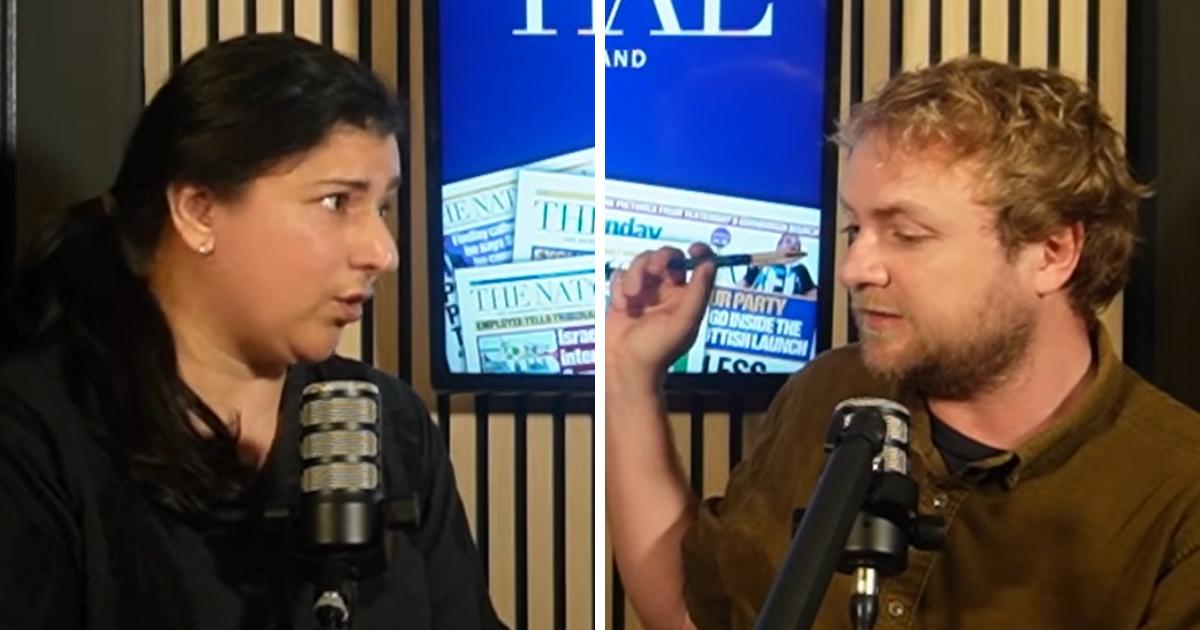
Robina Qureshi, the chief executive of Positive Action in Housing, explained to The National Podcast how people seeking refuge in the UK are told they cannot work – and then demonised for not contributing to society.
Qureshi has worked with asylum seekers and refugees for more than three decades and was the driving force behind “Room for Refugees”, the programme which sees members of the public offer space in their homes to people seeking asylum.
Started in 2002 in response to an influx of Iraqi asylum seekers, Rooms for Refugees now has around 20,000 hosts across the UK, Qureshi said – and “also some in America”.
“We’ve housed people even in Chicago and Hollywood,” she said. “People who are very well known and famous and all the rest of it – but … just want to do things anonymously, and that’s how we like to work.
“We don’t want to parade it. I just think there’s a lack of dignity in that.”
Speaking about the UK’s asylum policy, Qureshi said it could be improved in a number of ways, including:
Directly investing in local communities and housing projects instead of paying billions of “empty” money to firms to source rented accommodation for people in the Home Office system.
End the “demonisation” of immigrants in political rhetoric and the media.
Give people the right to work in their own profession from day one, rather than banning them from work and forcing them to take state handouts.
On the right to work – a key issue for campaigners including the Lift The Ban coalition of more than 300 charities, trade unions, businesses, and other groups – Qureshi went on: “Would it not be better to ask the question of every person seeking asylum here: ‘By the way, what’s your occupation?’
“Actually, when we take referrals from people, one of the questions we ask is, what was your previous occupation prior to you claiming asylum?
READ MORE: ‘Shelve the gimmicks’: Home Office urged to give asylum seekers right to work
“You’d be amazed at the wealth of, not just experience, but skills and qualifications that there are amongst individuals that are basically being forced into not working – and then being targeted for not working.”
Qureshi recounted the story of one Palestinian medic in England who reached out to her charity for help.
“There was an asylum seeker who was on £9 a week in a hostel,” she said. “He wrote to us – we get these calls, or letters or emails, whatever, thousands in a month – he wrote to us and said, ‘Look, I am a doctor, I’m an orthopaedic surgeon, who’s Palestinian, and I have been allowed to work, but I’m still claiming asylum …
READ MORE: Refugees in Scotland on why they want to work and contribute
“‘I’ve been successful in getting a job, which is 200 miles away. If I don’t have help with accommodation and if I’m not able to get the train ticket and money to buy my stethoscope and my first day’s uniform for work, then I can’t take that job.’
“So here you have a situation where, are we going to allow this person to stay in a hotel? This is the government’s plan. They’re not helping them …
“Why is a small charity in Glasgow helping somebody hundreds of miles away?”
She added: “My question is, why are you making it so hard for this country to actually build itself up? Why harm your own society?
“That’s precisely what’s happening, and the far right is capitalising on it.”
You can find the full episode of The National Podcast on YouTube, Spotify, or wherever you get your podcasts.