Twitter co-founder Jack Dorsey has made good on a promise to revive his beloved six-second video platform Vine. He has relaunched it as diVine and brought back over 100,000 archived videos that were on Vine before it was shut down.
As Futurism notes, this is likely only a small fraction of the platform’s original database. In its heyday a decade ago, Vine had over 200 million monthly active users, but was shut down in 2016.
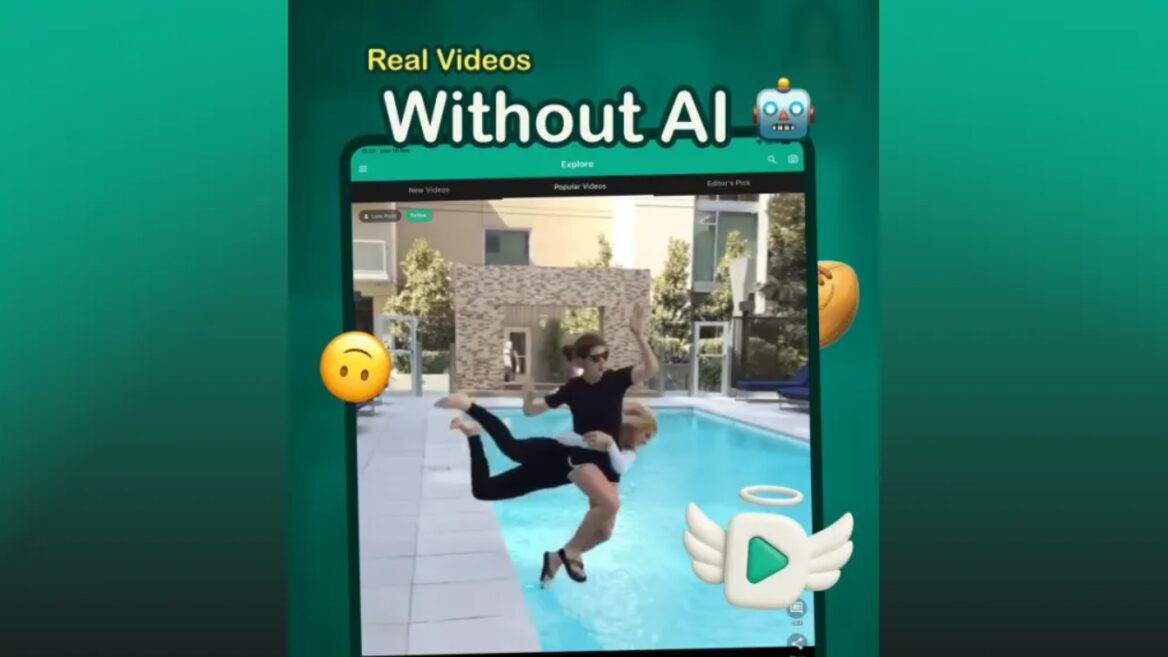
One of the features of the updated Vine is that content created with the help of artificial intelligence is strictly prohibited, and any suspicious use of artificial intelligence will be flagged and not allowed to be published. This sets diVine apart from other short-form video platforms that are teeming with AI content.
In July, billionaire Elon Musk announced his intention to bring back Vine, «but in the form of artificial intelligence.» He had previously hinted that he was working on a reboot of the service. Vine was acquired by Twitter in 2012 for $30 million and was owned by Jack Dorsey at the time of its closure.
Old Vine videos have been meticulously archived by a group called Archive Time, «an informal collective of archivists, programmers, writers, and chatterboxes dedicated to preserving our digital heritage.»
Now, former Twitter employee Evan «Rabble» Henshaw-Plath, who works at Dorsey’s nonprofit organization «And Other Stuff,» has led an initiative to restore the video platform’s content.
«Companies see the interest in AI and think that’s what people want. They mislead people by saying, yes, people interact with it, yes, we use these things, but we also want to control our lives and our social experiences. So I think there’s a nostalgia for the early Web 2.0 era, for the blog era, for the era that gave us podcasting, the era when you were building communities, not just playing with an algorithm,» he said.
Not everyone can sign up for diVine right now, but the new app is taking an interesting approach. The developers are prioritizing the roughly 60,000 creators whose videos they were able to save, allowing them to reclaim their Vine accounts and even post new videos.
«Well, that was quick, within four hours 10,000 people had joined the divine.video test,» Henshaw-Plath wrote.
However, they are strictly prohibited from publishing AI-generated content. According to TechCrunch, Henshaw-Plath is using technology from the human rights nonprofit Guardian Project to verify whether a video was recorded on a smartphone.
The new app is also built entirely on an open-source protocol called Nostr, «giving developers the ability to build next-generation apps without the need for venture capital, toxic business models, or huge engineering teams,» Dorsey said.
Although the app is available on Android, don’t expect diVine to appear on Apple’s App Store anytime soon.
«Apple, as always, is disappointing and doesn’t understand the point of App Store reviews. Just got rejected again,» Henshaw-Plath wrote in a separate post.