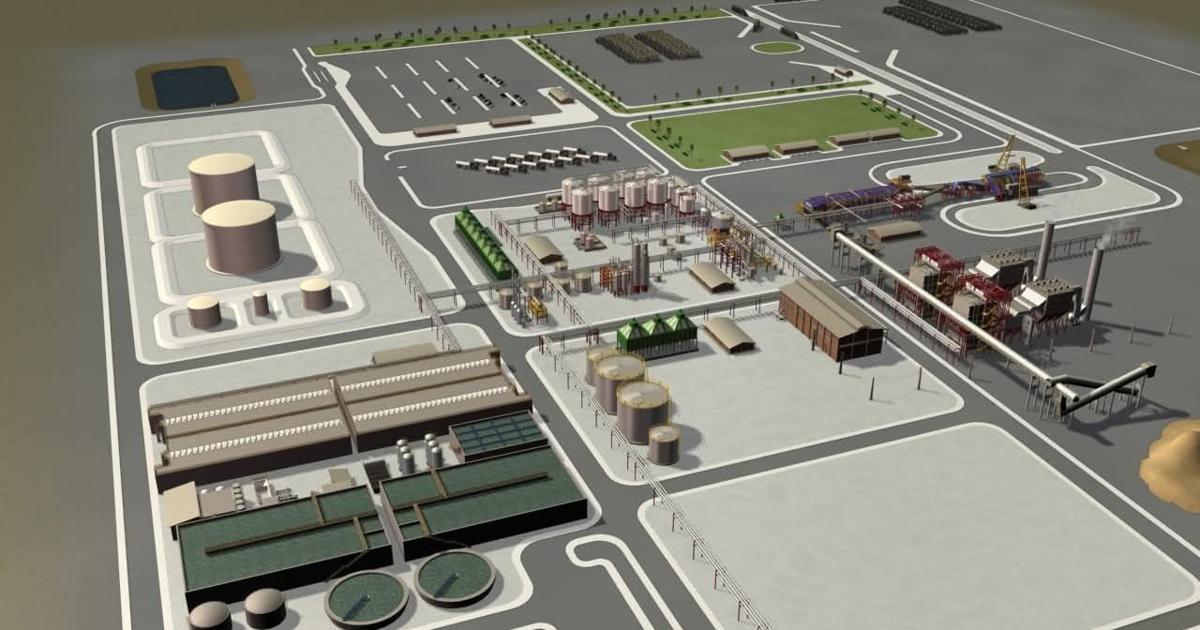
IMPERIAL COUNTY — California Ethanol + Power (CE+P) and the Imperial Valley Economic Development Corporation (IVEDC) announced that the planned renewable fuel and energy campus Sugar Valley Energy (SVE) has been selected to receive a Jobs First Grant through the Southern Border Jobs First Collaborative. The award represents a significant milestone for the project and for Imperial County, one of California’s most economically challenged regions.
In a statement, CE+P said the Jobs First Grant will support critical activities, including geotechnical engineering, foundation design, agricultural preparation, and procurement of key components for SVE’s integrated clean-energy system. These steps are essential to advancing construction readiness and securing full project financing for the $1.28 billion renewable infrastructure development, which will create 250 direct full-time living wage jobs and 15,000 jobs from planning through construction and plant start-up. The project will work in tandem with Imperial Valley College and the Imperial County Workforce Development Office to maximize local training and hiring opportunities.
“The Jobs First Grant accelerates the final steps needed to bring one of California’s most important clean-energy and agricultural revitalization projects across the finish line,” said Dave Rubenstein, President & CEO of California Ethanol + Power. “Sugar Valley Energy will deliver long-term climate benefits, stable employment, and a transformative new industry for Imperial County.”
The Catalyst Last Mile Proposal was submitted by IVEDC in partnership with CE+P, which has already invested $27 million to advance SVE from concept to shovel ready. The grant will immediately support jobs for key local project partners, including Landmark Consultants, Duggins Construction, Benson Farms, and Dubose Design Group and enable the project to begin construction on foundational elements of the ethanol plant.
“This award represents a major step forward, not only for the Sugar Valley Energy project, but for thousands of Imperial Valley families who deserve access to high-quality jobs and long-term economic opportunity,” said Timothy Kelley, President & CEO, Imperial Valley Economic Development Corporation. “The Jobs First Collaborative is helping remove barriers that have historically held this region back.”
Developed by CE+P, Sugar Valley Energy will be the first-of-its-kind project in North America. Once operational, the integrated biorefinery campus in Brawley, California, will produce more than 73 million gallons of low-carbon ethanol, 771 million standard cubic feet of renewable natural gas (RNG), and 41 megawatts of renewable electricity each year from sustainably grown sugarcane.
Sugarcane cultivated on more than 48,000 acres of Imperial County farmland will serve as feedstock for the project, creating new revenue streams for more than 50 farming entities and supporting 2,000+ local agricultural jobs. The crop replaces less profitable forage crops and will help fill the void left by the 2025 closure of the Spreckels Sugar Company plant, which eliminates hundreds of jobs and dismantles California’s last sugar beet processing industry.
Imperial County continues to face persistent underinvestment and the highest unemployment rate in the nation, notably 20.2% as of July 2025. The Jobs First Grant helps remove barriers to economic mobility by strengthening workforce development and local hiring pathways, expanding clean-energy and wastewater infrastructure, supporting agricultural diversification and resilience, creating jobs in a future-facing, low-carbon industry, and catalyzing regional investment tied to more than $200 million in federal investment tax credits.
A recent impact analysis found that construction and startup operations for SVE will generate more than $928 million in direct economic activity, creating 15,000+ construction and startup jobs and 250 long-term, family-sustaining operations jobs.
As California implements AB 30 and prepares for statewide E15 adoption, Sugar Valley Energy is positioned to become a major producer of ultra-low-carbon renewable fuel that supports the state’s climate goals and Low Carbon Fuel Standard (LCFS). The project has completed environmental permitting, secured site control, signed off-take agreements, and executed a fixed-price EPC contract with Hoffman Construction, significantly reducing cost and schedule risk.