If I told you 15 percent of S.C. voters were very concerned about “wokeness” or DEI or LGBTQ policies “infiltrating state government,” those of you on the left would probably breathe a sigh of relief. And those on the right would probably call the number a hoax.
Ditto if I said 17 percent want a DOGE-style organization taking its ax to state government.
Hold those thoughts for a moment while we talk about Gov. Henry McMaster’s internal polling, parts of which The Post and Courier’s Nick Reynolds guided us through on Wednesday.

Scoppe
This poll included a lot of answers you’d expect, a few that might surprise you and several that could challenge Mr. McMaster’s approach to governing if he’s concerned about polling — which he obviously is since he’s still paying someone to do it for him and which he really shouldn’t be since he’s run in his last gubernatorial election.
To me, the most interesting questions involve economic development and the environment. One of the most important arguments Mr. McMaster has brought to South Carolina’s Republican dialogue is the proposition that growing our economy can co-exist with protecting our environment. I think he’s spot-on, but I also realize there will always be conflicts where you have to pick one over the other.
When Mr. McMaster’s pollster asked about his balance idea, an impressive 58 percent said conservation and economic development should go hand in hand, with neither more important than the other. But a healthy 33 percent said conserving South Carolina’s “natural treasures” should be the top priority, even if it means putting the brakes on some development projects.
As those numbers would predict, when respondents were asked to make a binary choice between economic development and conserving our “natural heritage,” 65 percent chose conservation, while just 24 percent said economic development.
Those numbers are hard to square with the McMaster Commerce Department’s love affair with AI data centers. In addition to those centers’ tendency to suck up our diminishing water resources, utility executives say they have to build out massive new power plants to feed the centers’ insatiable appetite for electricity. In retrospect, it begins to look like the data centers were a driving force behind that massive new energy law the Senate got hoodwinked into passing last year.
My biggest concern about the data center boom is that the rest of us will have to pay to build those power plants, but most people in the environmental community argue that even the most benign fossil fuel — natural gas — needlessly and even irreparably damages our air and water.
Now, let’s go back to that question about 15 percent of S.C. voters worrying about wokeness, because this column isn’t about data centers, or really about any of the individual findings of the McMaster poll, as interesting as some may appear on the surface. Until you dig down a bit.
It’s about who was polled, which you might also think of as who matters, to the governor and to the lawmakers he obviously wants to influence by publicly releasing his polling numbers.
The wokeness question is from the McMaster poll, which reported the results as 66 percent of respondents saying they were worried about the issue. But that wasn’t 66 percent of S.C. voters. It was 66 percent of Republican primary voters, and Republican primary voters constitute only 23 percent of South Carolina’s registered voters. Multiply those two percentages together, and you have 15 percent of our state’s registered voters concerned about this problem — which is such a low percentage that no one should really care. But of course they do.
Now, I have no doubt that many of the people who vote Republican in the general election but boycott the primaries feel the same way. But as this poll reminds us, Republican politicians don’t care about them. By which I mean many of you. They only care about people who vote in the GOP primary. They take the rest of you for granted, because they know you’re not going to vote for a Democrat in November. They’ve got decades of election results to back them up.
This isn’t just about Republicans and certainly not just about Mr. McMaster. In Democratic states, the Democrats care only about people who vote in Democratic primaries. Of course here, Democrats matter even less than November Republicans to the governing class. Here, Democrats do good to win in districts that were drawn to make sure they will win, as some were in order to draw many more adjacent districts where only Republicans can win. That’s why it’s so funny to hear Republicans complaining about black-majority districts, which are what transformed their party into the ruling class.
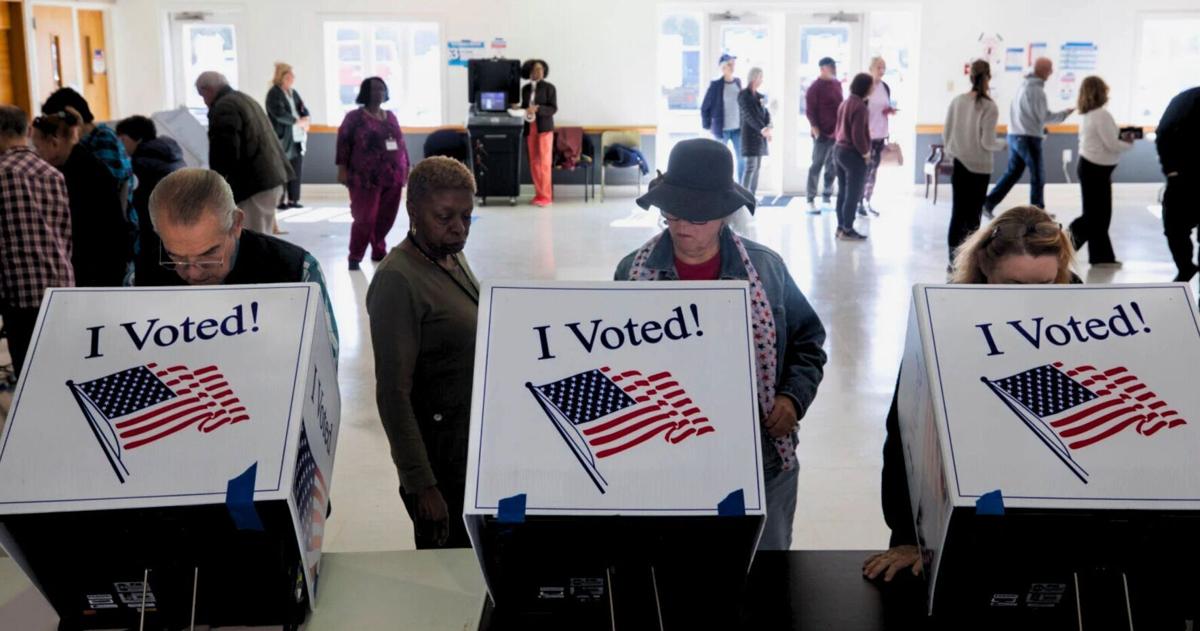
I don’t like having safe Republican districts or safe Democratic districts for many reasons, but mostly because they allow — invite, actually — politicians to ignore all the voters except those who vote in their primary. That’s not going to change until we change how we look at candidates. And the first step toward making that happen — yes, regular readers have figured out what’s coming next — is for more of us to vote in the primaries of the party that controls South Carolina.
Heck, if just the people who vote Republican in November would vote in Republican primaries, we’d wipe out the Freedom Caucus and its fellow travelers in two election cycles. That wouldn’t make safe districts go away — if anything, it might make more Republicans win in November, which is why Democrats freak out whenever we say more people need to vote in the Republican primary. (Please take note, all you GOP conspiracists who are convinced Democrats are just itching to sabotage “your” primary.)
But if all the November Republicans voted in the GOP primaries, instead of listening to what 15 percent of S.C. voters have to say, our politicians would have to listen to 60 percent of us.
Click here for more opinion content from The Post and Courier.