“Our economy is humming,” said Alex Beck, a workforce specialist at the Brattleboro Development Credit Corporation who helped orchestrate the refugee recruitment. “We have some employers that do not have any vacancies for the first time in years.”
The influx of immigrants has begun to address Vermont’s greatest economic challenge: a stagnant, aging population with too few workers, students, and taxpayers. In Brattleboro, far from the state’s business hub of Burlington, the transformation has been particularly palpable.
“As you go around town, go to the bank, go to the grocery stores and the schools, you see how the community has changed in a positive way,” said Joe Wiah, Vermont director of the Ethiopian Community Development Council, a refugee resettlement agency.
But new restrictions on legal immigration following a deadly shooting in Washington, D.C., in November, could stem the flow of such workers to Vermont and threaten the gains the state has made. If the policies result in the deportation of Afghans already in Brattleboro, Beck said, the economic impact would be akin to a major company shutting its doors.
“It’s going to be bad,” he said. “It will harm the community fabric that these people are a part of.”
Federal authorities have charged Rahmanullah Lakanwal, a 29-year-old Afghan refugee, with shooting two members of the West Virginia National Guard near the White House the day before Thanksgiving, killing one, Army Specialist Sarah Beckstrom. Lakanwal, who authorities say fought in a CIA-trained paramilitary unit in Afghanistan, has pleaded not guilty.
After the shooting, the Trump administration immediately halted visa requests from Afghans who helped the United States during its two-decade occupation of their country, and subsequently stopped applications for green cards and citizenship from people from 19 countries. It also froze all asylum claims.
The shooting and the crackdown that followed have shaken the estimated 650 Afghans living in Vermont, as well as other recent immigrants, according to Tracy Dolan, the state refugee director.
“They feel terrible for what happened,” she said. “The Afghans, in particular, feel afraid right now. They feel shame.”
One recent Afghan immigrant, who asked to be identified only by his first name, Sayed, for fear of retribution, said he and his fellow countrymen are alternately upset over Beckstrom’s death and worried about being punished for the actions of a man they do not know. Many Afghans who supported the US military have been waiting for years for family members to join them here; others have been marooned in Pakistan as they seek safe passage.
“They risked their lives,” said Sayed, who works for the Burlington-based Vermont Afghan Alliance. “They were shoulder-to-shoulder with US soldiers.”
Some in Vermont worry about the broader implications of Trump’s latest crackdown. The state has one of the oldest populations in the nation — and little prospect of addressing its workforce shortage organically. Every year, about 5,300 Vermonters enter 12th grade, while about 17,150 retire, according to the Vermont Futures Project, which advocates for population growth.
“We could keep every single kid here — we could hold them hostage — and we couldn’t fill enough jobs,” said Jen Stromsten, director of programs for the Brattleboro Development Credit Corporation.
Vermont has among the lowest unemployment rates in the country and in recent years has had two job openings for every person seeking work, according to US Bureau of Labor Statistics data. Meanwhile, wages remain stubbornly low, while prices are average, leading to a wider gap than other New England states.
The Vermont Futures Project has identified strategies to increase the state’s population by about 150,000, or 23 percent, over the next decade. Those include recruiting remote workers and veterans, retaining young Vermonters, and courting immigrants.
“For the purposes of having a robust, dynamic economy that creates opportunities for people here and elsewhere — whether you’re coming from New Jersey or New York or Afghanistan — right now we just need more players on Team Vermont,” said Kevin Chu, founder of Vermont Futures.
Over the past 15 years, Chu said, Vermont has gained more workers through international migration than any other pipeline.
“And those folks aren’t just workers,” he said. “They’re taxpayers. They’re citizens in the community. They’re kids in the school system. And they’re opening new businesses.”
Though previous proposals to bring refugees to Vermont hit resistance — including the 2017 defeat of the mayor of Rutland largely due to his support for resettlement of Syrians — the current wave appears to have garnered relatively broad support. Among its champions is Governor Phil Scott, a moderate Republican.
“I think it really does enhance our communities. It brings a lot to the table,” he said at a news conference on Dec. 3. “We have workforce challenges, so we need more people, and they have skills, and they’re very enthusiastic about acclimating to the United States and to Vermont, in particular.”
Scott said he supports efforts to determine whether other Afghans in the country, particularly those who served in the military, pose a security risk to the United States. But he otherwise opposes the Trump administration’s new limits on immigration.
“I don’t think this one situation should determine how we treat our Afghan population throughout the United States,” he said.
State officials say Afghan immigrants have filled key roles in manufacturing, food production, schools and hospitals — particularly in and around Brattleboro and Burlington.
“They are often the second and third shifts at factories that wouldn’t be able to run without this workforce,” said Dolan, the state refugee director. “They’re really doing the hard work.”
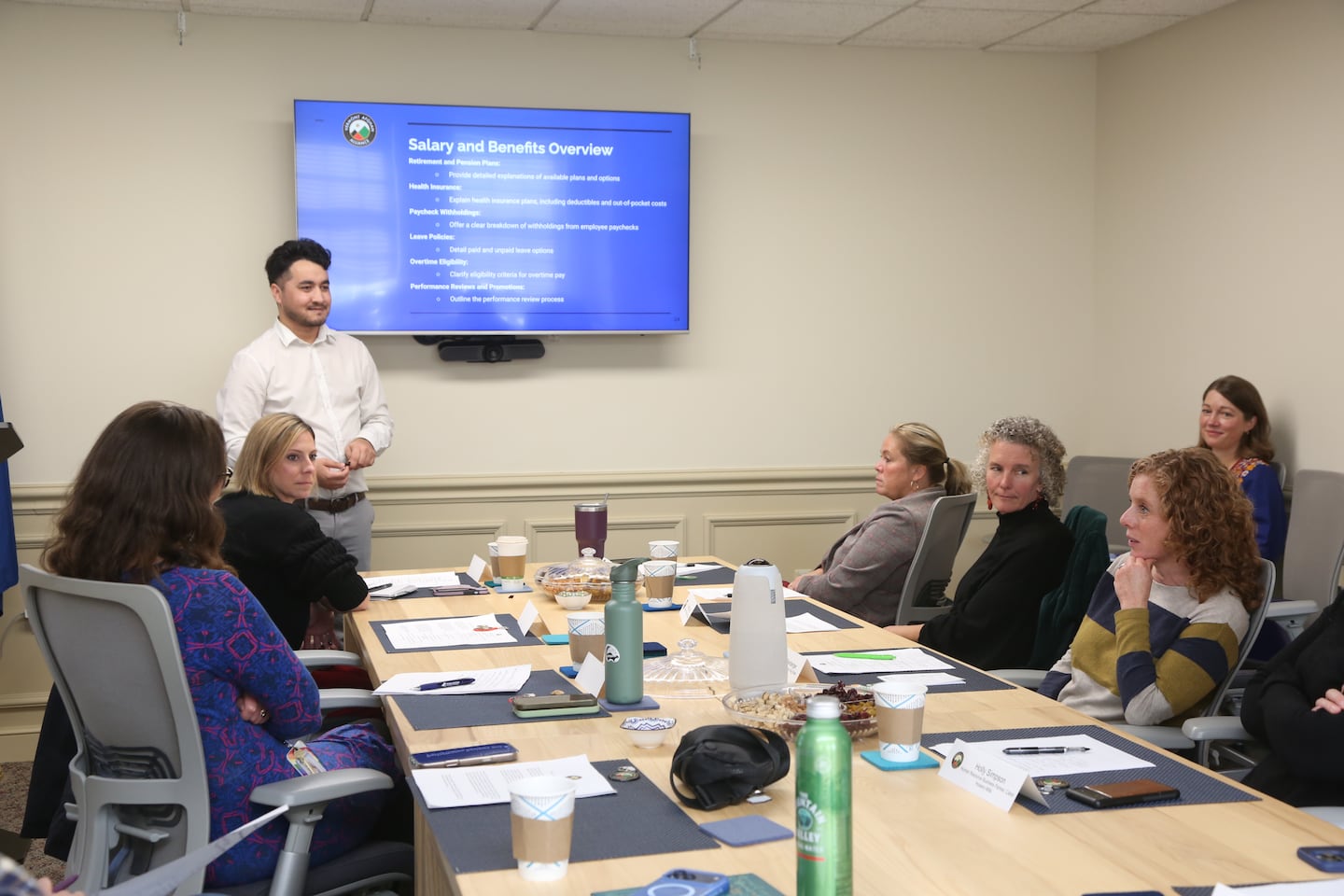
And according to Wiah, of the Ethiopian council, Afghans who cooperated with the United States and were forced to flee tend to be highly educated. Those who’ve moved to Vermont include doctors, lawyers, engineers, mechanics, helicopter pilots, police officers, and artists, he said.
“Lots of them are wildly overqualified,” said Stromsten, of the Brattleboro Development Credit Corporation.
That can cause its own problems, when licensing barriers prevent newcomers from making full use of their skills and education. Sayed mentioned a doctor who previously worked at the US embassy in Kabul and who is now serving as a medical assistant at a Burlington hospital.
There have been other challenges. Sayed, who has helped more than 100 Afghans find jobs in the state, said the language barrier and a lack of transportation often stand in the way of employment.
He and others have held trainings for employers and employees alike. He’s had to explain to employers they must provide a place for Muslims to pray throughout the day and shouldn’t expect those workers to show up on Eid, the annual holiday marking the end of Ramadan.
Regardless of the challenges, many businesses appear eager to hire Afghans and other legal immigrants.
“I would say that our refugee folks that come to us are our best employees,” said Cheray MacFarland, director of marketing and purchasing at City Market, a Burlington-based food cooperative. “They’re just so happy to be part of a business that supports them.”
For Sayed, dwelling on decisions that he disagrees with isn’t helpful; so he keeps his head down and tries to support his people and improve his adopted home.
“When we are trying hard, working, contributing to different things in the state, thinking as if you’re a Vermonter, that might create change,” he said.