‘WIN-WIN’:
The Philippines, and central and eastern European countries are important potential drone cooperation partners, Minister of Foreign Affairs Lin Chia-lung said
By Huang Ching-hsuan / Staff reporter
Minister of Foreign Affairs Lin Chia-lung (林佳龍) in an interview published yesterday confirmed that there are joint ventures between Taiwan and Poland in the drone industry.
Lin made the remark in an exclusive interview with the Chinese-language Liberty Times (the Taipei Times’ sister paper).
The government-backed Taiwan Excellence Drone International Business Opportunities Alliance and the Polish Chamber of Unmanned Systems on Wednesday last week signed a memorandum of understanding in Poland to develop a “non-China” supply chain for drones and work together on key technologies.
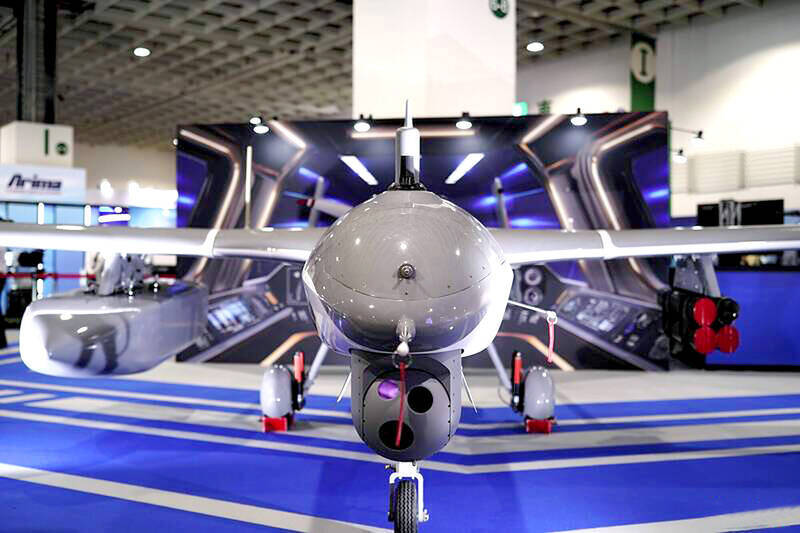
Photo: Chen Chih-cheng, Taipei Times
Asked if Taiwan prioritized Poland among central and eastern European countries in drone collaboration, Lin said: “Yes, we already have joint ventures with Poland.”
Taiwan also collaborates with the Baltic states and the Czech Republic, he added.
As Russia often uses drones to harass its neighbors, countries in central and eastern Europe have rich drone experience, so the Ministry of Foreign Affairs (MOFA) and the Ministry of Economic Affairs have been facilitating bilateral or multilateral cooperation with these nations, he said.

Photo: Huang Ching-hsuan, Taipei Times
Taiwan has a “central and eastern Europe supply chain resilience plan,” which includes Poland, as it is not only located at the center of the region, but is also the region’s largest economy, which plays an important role in Ukraine’s resistance against Russia’s invasion, Lin said.
Taiwan’s drone cooperation with Poland could create a win-win situation from the perspective of integrated diplomacy, also allowing Taiwan to connect with the world, he said.
Meanwhile, Taiwanese drone manufacturers such as Thunder Tiger Corp (雷虎科技), GEOSAT Aerospace & Technology Inc (經緯航太科技) and Coretronic Corp (中光電) have “great capacity,” Lin said, adding that they are eager to participate in international collaborations.
Either in the democratic supply chain or economic security partnerships, uncrewed aerial vehicles (UAVs) would be a key item of Taiwan’s international cooperation efforts, he said.
The MOFA has a “drone diplomacy task force,” aimed at establishing an international drone alliance, he said, adding that it would be greatly beneficial for Taiwan to help its allies and like-minded countries establish such an alliance.
The Philippines, and countries in central and eastern Europe are also Taiwan’s important potential drone cooperation partners, he said, adding that if Taiwan has collaboration with the Philippines, it would align with the US’ suggestion for joint development and production, while Taipei can also push forward its coprosperity project.
Taiwan has allocated a budget for such projects, Lin said.
After a drone supply chain is formed, Taiwan and its allies would have an edge over neighboring countries in terms of talent, technology, funding and big data artificial intelligence application, he said.
It would also demonstrate that “being friends with Taiwan not only prospers their [partners’] economy, but also makes them feel proud of being an ally of Taiwan,” he added.
The MOFA is mulling setting up an international drone academy and an international drone pilot alliance, as well as hold international drone pilot competitions, Lin said.
Drones also need maintenance and repair, so the government could also establish a scholarship program for talents from Taiwan’s diplomatic allies, he added.