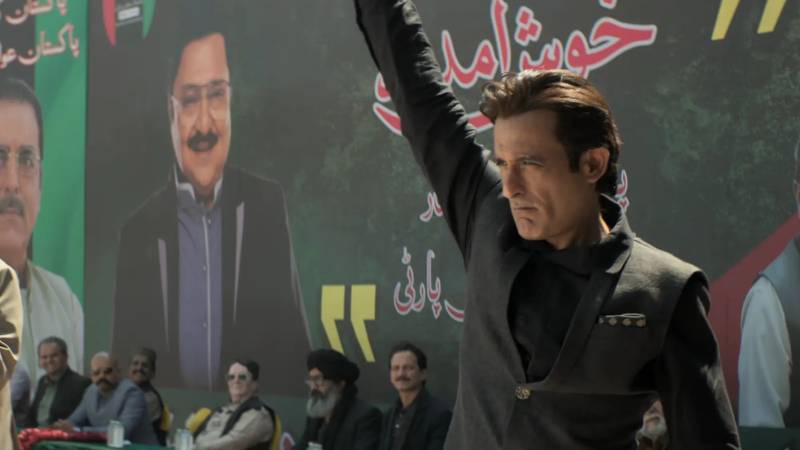
What is the big fuss over the Bollywood film Dhurandhar? It’s an attempt by Bollywood to make a film on Karachi and its gang wars, and in the process, it has generated considerable debate on both sides of the border.
Most of the debate is only to be expected, such as on Indian intelligence infiltration among Karachi’s underbelly. This is something that many in Karachi have known for a number of years, especially if you’ve been working in the city as a journalist.
It’s not really a secret that foreign intelligence agencies send agents and infiltrate them into countries seen as their enemies or adversaries. This is commonplace worldwide, especially when adversaries are in proximity to each other, as with India and Pakistan.
In fact, as a journalist, one has many a story of how the spooks of one country managed to infiltrate the other’s society for several years undercover. How many of these are true and how many are made up is difficult to say, but it can be said with a degree of certainty that some of it is true.
So, all the ruckus about an Indian movie pushing the narrative of Indian intelligence agents disguised as gangsters in Karachi is difficult to understand. After all, since when has Bollywood pushed any narrative other than that of the Indian establishment and state, and its military? Why would it be any different this time? And like other attempts to push its state and official narrative, especially on things that have to do with Pakistan, it has made several major errors.
For instance, no one in Pakistan celebrated the Mumbai attacks – it would be fair to say that most of Lyari’s residents would have had no idea what was happening that day; they were busy living their own generally tough lives. Secondly, another glaring mistake was the statement that “Whoever rules over Lyari, rules over Karachi” – that’s not true at all, since Lyari is one of several dozen city neighbourhoods and by no means the most strategic or important one.
Moving on, Dhurandhar does prove certain things without question. Primary among them is the fact that while they act as if they don’t, by and large Indians seem to be obsessed with Pakistan. And while many among the young – BJP-ruled and moulded – generation say that they hate Pakistan, they always seem to be talking about it, especially on social media. Much of the Indian mainstream media also suffers from this malaise, if you will, running daily shows on everything related to Pakistan. These days, the daily shows are usually outrage-based, with news anchors venting a mix of anger, frustration and closeted envy at Pakistan being given money for an upgrade of its F-16s, to Pakistan being given $1.25 billion in funding by the US Export-Import Bank, to Pakistan getting yet another IMF tranche, and so on.
Pakistan’s standing in the eyes of the world has improved remarkably, especially in the past year or so; it still suffers from an image problem. But that is precisely why Pakistanis should be telling stories from Pakistan, yet we don’t see much of that happening
The movie has also brought about another debate on social media among Pakistanis. Many commentators, including journalists, have argued that a story on Pakistan must only come from Bollywood, and what stops Pakistanis from telling their own stories. That is a fair question, and the answer to it is not so straightforward.
India has a much larger audience market and a film industry that has been around for decades, and is, in fact, a world leader, at least in the quantity of films produced and released annually. More importantly, it has financing available for those who want to make movies and bring them to the screen. And now, with the advent of OTT streaming platforms, it has an added advantage because most of them see India as a large market with a fair number of people who watch shows in English, and in any case, the platforms are also investing in making programmes in India’s own languages.
Though Pakistan’s standing in the eyes of the world has improved remarkably, especially in the past year or so, it still suffers from an image problem. But that is precisely why Pakistanis should be telling stories from Pakistan, yet we don’t see much of that happening. Part of this has to do with the availability of funds for such ventures, which are not easy to come by.
For instance, and I give this example because it relates to a story revolving around one of the characters in Dhurandar, there is a complete script, along with rights for a bestselling book, that tells an intriguing story of Karachi’s underbelly (the protagonist is one of the characters in Dhurandar), but the producers have not been able to find investors so far. This is just one example of why Pakistani storytellers find it difficult to tell their stories on an international stage.
As for soft power, which is what Bollywood represents and which may come to India’s aid at a time when its image is hitting rock bottom all over the world, Pakistan has its fair share – in Pakistani music, which is in a league of its own and is widely recognised even among Indian audiences (check the comments by Indians on Pakistani music videos on YouTube). That is also something that needs to be harnessed and projected to a global audience, because it can and will help build Pakistan’s image. In all such ventures – whether in cinema, television, web series, or taking our talented musicians to international audiences – the private sector has to take the lead, with the government and state acting as facilitators and enablers in the background.