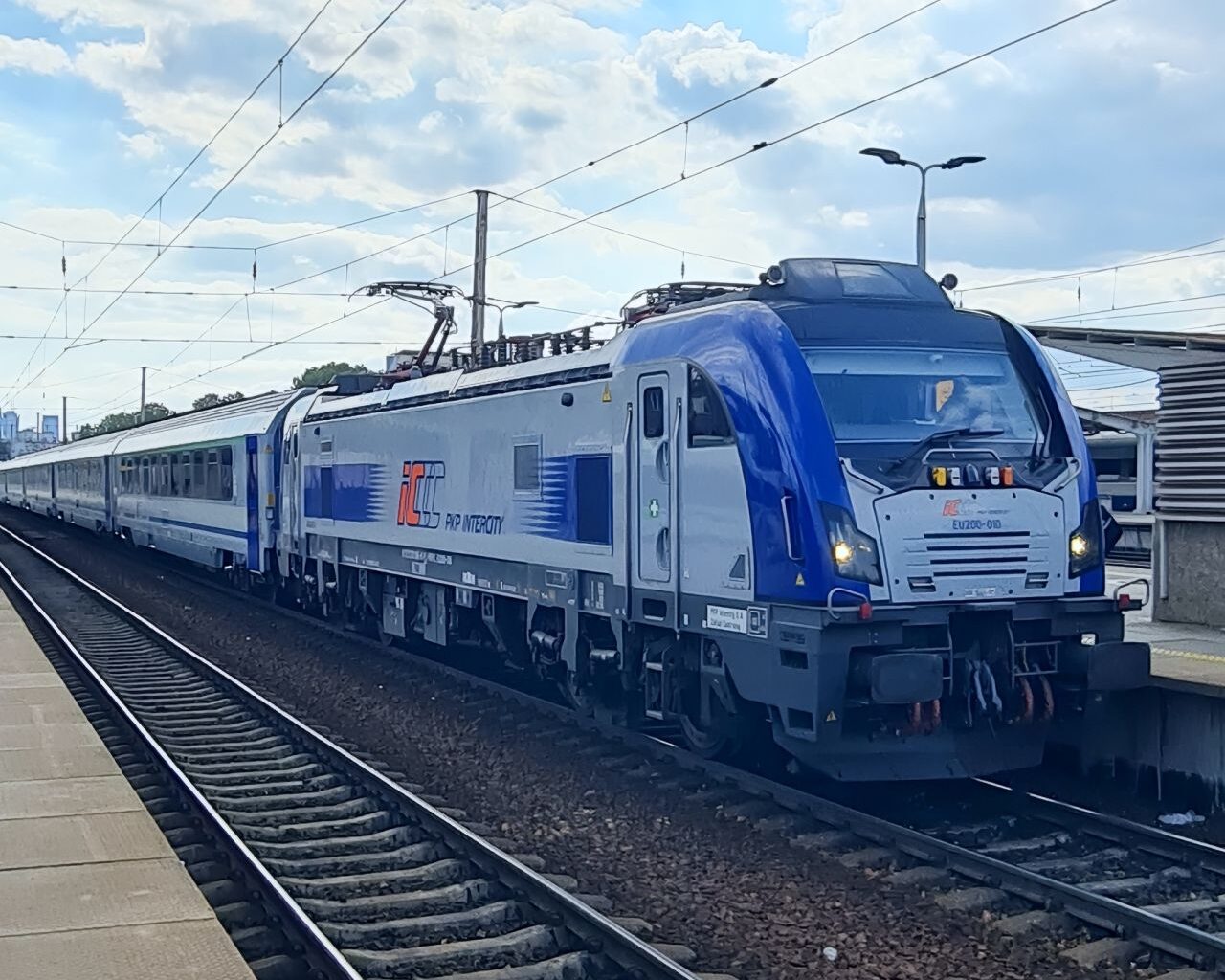
 Long-distance rail transport between Germany and Poland is expanding significantly with the introduction of the 2026 timetable, which brings a 50% increase in the number of EuroCity connections between the two countries. Deutsche Bahn (DB) and Polish operator PKP Intercity (PKP IC) have launched a new direct Leipzig–Wrocław–Kraków line with four daily trains, two of which continue on to Przemyśl, near the Polish-Ukrainian border.
This is the first time that Leipzig and southern Poland are directly connected by EuroCity trains without the need for transfers.
Direct connections between central Germany and southern Poland
The new line is served by two trains per day in each direction, operated jointly by DB and PKP Intercity. One of the daily trains continues to Przemyśl, providing connections to and from Ukraine, including Kiev.
The journey time is approximately three and a half hours to Breslau and seven hours to Krakow, making the new connection a competitive and sustainable alternative to road or air transport.
With this expansion, the total number of EuroCity trains between Germany and Poland reaches 34 per day.
Benefits for intermediate cities too
In addition to Leipzig, the new line also serves cities such as Riesa and Hoyerswerda (Saxony) and Elsterwerda and Ruhland (Brandenburg), which benefit from direct stops and improved connections to the regional transport network.
Thanks to synchronized connections, cities such as Chemnitz, Dresden, Görlitz, Cottbus, and Berlin, including BER Airport, are also better connected.
Economic, political, and strategic importance
“More and more people are traveling by train across national borders. We are responding to the increased demand for connections between Germany and Poland with a significant expansion of rail transport. The new direct connections to the strong economic regions in southern Poland and to the Ukrainian border are important from a political, economic, and tourism perspective,” said Michael Peterson, member of the DB Management Board responsible for long-distance passenger transport.
Janusz Malinowski, CEO of PKP Intercity, highlighted the growing demand for international travel.
“The number of passengers traveling on our trains to Germany is growing every year. That is why we are expanding our international offer to the west, not only with more trains to Berlin, but also with new connections to other German cities, such as Leipzig.”
Investments of over one billion EUR in infrastructure
German Federal Minister of Transport Patrick Schnieder highlighted the role of investments in cross-border infrastructure.
“The new rail service strengthens the good neighborly relations between Germany and Poland and allows more people to discover their neighboring country in an environmentally friendly way. It is the result of decades of joint investment in cross-border infrastructure.
In Germany alone, over 1.1 billion EUR has been invested,” said Patrick Schnieder.
He also emphasized that the current security situation in Europe gives cross-border rail transport increased strategic importance, in addition to its cultural and economic benefits.
Operational details and tickets
The trains are operated with modernized EuroCity carriages from PKP Intercity, each train offering over 300 seats. Departures from Leipzig Hauptbahnhof are at 10:55 and 14:55, and trains arrive from Krakow or Przemyśl at 13:04 and 17:04.
Tickets for travel between Germany and Poland can be purchased up to six months in advance, including through the Super Sparpreis Europa offer, with prices starting at 18.99 EUR. A free seat reservation, which is mandatory on the international segment, is automatically included with the purchase of the ticket.
For passengers from cities such as Munich, Nuremberg, Erfurt, or Frankfurt am Main, the new connection reduces travel times to Breslau by approximately two hours, thanks to optimized connections in Leipzig.
Share on: 


