By Evan Lerner, John and Marcia Price College of Engineering
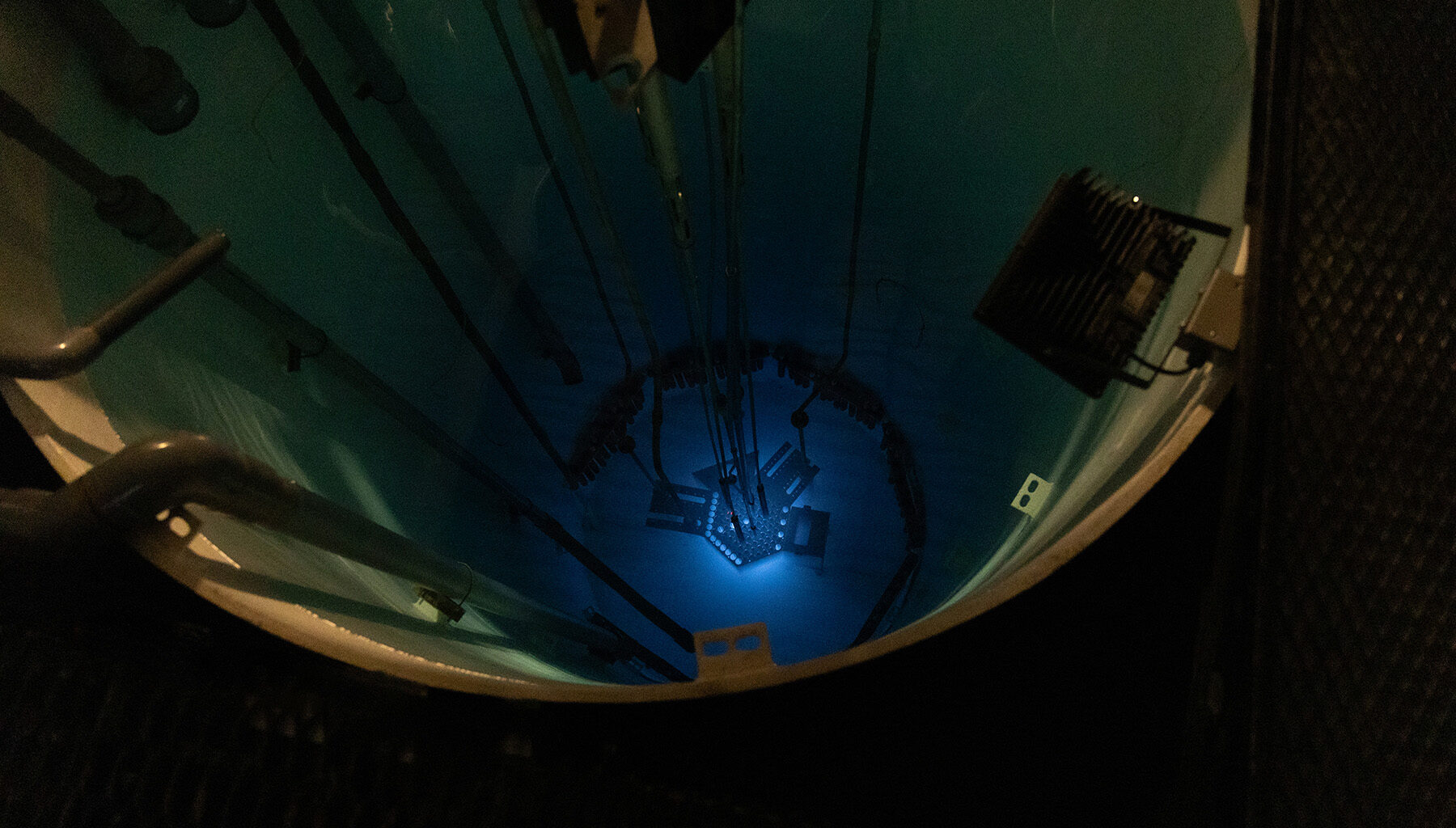
The University of Utah’s TRIGA nuclear reactor is once again producing a faint blue glow. Under repair for the past two years, the process was completed just in time for the reactor’s 50th birthday celebration, which brought alumni and key partners of the U’s nuclear engineering program back to campus to mark the occasion.
The reactor was designed not to generate electricity, but the next generation of nuclear engineers. And its role has never been more important, with a “nuclear renaissance” growing to meet the needs of an AI-enabled future.
“For 20 years, the demand for electricity has been flat, but that’s now changing with demands of new data centers,” said Supathorn Phongikaroon, chair-holder of the EnergySolutions Presidential Endowed Chair in nuclear engineering and director of the Utah Nuclear Engineering Program in the Department of Civil & Environmental Engineering, “Our TRIGA reactor and nuclear engineering program are going to meet that demand.”
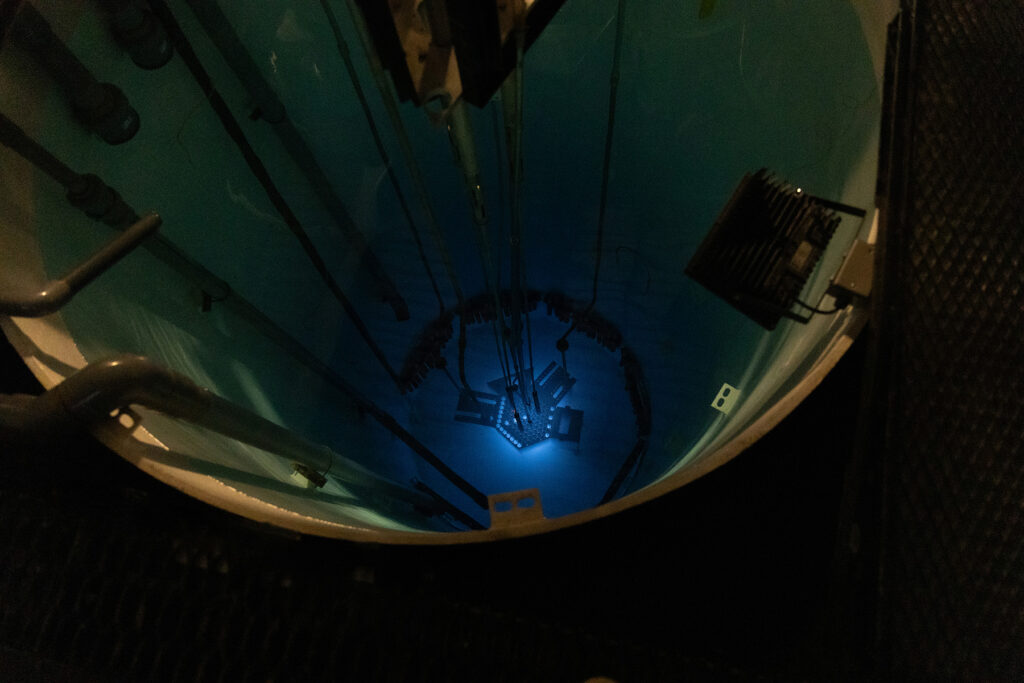 TRIGA is 1 of 18 reactors still operating in the U.S., and the only functional nuclear training reactor in Utah.
Credit: Dan Hixson/College of Engineering
TRIGA (Training, Research, Isotopes, General Atomics) reactors were originally devised in the 1950s, when optimism about nuclear power was at an all-time high and a cohort of new nuclear engineers needed to be trained. Designed to be exceedingly safe, the reactors are passively cooled by pools of water and use a type of uranium fuel that becomes less reactive as its temperature increases. TRIGA reactors can therefore have long lifespans if they are consistently maintained.
Installed in October 1975, the TRIGA reactor has been the centerpiece of the John and Marcia Price College of Engineering’s nuclear program since, operating under the auspices of the U.S. Nuclear Regulatory Commission (NRC). It is one of 18 still operating in the United States and is the only nuclear reactor in Utah. As such, it plays a crucial role in the training and development of the state’s nuclear workforce.
Now that it is running again, the program will offer an operator course this spring; upon completion, students can become licensed by the NRC to operate the reactor.
Charles Musgrave, dean of the College of Engineering, emphasized that fact as he welcomed guests to the reactor’s birthday celebration.
“We have the expertise, the reactor, the students, the nuclear engineering degrees, and we’re excited to partner with the state and our national labs,” he said.
Provost Mitzi Montoya echoed the dean’s sentiments.
“This reactor is all about translating ideas into practice, and the opportunity to learn in an experiential way,” she said. “That’s a difference-maker that will attract future students and faculty.”
Other speakers included Jess Gehin, associate laboratory director, Nuclear Science & Technology, Idaho National Laboratory, and Tim Kowalchik, research director and emerging technology strategist at the Utah Office of Energy Development. Both remarked on the value the U’s TRIGA reactor continues to provide in the regional and national nuclear infrastructure.
Ted Goodell, the nuclear reactor facility director, also spoke, providing details of the reactor’s repair process, and a look to the future of what a planned upgrade—going from 100 kilowatts to a megawatt—would enable. The reactor already produces isotopes for research purposes; more power would enable the facility to produce additional medical-grade isotopes for use in diagnostics and radiotherapies.
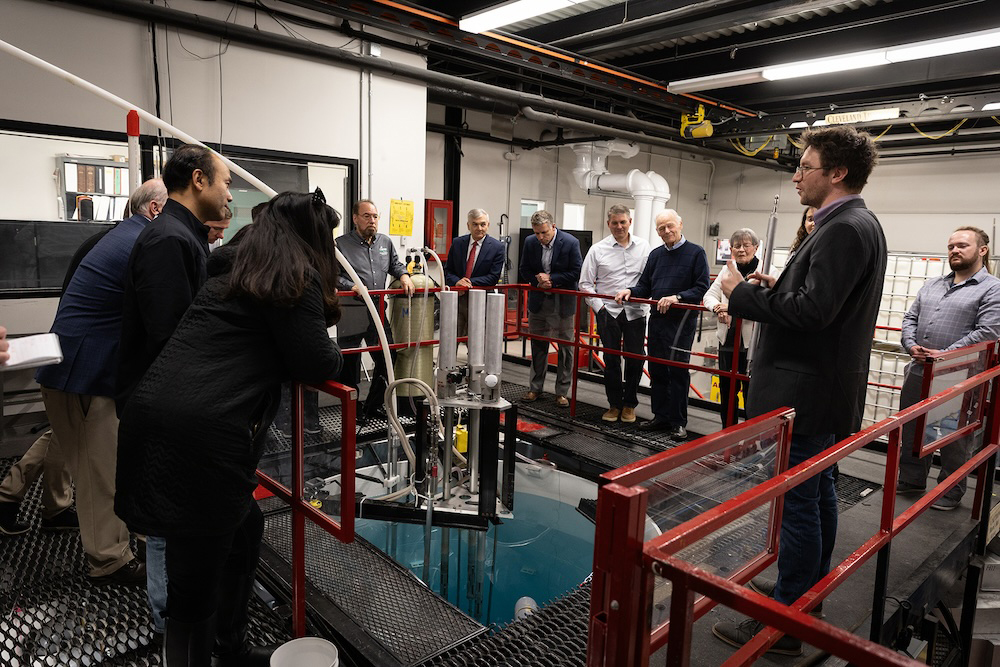 Alumni and key partners of the U’s nuclear engineering program came to campus to mark the occasion. Credit: Dan Hixson/College of Engineering
Finally, Phongikaroon presented Gary Sandquist, professor emeritus of mechanical and nuclear engineering, a lifetime achievement award in recognition of his role in the initial building of the reactor.
“His pioneering leadership in establishing the TRIGA reactor and his lifelong dedication to the University of Utah have shaped the very heart of our nuclear engineering program,” Phongikaroon said. “We celebrate his legacy, his service, and the countless students and scholars he has inspired.”
With the reactor humming again, the celebrants looked forward to another 50 years of education and research.
“We’re illuminating a bright future for nuclear energy and technology at the University of Utah,” Phongikaroon said.
Note: This story originally appeared on @theU and by the John and Marcia Price College of Engineering.