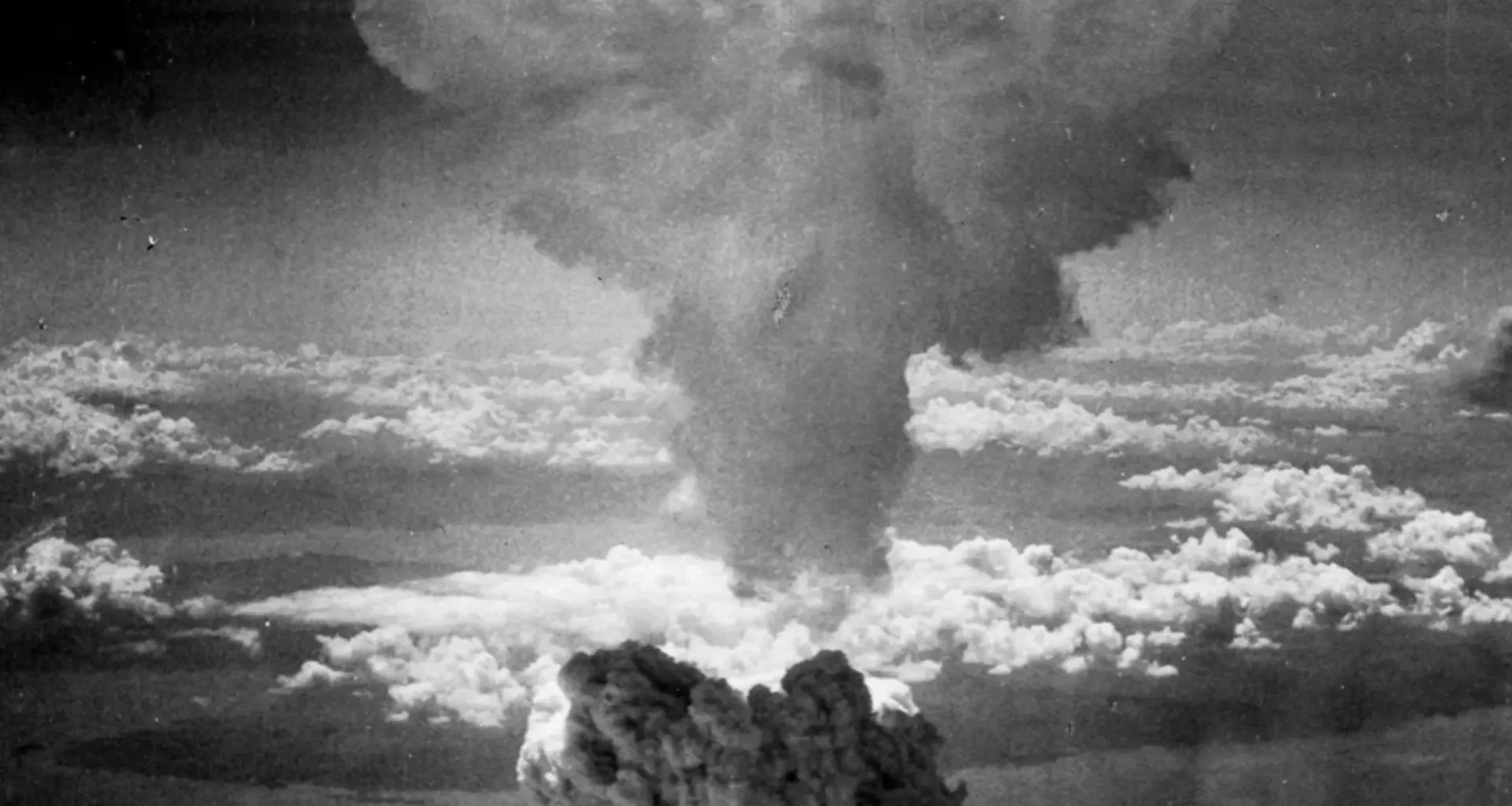
More than 30 years after the end of the Cold War, anxiety about the threat of nuclear weapons is rising sharply again, as new countries push for nuclear capability, others replenish existing arsenals, and international conflicts—some centuries old—heat up. In The Nuclear Age: An Epic Race for Arms, Power, and Survival (W.W. Norton, $31.99), Hrushevs’kyi professor of Ukrainian history Serhii Plokhy offers a sweeping account of the geopolitics of nuclear armament going back to 1945. He asks what the first arms race can teach us now that, as he writes, “fear is back.” The excerpt below, from the epilogue, addresses what Plokhy, an expert on nuclear history, sees as a major factor in the rising danger: Russia’s war in Ukraine.
Early in the morning of February 24, 2022, Russian troops crossed the borders of Ukraine, turning the eight-year-old Russo-Ukrainian war, which began in the spring of 2014 with the Russian annexation of the Crimea, into the largest European conflict since 1945. As troops entered Ukraine from Russian territory in the east, Belarusian territory in the north, and the annexed Crimea in the south, Vladimir Putin released a prerecorded video address blaming the war on Western actions. He threatened “those who may be tempted to interfere in these developments from the outside” with consequences “such as you have never seen in your entire history.” He added: “No matter how the events unfold, we are ready. All the necessary decisions in this regard have been taken. I hope that my words will be heard.”
The post-Cold War world order came to an end in the flames of the Russo-Ukrainian war, and a new international order began to emerge, with nuclear threats becoming part of its formation. Russia’s war on Ukraine brought to the fore four key factors that characterize the new stage of the Nuclear Age and present a major threat to the survival of the world. Some of them are old. Others are new. The first one is the nuclear brinksmanship characterized by the nuclear threats against non-nuclear countries, the second is the renewed nuclear arms race between the key members of the nuclear club, the third is the challenges to the nonproliferation regime, brought by the war unleashed by a nuclear state on the state that gave up the nuclear weapons in its possession to comply with the nonproliferation regime, and the fourth is the coming of warfare on the nuclear energy sites, turning what became known as the Atoms for Peace into atoms for war.