WASHINGTON — The death of three Americans in Syria over the weekend is sparking fresh pushback from a handful of lawmakers regarding the presence of U.S. troops in the country, an argument that has hung in Washington for years and been raised by members of Congress at different points in multiple administrations.
This time, three congressional Republicans known for being willing to publicly stray from their party are leading the new calls to reconsider having American boots on the ground.
Rep. Marjorie Taylor Greene of Georgia — a onetime close ally of President Donald Trump who has recently feuded with him and announced she will resign from Congress next month — took to X on Sunday to declare that U.S. “National Guard troops should not be sent to foreign countries to be killed in foreign lands like Syria.” Iowa Gov. Kim Reynolds announced Saturday that the two service members killed in the attack — along with three soldiers injured — were members of her state’s Army National Guard and were a part of a group of about 1,800 soldiers sent to the Middle East in May as part of a U.S. mission to counter the Islamic State group, or IS, in the region.
“Bring our troops home!!!” Greene’s post continued. “Enough of this!!!”
In an appearance on NBC News’ “Meet the Press” on Sunday, GOP Sen. Rand Paul of Kentucky agreed with Trump’s calls to retaliate but suggested there should be a larger debate, referring to the “purpose” of having U.S. soldiers in the region as a “big question.”
“Yes, the people who killed our soldiers should be punished,” he said. “But really, we need to reassess whether or not we should have troops in Syria to begin with.”
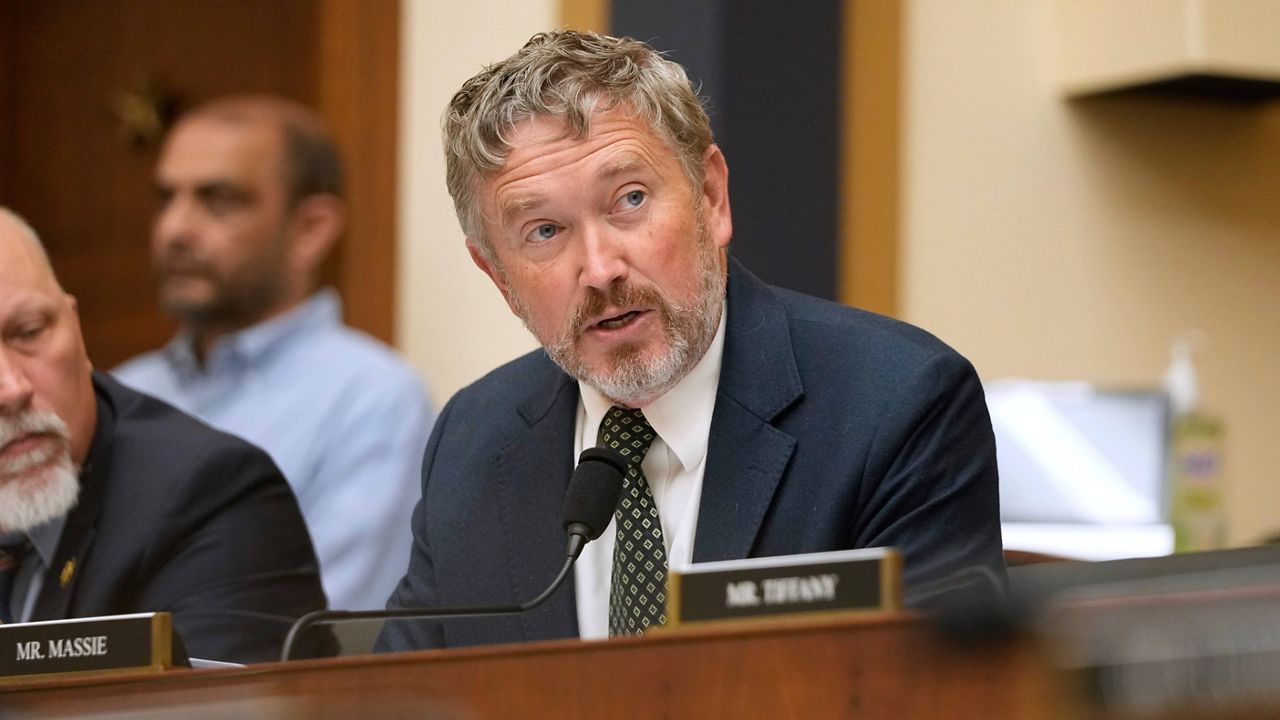
Meanwhile, Kentucky Republican Rep. Thomas Massie took it a step further in a post on X on Saturday, outright urging the withdrawal of American forces and vowing to sponsor legislation this week to repeal the authorization for use of military force, known as an AUMF, approved by Congress more than two decades ago, allowing U.S. military operations against those involved with the Sept. 11, 2001, terror attacks.
“I’m heartbroken that we lost soldiers in Syria, but now is the time to ask: Why are we in Syria?” Massie wrote in his post.
The use or interpretation of the AUMF to carry out actions in the Middle East has evolved over different administrations for years and drawn degrees of pushback in each. The U.S. government’s official website for federal legislative information maintained by the Library of Congress notes that U.S. forces initially focused on actions in Afghanistan after the passage of the AUMF but operations have since expanded to include al-Qaida and Taliban targets in Pakistan, Yemen, Somalia, Libya and Syria.
Former Democratic President Barack Obama’s decision to send special operations forces into Syria to combat IS in 2015 triggered pushback from senators in his own party, including Sens. Tim Kaine of Virginia, Brian Schatz of Hawaii and Chris Coons of Delaware, who questioned whether the 2001 AUMF gave Obama the authority for such a move.
During Democratic former President Joe Biden’s time in office, Rep. Gregory Meeks, D-N.Y., led an effort to try to repeal and narrow the scope of the AUMF in 2023. The next year, as Biden ordered strikes targeting the Houthi rebels in Yemen and other Iranian-backed militant groups amid attacks on shipping in the Red Sea, citing in part the AUMF, the then Democratic chair of the Senate Foreign Relations Committee, Ben Cardin, said the administration should be coming to Congress for new authorizations.
This time, the attack over the weekend comes weeks after Trump hosted Syria’s new president — who became the country’s leader after heading efforts to topple the Assad family and its government last year — at the White House in November. The visit marked the first from a Syrian head of state in more than 75 years and followed Trump’s decision to lift sanctions on the Middle Eastern country in what he said was a bid to give the new government with a new leader a “chance at greatness.”
Following the attack, which killed two U.S. service members and one American civilian serving as an interpreter, Trump said it was carried out by IS against the U.S. and Syria in an area of the country that is “not fully controlled by them” and vowed “very serious retaliation.”
The U.S. Army identified the two killed service members from Iowa on Monday as Sgt. Edgar Brian Torres-Tovar, 25, of Des Moines, and Sgt. William Nathaniel Howard, 29, of Marshalltown.
In an appearance on Fox News over the week, Sen. Jack Reed of Rhode Island, the top Democrat on the Senate Armed Services Committee, urged the U.S. to be “aggressive” in countering IS and “work with the new government in Syria.”
“We have our opportunity, for the first time in a long time, to work with a Syrian government that shares many of our own hopes and aspirations in terms of defeating ISIS,’ Reed said.
The renewed debate over deployments comes as some lawmakers have raised questions over the Trump’s administration’s monthslong campaign targeting what it says are drug smuggling boats in the Caribbean Sea and eastern Pacific Ocean, including whether the administration should be seeking congressional approval.
The War Powers Resolution passed by Congress in 1973 requires hostilities carried out without Congress declaring a war must end within 60 days after the president notifies lawmakers of the action.