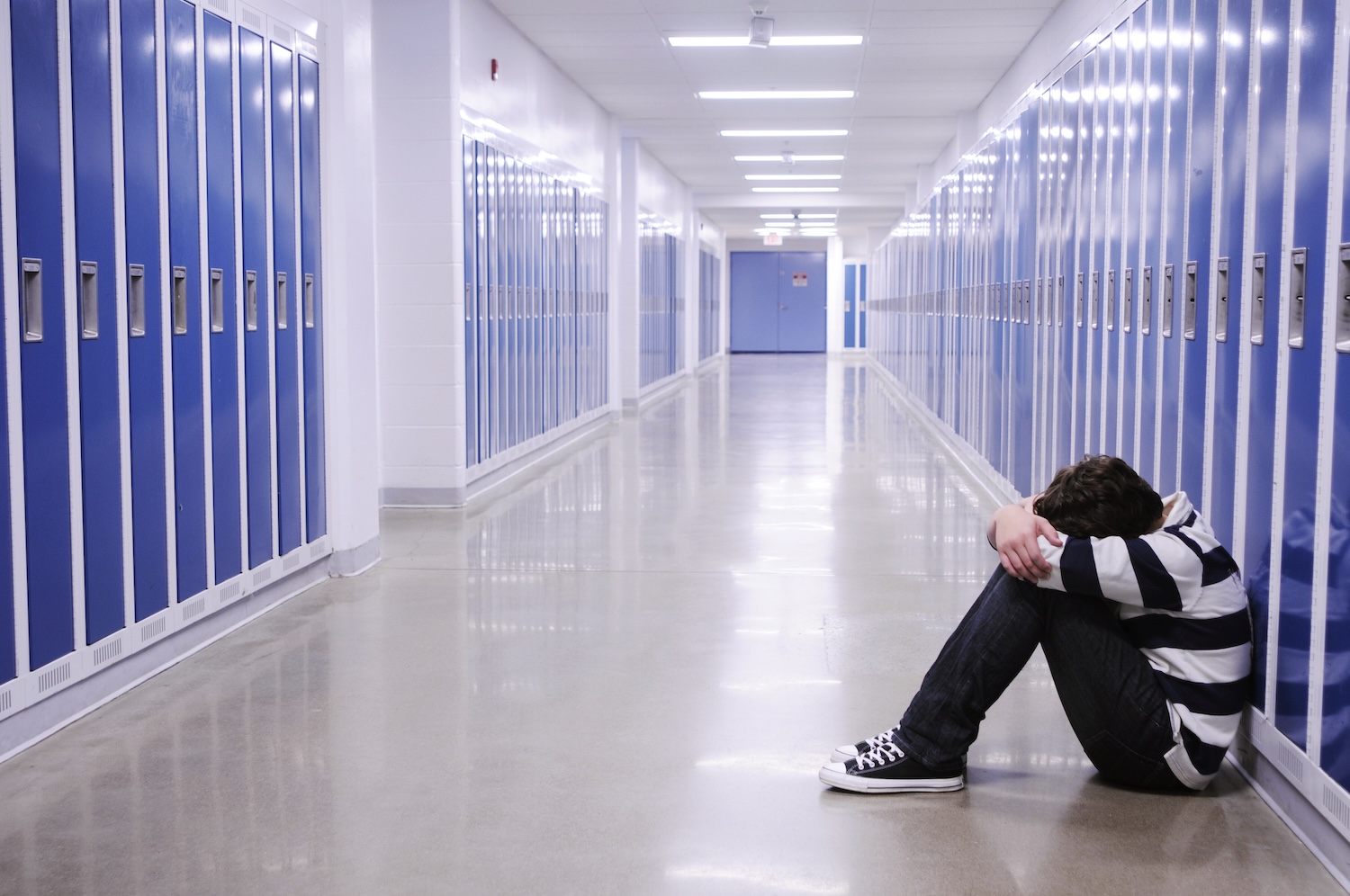
As concerns rise about the mental health of American adolescents, schools have worked to create an atmosphere where students feel safe, connected, and respected.
But a positive campus climate does not provide the same benefits for all students — and in some cases may even deepen feelings of isolation and despair, according to new research co-authored by UCLA Professor of Social Welfare Ron Avi Astor.
This counterintuitive finding, just published in the American Educational Research Association’s flagship journal Educational Researcher, arose from an exhaustive review of survey data from more than 1 million students in 2,500 California secondary schools.
The research team compared the experiences of three groups of students: those who had been bullied or victimized due to a bias against their race, ethnicity, sexual or gender identity, religion, disability, immigration statu,s or other personal characteristic; those who were targeted but not because of this kind of bias; and those who had never been targeted.
The study’s authors were surprised to find that a supportive school climate produced fewer positive effects overall for students in the first group, a phenomenon known as the “healthy context paradox,” said Astor, a professor of social welfare and education at the UCLA Luskin School of Public Affairs and UCLA School of Education and Information Studies.
When students in distress are in a relatively positive setting, they may compare themselves with their peers and blame themselves for feelings of sadness, hopelessness, and thoughts of suicide. “Why are things getting better for everyone but me?” they may wonder. And being targeted for personal traits that they cannot change is particularly hurtful, deepening their sense of inadequacy.
“We realized that the negative impact of student victimization on certain students’ mental health is exacerbated in schools with positive climates and lower overall violence levels,” said Ruth Berkowitz of the University of Haifa, who led the research team including Astor, Netta Achdut of Ben Gurion University and Rami Benbenishty of Hebrew University of Jerusalem.
“You would have expected that victimized students would gain much more from a positive school climate,” she said, noting that the findings were so unexpected that the team repeatedly rechecked the data.
Similar findings had been reported in some Scandinavian countries, but not in such a large-scale U.S. study. The new research also broadens understanding of the distinct experience of students victimized because of their identity, and the need for tailored mental health support.
“You want a positive school climate, obviously, and you want to reduce victimization,” said Astor, an authority on bullying and school violence. “But you also need another layer of very specific interventions toward groups that are being systematically targeted due to prejudice because of their identity in schools.”
RESEARCH TO ACTION
How can these findings be used to help schools and the students they serve? Astor says that giving leaders access to precise information about the kinds of bias detected on their campuses is an important first step.
“It is possible for kids and teachers and others to have prejudices that are extremely specific,” he says. A campus may exhibit broad tolerance for people of different faiths but show hostility to its immigrant families, for example. A school with a thriving gay-straight alliance may not be as welcoming to students with disabilities.
“If we drill down and really see what’s happening at each school, they can tailor how they educate their population about different groups, and that can help the level of bias go down,” he says.
Astor is also putting this anti-bias scholarship into action through a new partnership with Holocaust Museum LA, which commemorates those who perished and teaches future generations important lessons about kindness, dignity, and humanity.
The museum worked with Astor to develop questionnaires for teachers and students from across the country who are participating in its many educational programs. Launched at the start of this school year, the tool provides a snapshot of a school’s climate, potential pockets of bias, and the needs of teachers seeking to build an inclusive environment.
“We’re really excited about this partnership,” said Jordanna Gessler, the museum’s chief impact officer. “It’s taking work that Ron was already doing, work that we were already doing, and merging them together to really amplify the understanding of what is happening in our schools and how we can best course correct when there are incidents of hatred and identity-based violence.”
The surveys include basic biographical information as well as open-ended questions that allow participants to share what they’ve seen on their campuses, Astor says. Students can report whether they have witnessed or experienced insults or exclusion, for example, and assess the likelihood that someone on campus would intervene.
Using well-established research methods, Astor analyzes the data and provides feedback to the museum so that it can assess the impact of its programs and swiftly adapt to the changing needs of the community.
“One of the most important things we can be doing in these spaces is being flexible in our understanding of what is taking place and how we can respond to it with compassion,” Gessler says.
PRIORITIZING MENTAL HEALTH
Researchers were motivated to launch the latest study by rising reports of mental illness among young people and a desire to understand the role of school-based victimization.
They analyzed data from seventh-, ninth- and eleventh-graders who responded to the California Healthy Kids Survey between 2017 and 2019. Conducted biannually across the state, the voluntary and anonymous survey includes questions about a broad array of topics, including school safety and student well-being.
Students who reported being the target of bias-based victimization made up 23.6% of the respondents. Since a positive school climate can actually exacerbate their feelings of despair, the researchers urge schools to implement a multi-tiered approach including outreach to vulnerable youth and a commitment to combat discrimination.
“Focusing solely on overall school climate to improve mental health, without explicitly addressing specific types of victimization, particularly bias-based incidents, could potentially exacerbate the difficulties faced by affected students,” Berkowitz says.
“Schools are constantly being held accountable for academic growth,” she says. “But how about the growth of a positive school climate? This could improve the overall outcomes, not just in academics but also in the mental health of students.”