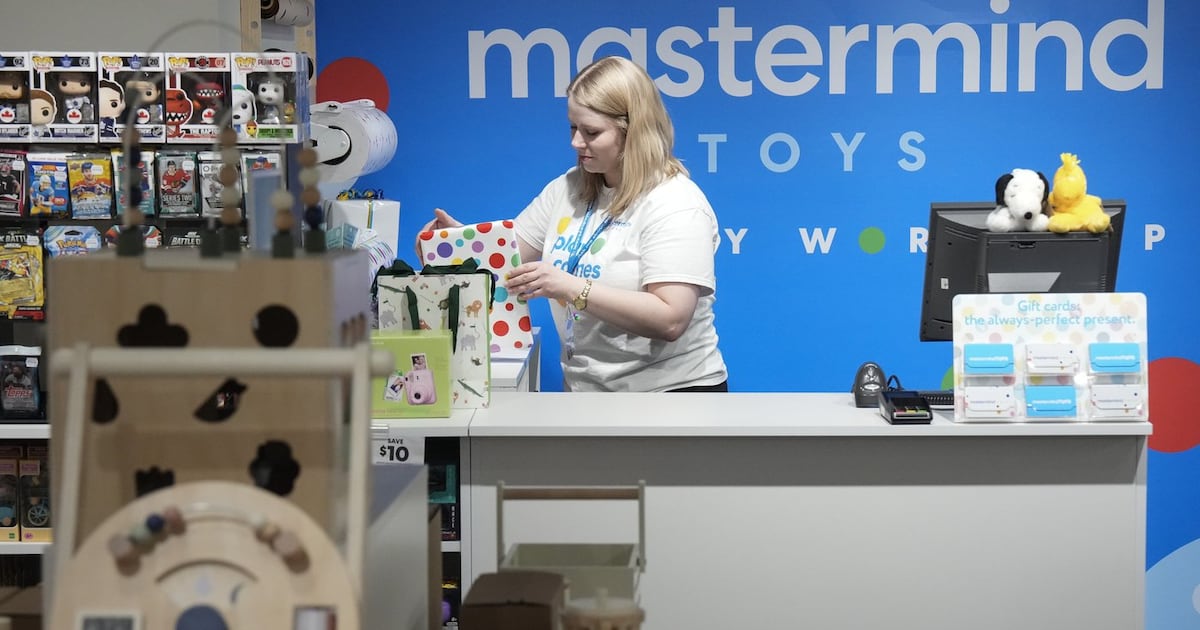
Mastermind Toys is about to adopt a new business model.
The Canadian toy store chain confirmed Monday that it’s planning to expand the business through franchising.
“It’s an awesome opportunity to sort of bring the Mastermind experience to more communities,” chief executive John Bayliss said in an interview, when asked why the company was exploring franchising.
“Our strongest stores are ones that really thrive because they have deep roots in their communities and store managers … that really have an ownership of the community that they operate in, and I think that’s something we’re looking to replicate.”
Bayliss didn’t say specifically what markets the company hopes to expand into but said he hoped the move would help it re-enter regions it previously left and grow its footprint in dense places like Toronto, Vancouver and Alberta. The company will keep some stores corporately owned.
Bayliss’ remarks came after Bazely Consulting said it had been hired to help with franchising.
The Kitchener, Ont.-based firm did not respond to requests for comment Monday but said on LinkedIn over the weekend that it was retained by Mastermind to “prepare the business for franchising” and an entrance to “new markets.”
The push toward franchising is the latest in a string of changes Mastermind’s new owners have made to the business.
The chain began closing stores and filed for creditor protection on Black Friday in 2023, citing increasing competition, disruptions from the COVID-19 pandemic and a deteriorating macroeconomic environment.
It was eventually bought by Unity Brands, which also runs Casca Footwear and Kit and Ace and is owned by Canadian retail titans Joe Mimran, Frank Rocchetti and David Lui.
Since the deal closed, Unity has been working to rebuild Mastermind.
Last year, it brought back products from manufacturers like Melissa & Doug and experimented with a pop-up holiday store at Union Station in Toronto.
This year, it’s testing the same model at Holt Renfrew’s department stores and has a partnership with convenience store chain 7-Eleven. Under that deal, Mastermind products, including plushies, games and puzzles, are being sold at 7-Eleven, while candy and snacks from the convenience store giant are available in the toy shop’s checkout aisle.
It’s also recently opened Lajoué, a new, Quebec-based store banner, and brought back Mastermind to communities like Woodbridge, Ont., just north of Toronto.
All of these moves symbolize that Mastermind is “regrouping,” said Lisa Hutcheson, a retail strategist with J.C. Williams Group.
She thinks franchising will only hasten the company’s revitalization because it will help the business reach new customers, including many who are toy shopping online or at Walmart and Canadian Tire because chains like Mastermind and Toys “R” Us have left their neighbourhood.
While Bayliss said his focus will be on franchising in Canada for now, Hutcheson thinks the business model could work both at home and abroad.
“I think it will get more expansion in Canada, but the U.S. is also a good player and I don’t see why there wouldn’t be an opportunity for them to expand internationally,” she said.
By expanding this way, Hutcheson said franchisees rather than the company will be on the hook for the costs growth brings.
Franchisees often pay big upfront expenses to run stores under brand names and have to abide by strict rules around what products they can carry and prices they can charge.
Few, if any, Canadian toy stores are franchised but Build-A-Bear is among the international brands that has used the model to expand.
Tara Deschamps, The Canadian Press.