U.S. counterintelligence officials are now warning that four of Washington’s most consequential adversaries, Russia, China, Iran and North Korea, are not just individually targeting the United States but increasingly synchronizing activities that threaten U.S. national security, economic stability, and democratic processes. This trend, documented in recent intelligence assessments and reflected in current events, represents a more complex and potentially synchronized set of challenges for American policymakers than at any point in recent memory.
According to the 2025 Annual Threat Assessment released by the U.S. intelligence community, Russia, China, Iran, and North Korea continue to pose “the most significant intelligence threats” to U.S. interests, with their intelligence activities described as “more aggressive” and in certain cases overlapping in methods and impact. The assessment notes that these states are launching operations “increasingly cooperating with one another, enhancing the threat they pose,” using both state direction and commercial or widely available technologies to gather intelligence and penetrate sensitive systems.
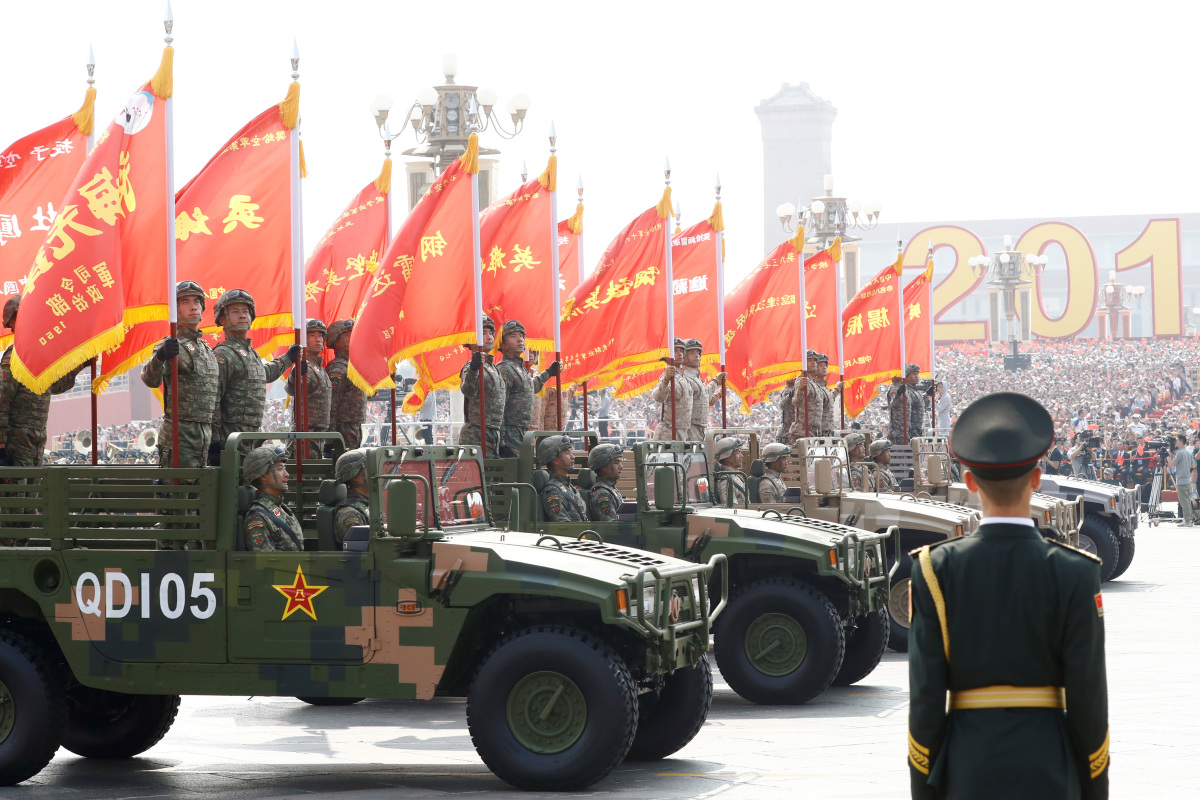
In December 2025, China and Russia announced what Beijing’s defense ministry described as their tenth joint strategic air patrol over the East China Sea and the western Pacific. This operation, a continuation of an ongoing series of coordinated military exercises, illustrates a sustained pattern of military cooperation between the two powers. That patrol drew a response from South Korea‘s air defenses, underscoring how these activities are elevating regional tensions, a Reuters report said.
Beyond cooperative military maneuvers, broader strategic developments point to deeper collaboration among these adversaries. The U.S. Defense Intelligence Agency’s 2025 Worldwide Threat Assessment, publicly summarized by analysts, indicates that Iran’s efforts to mitigate sanctions and diplomatic isolation are driving it toward cooperation with Russia, China, and North Korea. Tehran’s sales of unmanned aerial vehicles and missile technology to Moscow, and the reciprocal transfer of advanced military equipment and strategic support, reflect a reciprocal pattern. North Korea, for its part, has received surface‑to‑air missile systems and electronic warfare equipment from Russia in exchange for material and personnel support in Ukraine, while its long‑standing economic dependence on China underpins Pyongyang’s diplomatic and military calculus.
The cybersecurity domain is another area where coordinated or parallel adversary behavior poses mounting risks to U.S. interests. Private sector cybersecurity reporting has detailed how cybercriminal networks are increasingly exploited by nation‑state actors to expand offensive operations. According to a 2024 collaborative report by Microsoft and Euronews, Russia, China, Iran, and North Korea have all leveraged criminal intermediaries to amplify their cyber capabilities, blurring the distinction between government operations and illicit hacking. Acchis trend enhances the volume, sophistication, and deniability of cyberattacks targeting U.S. government systems, critical infrastructure, and private sector networks.
In addition to criminal proxies, state‑linked cyber threat actors are embracing advanced technologies to increase impact. Earlier analyses reported that Iranian and North Korean cyber units, such as North Korea’s Kimsuky group, have used generative artificial intelligence tools for offensive reconnaissance and social‑engineering attacks, while Russian and Chinese actors are adapting AI techniques for influence operations and network exploitation. These developments suggest that adversaries are converging on similar technical strategies even in disparate jurisdictions, Euronews AI cybersecurity report points out.
Current geopolitical shifts have also spotlighted broader strategic friction. Russia’s continued military engagement in Ukraine, coupled with U.S. diplomatic involvement in peace negotiations, highlights the interplay of force and diplomacy affecting U.S. ties with Moscow. On the same day that the U.S. officials reported progress on a proposed security guarantee package to Ukraine, likened to elements of NATO’s collective defense commitment, Russian forces launched drone and missile attacks across the Donbas and Ukrainian defense lines, emphasizing ongoing hostilities even as negotiations proceed. This juxtaposition, according to Associated Press via AP News, underscores the unpredictable duality of diplomatic engagement and battlefield escalation involving a primary U.S. adversary.
International reactions to U.S. policy toward China also reinforce the broader competitive context. Russian officials in early December publicly criticized language in the United States’ updated National Security Strategy, which emphasized China as a central challenge to U.S. interests. According to Russia’s Foreign Ministry spokeswoman, Maria Zakharova, that language signaled unnecessary conflict and could strain global security dynamics, particularly as the U.S. calls on regional partners for expanded access to military facilities, Tass reported.
U.S. policymakers have begun articulating responses to this multifaceted threat environment. Bipartisan congressional efforts have been reported to promote a “whole‑of‑government” framework aimed at disrupting cooperative activities among adversary states, spanning intelligence sharing, cyber defenses, and counter‑influence campaigns. These legislative initiatives respond directly to the growing concern that traditional siloed approaches are insufficient against adversaries whose operations cut across domains and jurisdictions, DefenseScoop reported.
At the same time, debate within U.S. strategic circles reflects differing assessments of priorities and approaches. Analysts and allied partners have noted divergences between the Trump administration’s National Security Strategy, which has reoriented certain priorities and emphasized “America First” strategic principles, and the views of Congress and European allies on confronting Russia and China. These differences could influence the coherence and effectiveness of collective responses to adversary coordination.
The emerging pattern of coordinated behavior does not amount to a formal alliance among Russia, China, Iran, and North Korea, but it represents an operational alignment that increases the complexity of the threat environment facing the United States. Whether through reciprocal military support, shared cyber tactics, or diplomatic signaling, the behavior of these states reflects increasing synchronicity in strategies aimed at challenging U.S. influence and leverage. Intelligence officials warn that recognizing, anticipating, and mitigating the implications of this evolving adversary network will require sustained interagency cooperation, strengthened deterrence frameworks, and deeper integration of cyber, diplomatic and defense capabilities.