 Croatia’s railway infrastructure manager, HŽ Infrastruktura, has reopened the Koprivnica–Novo Drnje section after more than a decade.
This important step represents the achievement of one of the key objectives of the project to rebuild and construct the second railway track on the M201 line, on the Križevci–Koprivnica–Hungarian border section, which could obtain EIB financing. The project is estimated at EUR 469 million.
Following the opening of the new Novo Drnje station to traffic, with the introduction of the new train schedule, passenger trains began running on the Zagreb Central Station – Dugo Selo – Koprivnica – Novo Drnje route, as well as in the opposite direction. This measure ensures a new level of connectivity between the municipality of Koprivnica, the surrounding area, and the Croatian capital, while also laying the foundation for the planned development of suburban passenger rail transport.
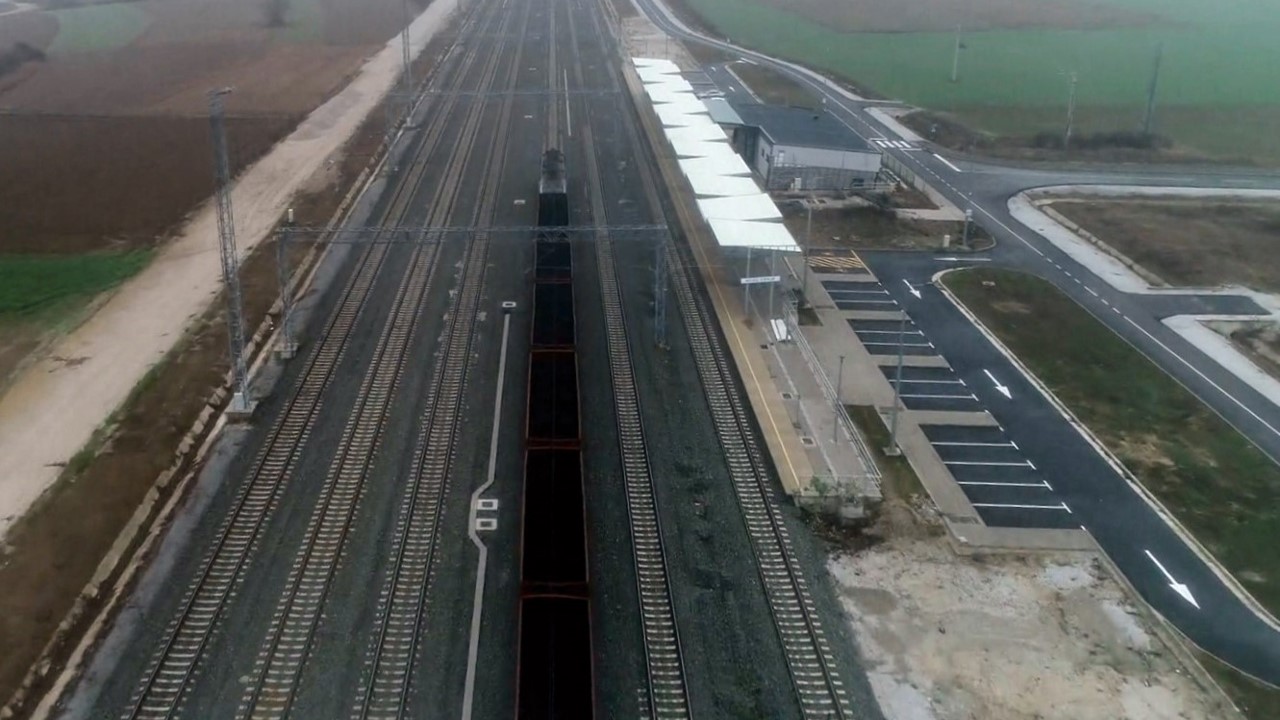
Novo Drnje Station was designed and built as a fully interoperable infrastructure, equipped with six electrified arrival and departure lines, adequate technical capacities, and a 160-meter-long side platform. It is equipped with a modern electronic signaling and safety system, which was put into trial operation at the end of September 2024.
In addition to the Novo Drnje station, the new Peteranec stop, located between Koprivnica and Novo Drnje, has also been opened to traffic, where passenger trains also stop.
In the 2025/2026 train schedule, three pairs of trains are planned for this route, marking the initial phase of the planned suburban transport for the Koprivnica area and improving access to rail transport for residents of the wider region.
The resumption of traffic on the modernized Koprivnica–Novo Drnje section, along with the stations along the line, is an essential step in the implementation of the project to modernize the 42.6 km long Križevci–Koprivnica–state border railway line. The project is one of the largest infrastructure investments in Croatia’s railway network, with a value of 350 million EUR, co-financed by the Connecting Europe Facility (CEF).
Upon completion of the works, passenger trains will be able to travel at speeds of up to 160 km/h, which will significantly reduce travel times and increase the safety and reliability of rail transport. To date, approximately 90% of the work has been completed, and the goal is to have the entire project completed by the end of 2026.
Share on: 


