Communities in Michigan grapple with the rapid expansion of data centers, raising concerns about water use amid pressure for transparency and sustainable practices.
GRAND RAPIDS, Mich. — “Data centers,” we’ve been hearing a lot about plans for them all over the state of Michigan.
One concern shared among opponents is if the centers drain natural resources, especially water.
A water conservancy group called the ‘Alliance for the Great Lakes’ is sounding the alarm about the pace at which these large-scale data centers are being planned.
“This transition from the data centers that we had [since the 2010s that] support the things that we need every day, the files that we store, our digital media, our streaming,” says Helena Volzer, Senior Source Water Policy Manager at the Alliance for the Great Lakes. “But the difference now is we’re really seeing a transition to these hyperscale facilities to sustain the needs of generative AI, and these are bigger, larger facilities with more intensive energy and water needs.”
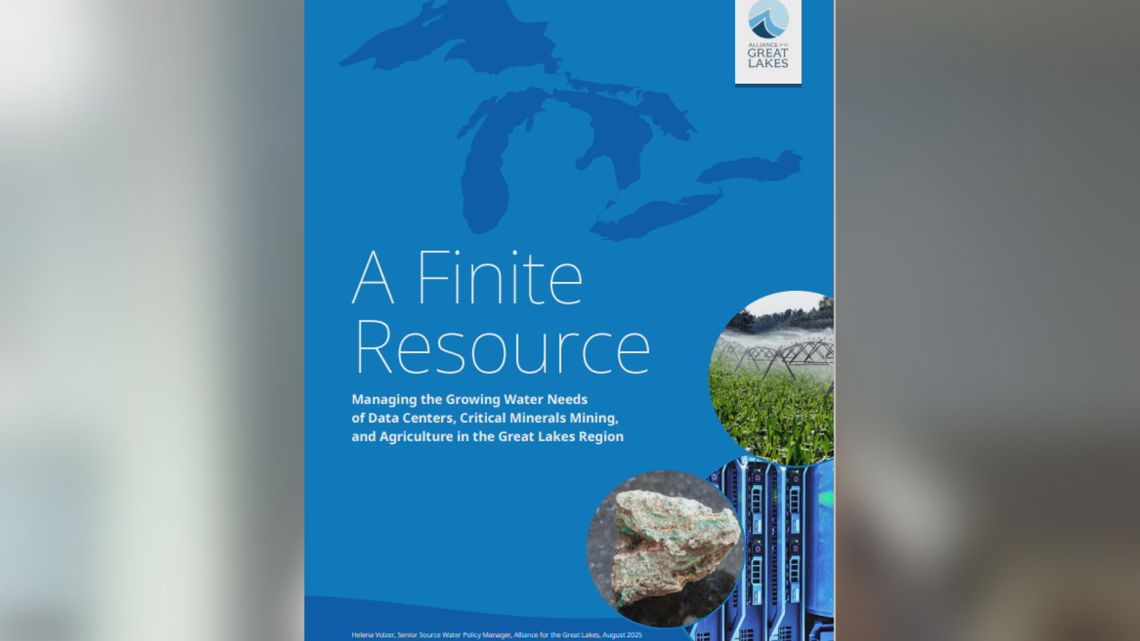
Volzer authored a report earlier this year that shows large data centers can use millions of gallons of water a day for cooling and power, and claims companies aren’t being adequately transparent in their water footprint.
The report also shows that Michigan has a system in place to ensure water withdrawals don’t cause environmental damage.
“It actually looks at whether or not the withdrawal of that groundwater will cause an adverse resource impact to lakes and streams,” Volzer said. “If it will, that registration can’t even occur. It can’t get registered. And so, for Michigan, it’d be really great to adapt that tool and apply it to all large water users above a certain threshold that connect to municipal supplies.”
Volzer also advocates for what’s called ‘community benefits agreements,’ that local governments can make with these companies to ensure resource stability and a clean environment.
“These are legally binding, enforceable contracts that could provide some kind of benefits back to the local community, in terms of water resources, agreeing to pay for water infrastructure, agreeing to, you know, green building standards or conservation and efficiency practices that are outlined and agreed to and committed to.”
The topic of data centers is becoming such a big issue in West Michigan that many communities are trying to change their rules to have better oversight over these centers.
The issue was brought up most recently at a Grand Rapids committee meeting on Tuesday.