Photo courtesy of JAEA
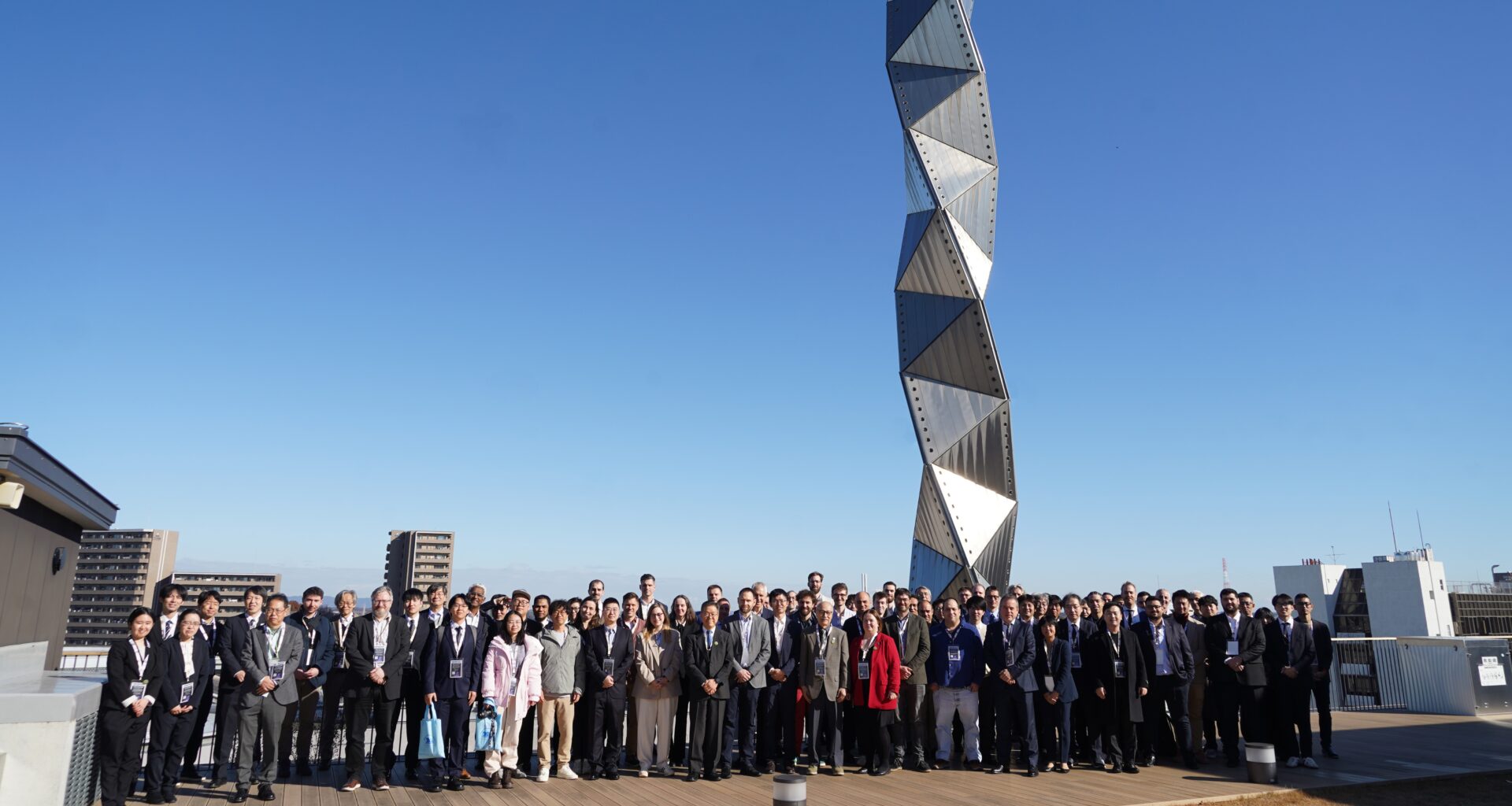
International experts convened in Mito City, Japan, from 10 to 12 December 2025 for the 10th Workshop on Computational Fluid Dynamics for Nuclear Reactor Safety Issues (CFD4NRS-10). Hosted by the Thermohydraulic Safety Research Group of the Nuclear Safety Research Center at the Japan Atomic Energy Agency (JAEA), the event welcomed over 100 participants from research organisations, technical support organisations, industry, and academia around the world.
Held for the first time in Japan and organised by the NEA Working Group on Analysis and Management of Accidents (WGAMA), the meeting opened with remarks from General Chairs Hisashi Ninokata (Polytechnic of Milan and Tokyo Tech), and Yasuteru Sibamoto (JAEA), joined by Martina Adorni (NEA) and Satoshi Abe (JAEA). Their leadership and enthusiasm set the stage for a dynamic and collaborative gathering.
This year’s workshop was especially significant, coinciding with the 25th anniversary of WGAMA. Over the past quarter-century, WGAMA has played an important role in advancing knowledge and methodologies for accident prevention, mitigation, and management in nuclear power plants. The group’s efforts have led to the development of high-fidelity computational codes, innovative experimental programmes, and a thriving international community of experts, all united in their commitment to nuclear safety.
Throughout the three days, workshop participants engaged in nearly 70 technical presentations across 13 sessions, as well as three keynote lectures and a special session. The programme spanned a broad spectrum of topics, from uncertainty quantification and validation, to innovative experiments and measurement techniques, multiphase and multiphysics simulations, and practical applications in regulatory contexts. The keynote lectures were delivered by internationally recognised experts: Dr Pierre Ruyer of the Autorité de Sûreté Nucléaire et de Radioprotection (ASNR), who addressed the challenges of uncertainty quantification in CFD; Dr Martina Adorni (NEA), who highlighted the importance of experimental programmes and joint code validation initiatives; and Dr Jan-Patrice Simoneau of Électricité de France (EDF), who discussed the growing relevance of CFD in both established and innovative reactor designs. Dr Victor Petrov of Paul Scherrer Institut (PSI) led a special session on the NEA WGAMA T-Junction CFD Benchmark, highlighting the importance of benchmarking activities for the international community.
This was also an opportunity to thank Dr Jan-Patrice Simoneau for decades of outstanding contributions to the field and to the CFD4NRS.

The work of the international nuclear safety community does not end here. The challenges ahead will require sustained collaboration and innovation. All participants are encouraged to remain engaged with WGAMA and the CFD Task Group, to participate in future benchmarks and experimental projects, and to support the development of the next generation of researchers and engineers.