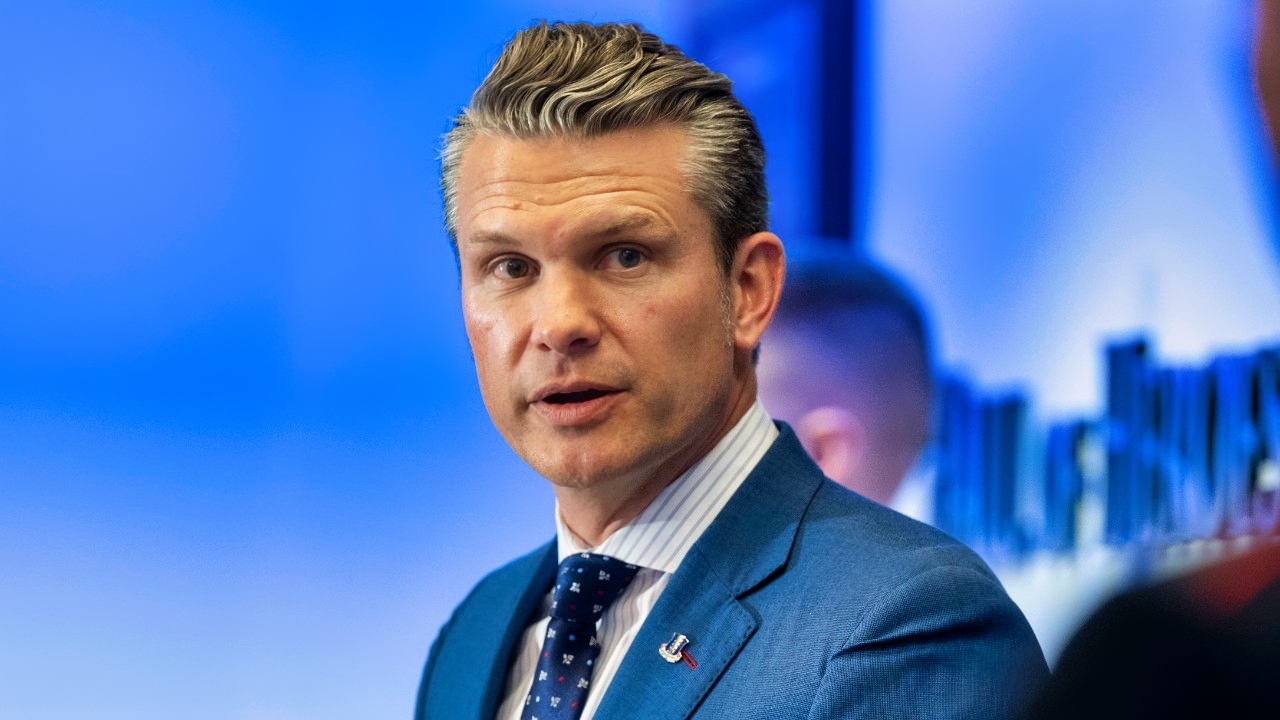
Key Points and Summary – Secretary of War Pete Hegseth is floating a major shake-up of the Pentagon’s combatant command system, potentially downgrading powerful regional commanders created by Goldwater-Nichols.
-Dr. Robert Farley argues that questioning the aging COCOM model is fair—but doing it by executive fiat, without a serious congressional process, is dangerous.
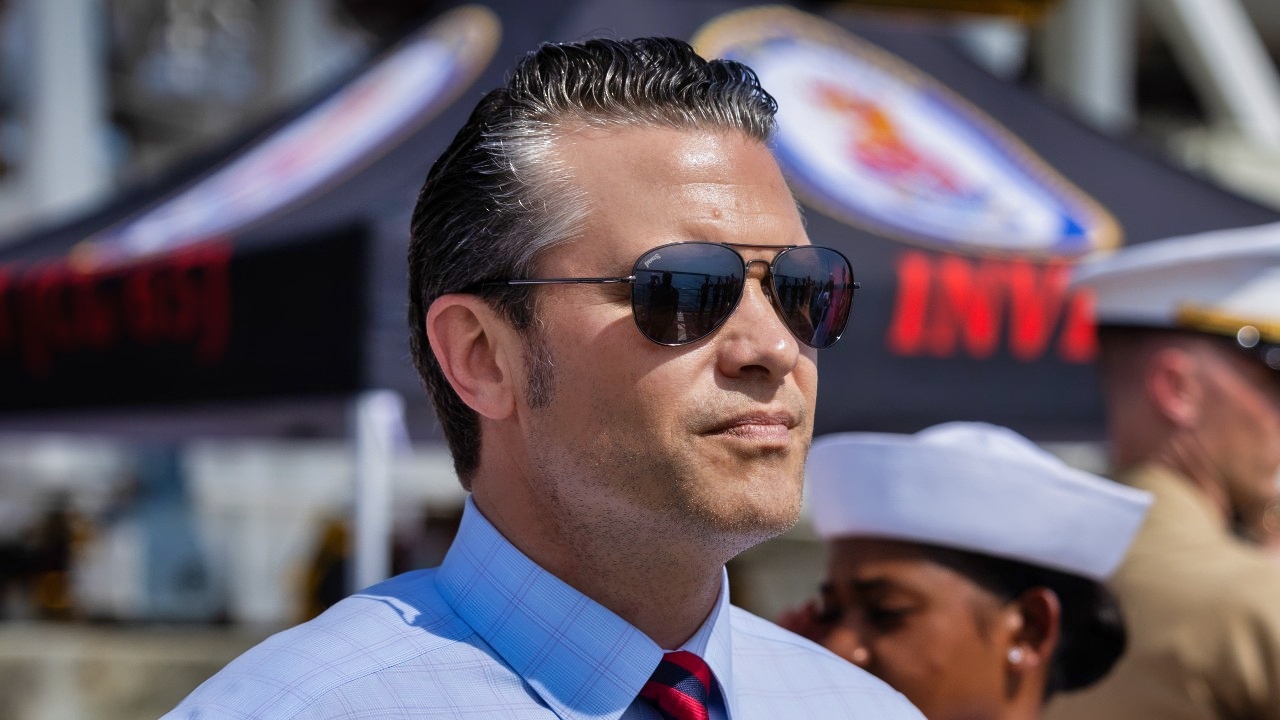
U.S. Secretary of Defense Pete Hegseth boards the Ticonderoga-class guided-missile cruiser, USS Chosin (CG 65), Panama, April 9, 2025. U.S. Southern Command and the Panamanian security forces collaborate to ensure and maintain regional stability during natural disasters, medical catastrophes or regional conflicts. (U.S. Marine Corps photo by Lance Cpl. Van Hoang)
-Unlike the 1947 National Security Act or Goldwater-Nichols, Hegseth’s approach appears rushed, thin on detail, and designed to limit outside input.
-That makes any changes easy to reverse and hard to trust. Real reform, Farley contends, demands bipartisan buy-in, uniformed support, and patience—not a four-year experiment with U.S. warfighting architecture.
Pete Hegseth’s Big Pentagon Shake-Up: Is the Combatant Command Era Ending?
Secretary of Defence (renamed Secretary of War) Pete Hegseth wants to reorganize the combatant command system. Details remain vague. Still, Hegseth seems to want to de-emphasize some regional commands by grouping them under larger formations.
This restructuring would presumably reduce the power of the combatant commanders, who were elevated to exceptional power and visibility roles by the 1986 Goldwater-Nichols reforms.
The System
Reform of the existing system shouldn’t be rejected out of hand. Combatant Commanders are often viewed as akin to imperial proconsuls in their authority and responsibility for regional military diplomacy and planning.
The Goldwater-Nichols reforms were intended to facilitate cooperation between the services at a time when technological developments had increasingly made “joint” action a necessity rather than a luxury.
The elevation of the combatant commanders was a not-fully-intended consequence of the reform, leading eventually to making such figures as H. Norman Schwarzkopf and David Petraeus into international celebrities.
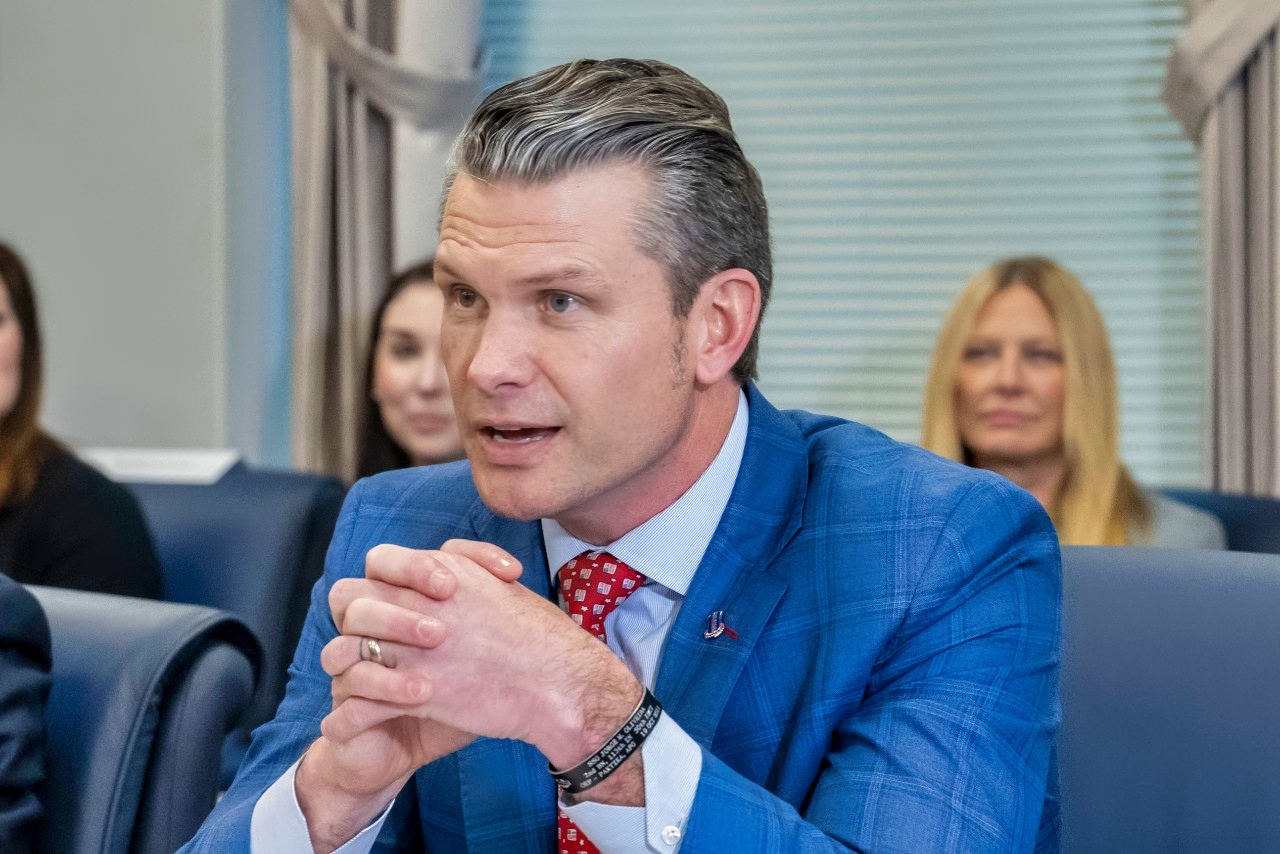
Secretary of Defense Pete Hegseth hosts a bilateral exchange with Australian Deputy Prime Minister Richard Marles at the Pentagon, Washington, D.C., Feb. 7, 2025. (DoD photo by U.S. Air Force Senior Airman Madelyn Keech)
To be sure, there are certain benefits to the existing system, not least that it supports the development of career paths and the cultivation of subject matter expertise that enable effective military diplomacy in a regional context. But there’s little doubt that the existing system has become bloated.
It’s worth our while to listen to ideas that could modify institutional structures created under vastly different geopolitical conditions.
Role of Congress
But there’s a problem. Goldwater-Nichols was a significant revision of how the United States conducted security, and it was hard work. The 1947 National Security Act was similarly hard work, but both bundles of legislation were designed to make lasting reforms that would establish long-standing institutions.
Both required immense bipartisan work in Congress, with significant intervention from the executive branch and the uniformed services.
Conflict was often brutal, and the consequences of the legislation were sometimes unpredictable. When it was done, there was nevertheless the sense that the machinery of the United States government had gotten something done.
But, that’s not what’s happening here. There’s no hint of any effort to engage with Congress or allow extended debate on what the new system will look like. Thus far, all indications suggest that the reforms will be initiated in the executive branch with limited outside input.
Indeed, limiting outside input seems to be a feature, not a bug; increasing decision-making speed is one of the reform’s rationales. This means that core constituencies who will be affected by the decisions do not influence how they are made.
And of course, noting the prospect for reform doesn’t make any particular reform sound. Secretary of War Hegseth has done little to earn trust either domestically or internationally, and the prospect of a major reform on his watch justifiably strikes many observers as terrifying.
The evident exclusion of Congress from this reform process does not imply confidence that the reforms will be well considered or have a broad base of support within or outside government.
Finally, what is done exclusively by executive action can easily be undone exclusively by executive action. The 1947 National Security Act established a system that the national security bureaucracy could rely upon, with marginal revisions, for decades. Goldwater-Nichols did the same.
Hegseth’s reforms, if not supported by a deeply divided Congress, may not survive Hegseth. It hardly seems necessary to note that conducting major reforms to how the Pentagon does business every four years is bad for the national security of the United States of America, which is why previous efforts engaged with, rather than avoided, Congress.
A Pentagon Transformed?
It’s never wrong to question the relevance of the institutions that we expect to protect US security and further US interests.
This is as true for CentCom as it is for USAID or the Voice of America. The defenders of these institutions and practices should have answers for why they’re relevant and why they represent a good investment of the time, people, and assets of the United States of America.
In 2014, this author proposed abolishing the US Air Force and folding its assets into the Army and the Navy.
A recent op-ed by National Security Journal Contributor Harrison Kass suggested doing the same thing to the United States Marine Corps.
The combatant command system is bulky, off-putting to much of the world, and the relic of a strategic environment that no longer exists. Some of those problems may be remediable, while others may be inherent to the size and scope of the US defense apparatus.
Reform, if possible, needs to be undertaken with care, considerable forethought, and buy-in from both Congress and the uniformed military.
At this point, it does not seem that Secretary Hegseth has done the difficult work that genuine change requires.
About the Author: Dr. Robert Farley, University of Kentucky
Dr. Robert Farley has taught security and diplomacy courses at the Patterson School since 2005. He received his BS from the University of Oregon in 1997, and his Ph. D. from the University of Washington in 2004. Dr. Farley is the author of Grounded: The Case for Abolishing the United States Air Force (University Press of Kentucky, 2014), the Battleship Book (Wildside, 2016), Patents for Power: Intellectual Property Law and the Diffusion of Military Technology (University of Chicago, 2020), and most recently Waging War with Gold: National Security and the Finance Domain Across the Ages (Lynne Rienner, 2023). He has contributed extensively to a number of journals and magazines, including the National Interest, the Diplomat: APAC, World Politics Review, and the American Prospect. Dr. Farley is also a founder and senior editor of Lawyers, Guns and Money.