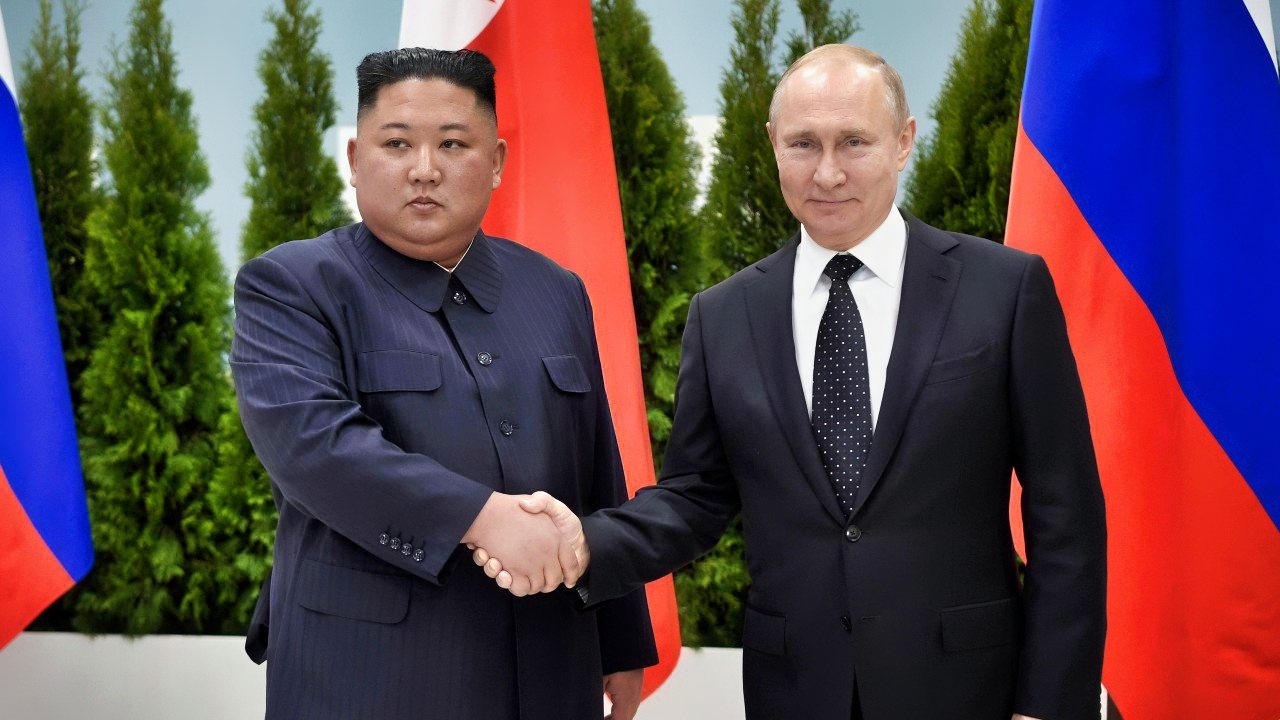
Key Points and Summary – Russia’s reliance on North Korea is one of the clearest side-stories of the Ukraine war—and it will matter as President Donald Trump pushes for an endgame.
-Facing high artillery burn rates and political limits on mass mobilization, Vladimir Putin needed ammunition and manpower without risking backlash at home.
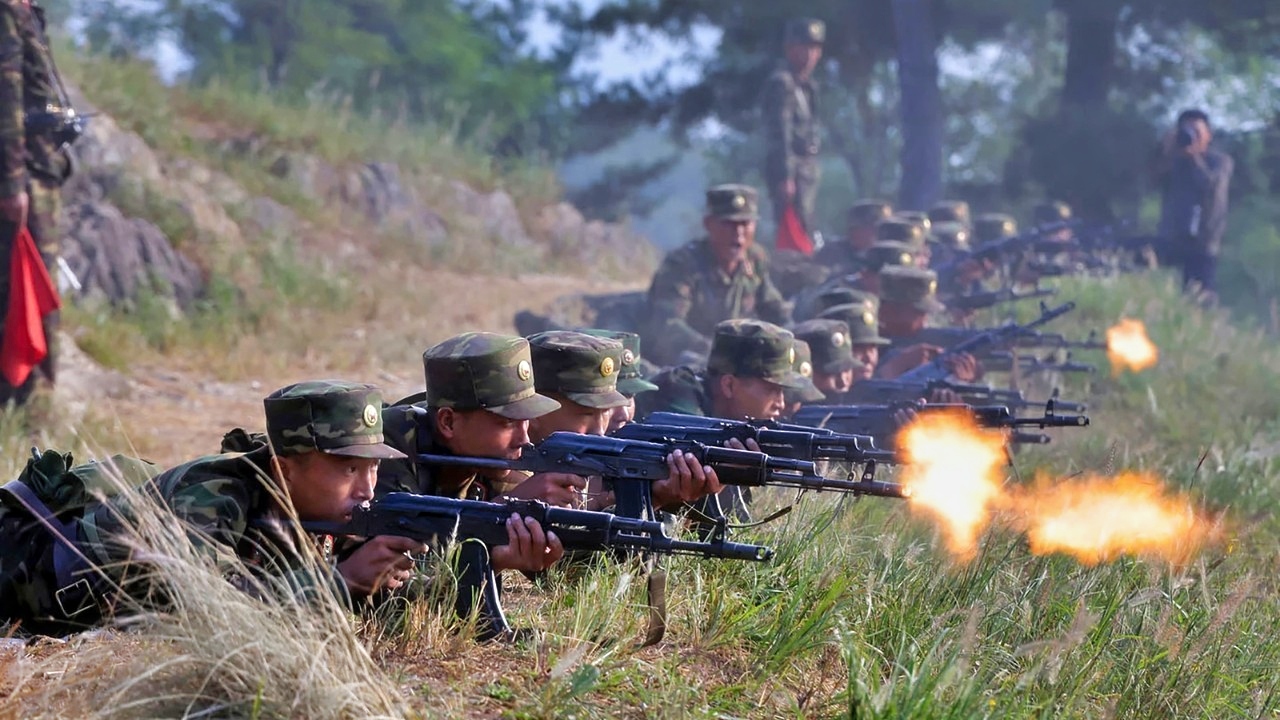
North Korea Soldiers. Image Credit: KCNA/North Korean State Media.
-Kim Jong Un could supply both, selling shells and exporting soldiers for hard currency.
-In return, Pyongyang likely sought food, banking access to blunt sanctions, and discreet help improving missile testing, guidance, and re-entry.
-Yet this partnership looks transactional rather than durable and may fade as the war’s pressure eases for both sides.
Russia’s North Korea Alliance Can Be Summed Up in 1 Word: Necessity
As United States President Donald Trump tries to resolve the Ukraine War, the Russian relationship with North Korea will come into focus again. Russia and the North have been allies as the war has dragged on.
Russia has been forced to re-fit and re-arm much of its ground force. Russia turned to North Korea two years ago, foregoing a more valuable relationship with far wealthier South Korea. This ‘alliance’ probably will not survive the war, however.
Why Russia Went to North Korea
Russian President Vladimir Putin has tried to avoid mobilizing the broad Russian middle class to fight in Ukraine. He fears popular resistance to the war if its burdens fall squarely on his main base of support.
So Russia has outsourced the war, hiring mercenaries from around the world. It has also lacked the ammunition supplies to meet the high artillery expenditure rates of modern warfare.
North Korea has been valuable in both respects. It has been manufacturing ammunition for decades due to its arms race with South Korea. And it similarly has a massive conscript army because of that arms race. North Korean leader Kim Jong-Un has been happy to sell his enormous ammunition stockpiles to Putin and to hire out his soldiers as mercenaries for his cash-strapped economy.
What Did North Korea Get in Return?
There is much debate over the upside for North Korea in this relationship. Putin’s ‘receivables’ are evident on the battlefields of Ukraine: North Korean soldiers have been taken captive; North Korean hardware has been found or captured. But North Korea is notoriously secretive. Neither it nor Russia has shared any information on Russian transfers.
But logic lets us guess. North Korea suffers from regular food insecurity. Russian foodstuffs are likely one of the sought-after benefits. North Korea is also heavily sanctioned because of its nuclear and missile programs.
US dollars and Russian banking help evade that sanctions cordon, too. But the most controversial area is Russian aid with Northern nuclear missiles.
North Korea already has functional nuclear weapons of decent scale (probably around two hundred kilotons). And Putin would likely balk at direct assistance regarding the world’s most potent weapons. But North Korea does need help with missile development.
Its geography makes missile testing difficult. Long-range tests traverse neighboring airspace. And while it appears to have mastered sheer throw-weight, questions remain over its ability to strike a designated aim-point, and whether its missile nose cones can survive the stresses of atmospheric re-entry.
In other words, North Korea can probably reach the US mainland, but it is unknown if its missiles will break up in-flight or actually hit a meaningful target (rather than just land in some random location).
Is it Just a Transactional Relationship?
The ‘alliance’ has served both parties well, but durable alignments typically rest on shared values and interests. Here, Russia and North Korea diverge widely. In a general sense, both are autocracies and oppose the US-led international liberal order.
But Russia has openly imperialist aims under Putin, which small North Korea will never share. Putin has made clear that he misses the days of Soviet geopolitical dominance. Part of that was North Korea’s inclusion in the Soviet sphere of influence.
North Korea, by contrast, seeks limited nationalist goals—ideally reunification on its terms with South Korea. But barring that, the Kim have long sought to maintain North Korean independence from the larger powers around the North, including Russia.
Ideologically, too, Russia and North Korea are far apart. North Korea is practically a theocracy, with a highly unique personality cult which most of its neighbors, including China, find bizarre. Russia, by contrast, is a relatively typical fascist state now, far more similar to China than cold-war throwback North Korea.
There is little reason to think these ideologically diverse states will hang together once they no longer need each other.
For Pyongyang, a world dominated by the US, or by a Sino-Russian axis, is equally objectionable. Cut loose from Russia, we should expect North Korea to return to its time-tested ways of local provocations to demonstrate its independence against all comers—including Russia.
Author: Dr. Robert Kelly, Pusan National University
Dr. Robert E. Kelly is a professor of international relations in the Department of Political Science and Diplomacy at Pusan National University in South Korea. His research interests focus on Security in Northeast Asia, U.S. foreign policy, and international financial institutions. He has written for outlets including Foreign Affairs, the European Journal of International Relations, and the Economist, and he has spoken on television news services such as the BBC and CCTV. His personal website/blog is here; his Twitter page is here.