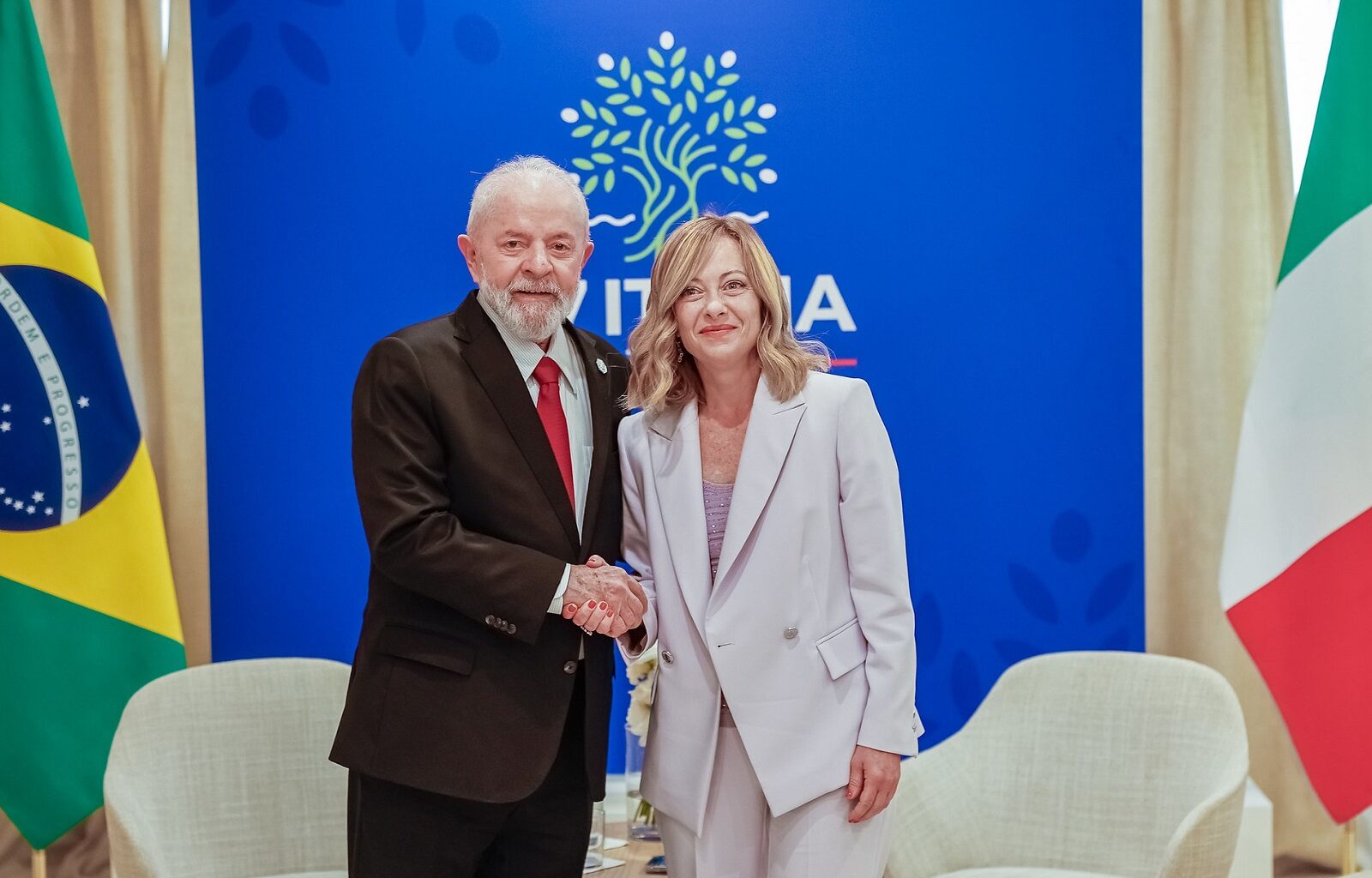
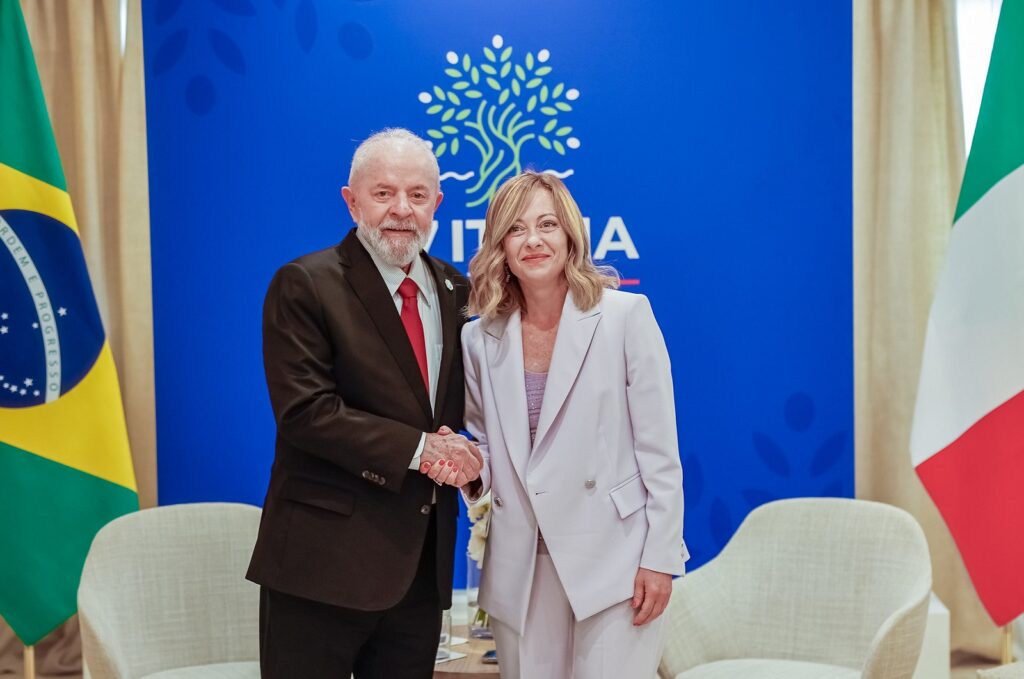
Italian Prime Minister Giorgia Meloni dampens expectations of an imminent agreement between the EU and Mercosur. Credit: Palacio do Planalto, CC BY-ND 2.0 / Flickr.
For the global diplomatic and commercial scene, the long-anticipated free trade agreement between the European Union and Mercosur is at an impasse, despite earlier announcements pointing to its imminence before the end of 2025. For decades, these negotiations have dragged on, marked by advances and setbacks that reflect deeply divergent economic and political interests.
In recent hours, expectations of an imminent signing — which had seemed within reach in the context of the summit scheduled to be held in Brazil — have cooled significantly following remarks by Italian Prime Minister Giorgia Meloni, who described it as “premature” to greenlight the pact in the coming days.
Her stance has reignited doubts about the viability of an agreement that for years has symbolized a massive opportunity for global trade integration, but which also exposes tensions over agriculture, regulatory standards, and trade reciprocity.
Meloni’s statement, delivered before the Italian Parliament, was not an outright rejection but rather a warning about the steps that are still considered necessary before moving forward. Italy, along with France and other EU member states, has called for additional measures to ensure that the European agricultural sector does not suffer adverse effects from competition with South American products.
This emphasis on safeguards, phytosanitary controls, and compensation mechanisms reveals the deep concerns that persist at the heart of the European bloc and that have complicated what would otherwise be a procedural signing after more than two decades of negotiations.
Meloni cools expectations of an imminent EU–Mercosur deal
Meloni cast doubt on the signing of the agreement in the coming days between the EU and the Mercosur countries, stressing that certain measures, although presented, “have not been fully concluded” and that there must be room to discuss them with Italian farmers before assuming a definitive political commitment.
“All these measures, although they were presented, have not been fully concluded. Therefore, we believe that signing the agreement in the coming days, as has been suggested, is still premature,” said Italy’s head of government.
Meloni clarified that this “does not mean that Italy intends to block or reject the agreement as a whole,” while assuring that she is “very confident that by the beginning of next year all the conditions will be met.”
This clarification reflects not only the complexity of the negotiations but also the internal pressure faced by European leaders whose political legitimacy depends in part on protecting traditional productive sectors.
Although the prime minister made clear that this stance does not imply opposition to the treaty as a whole and expressed optimism that the necessary conditions could be met early next year, her message showed a clear cooling of expectations for an imminent signing.
A landmark agreement sought for decades
The agreement between the EU and Mercosur, which groups Brazil, Argentina, Paraguay, and Uruguay, has been considered one of the most ambitious free trade deals in recent times, with implications for a combined market representing hundreds of millions of consumers.
However, moving toward its formal ratification requires not only approval by the European Commission, but also the backing of a qualified majority of member states, corresponding to at least 15 countries representing 65% of the EU’s population.
Objections from Italy and France, which share similar concerns about the importation of products such as meat or sugar, have strained that balance, putting the process on hold just when it seemed close to completion.
At the heart of these reservations are the big differences in economic structure between the two blocs. The EU seeks to ensure stringent standards on production issues, pesticide use, animal welfare, and the environment, while Mercosur countries see the treaty as a decisive opening for their agricultural exports.
For some in Europe, the industrial benefits promised by the agreement, such as increased exports of vehicles and machinery, do not offset the perceived risks to local farmers. For their part, South American governments view these additional requirements as a potential bureaucratic obstacle that could dilute the advantages of preferential access promised by the pact.
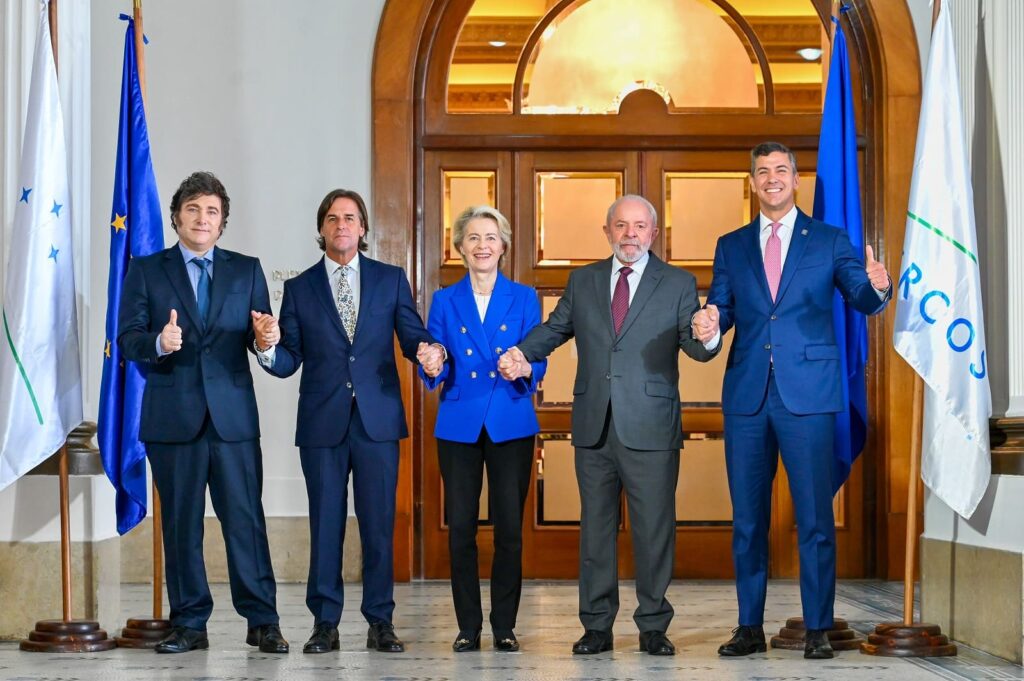
Disagreements among some EU countries over the protection of their agricultural products are holding up the signing of the historic agreement with Mercosur, which seemed imminent. Credit: European Union, CC BY-SA 4.0.
The response from Brazilian President Lula da Silva: ‘Now or never’
In light of the shift in the situation, Brazil’s reaction was swift. President Luiz Inácio Lula da Silva issued an ultimatum to European leaders, encapsulating Mercosur’s frustration with the stalemate in the negotiations.
In public statements, Lula urged EU countries to decide “now or never,” in a tone that reflects not only urgency but also the impatience of a region that has waited more than a quarter of a century for a robust treaty. This demand takes on added significance given the proximity of the Mercosur summit in Foz do Iguaçu, where it had been planned to sign the agreement after 26 years of talks.
Lula was blunt in pointing out that the doubts expressed by France and Italy could jeopardize not only an immediate signing but also the political viability of the agreement as a whole. His ultimatum implies that, if decisive progress is not made in the coming days, Brazil and its partners could reconsider their commitment or explore alternatives that do not depend on the will of the EU’s most reluctant member states.
This hardline, no-concessions stance underscores a strategic shift: The countries of Mercosur are no longer willing to prolong a negotiation they consider essential to their economic development.
The clash between a tight diplomatic timetable and the domestic political needs of European countries reveals how difficult it is to reconcile such divergent priorities. While some EU governments are pushing to move forward with a treaty that would strengthen the bloc’s commercial position vis-à-vis other global powers, others stress the importance of protecting traditional sectors from changes that could be perceived as disruptive.
For their part, the Mercosur countries appear increasingly unwilling to accept delays, interpreting European reluctance as a sign of disinterest or disguised protectionism. Amid this dispute, expectations of an imminent signing are fading, at least for now, leaving in limbo an agreement that, if concluded, could redefine transatlantic trade relations.
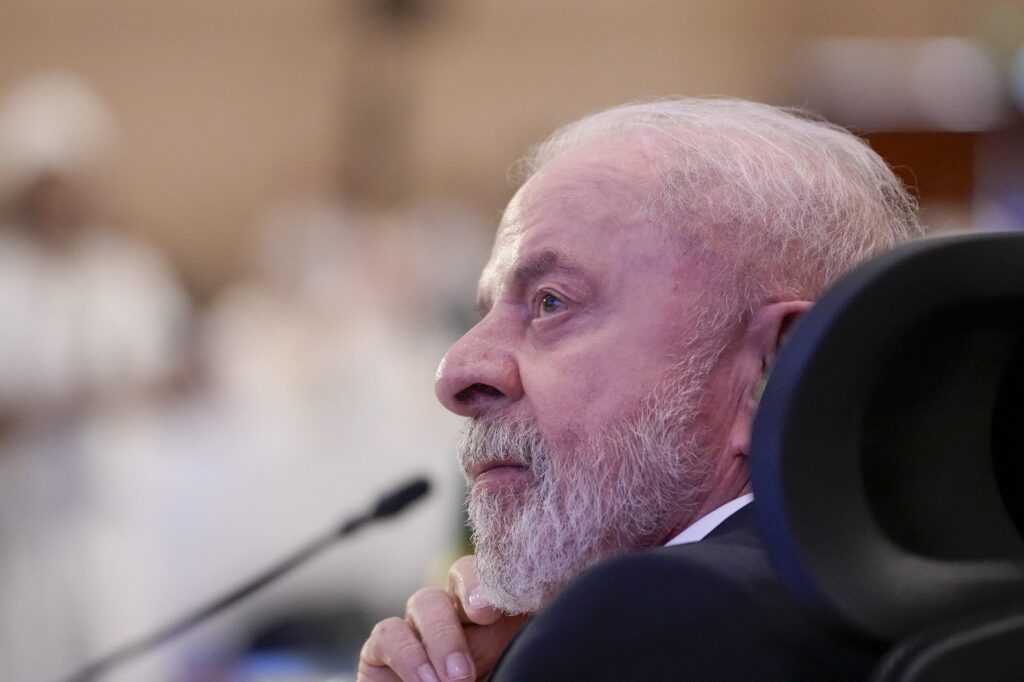
Brazilian President Lula Da Silva responded forcefully to Giorgia Meloni’s statements and warned that the agreement is “now or never.” Credit: Andrea Puentes / Presidency of Colombia.