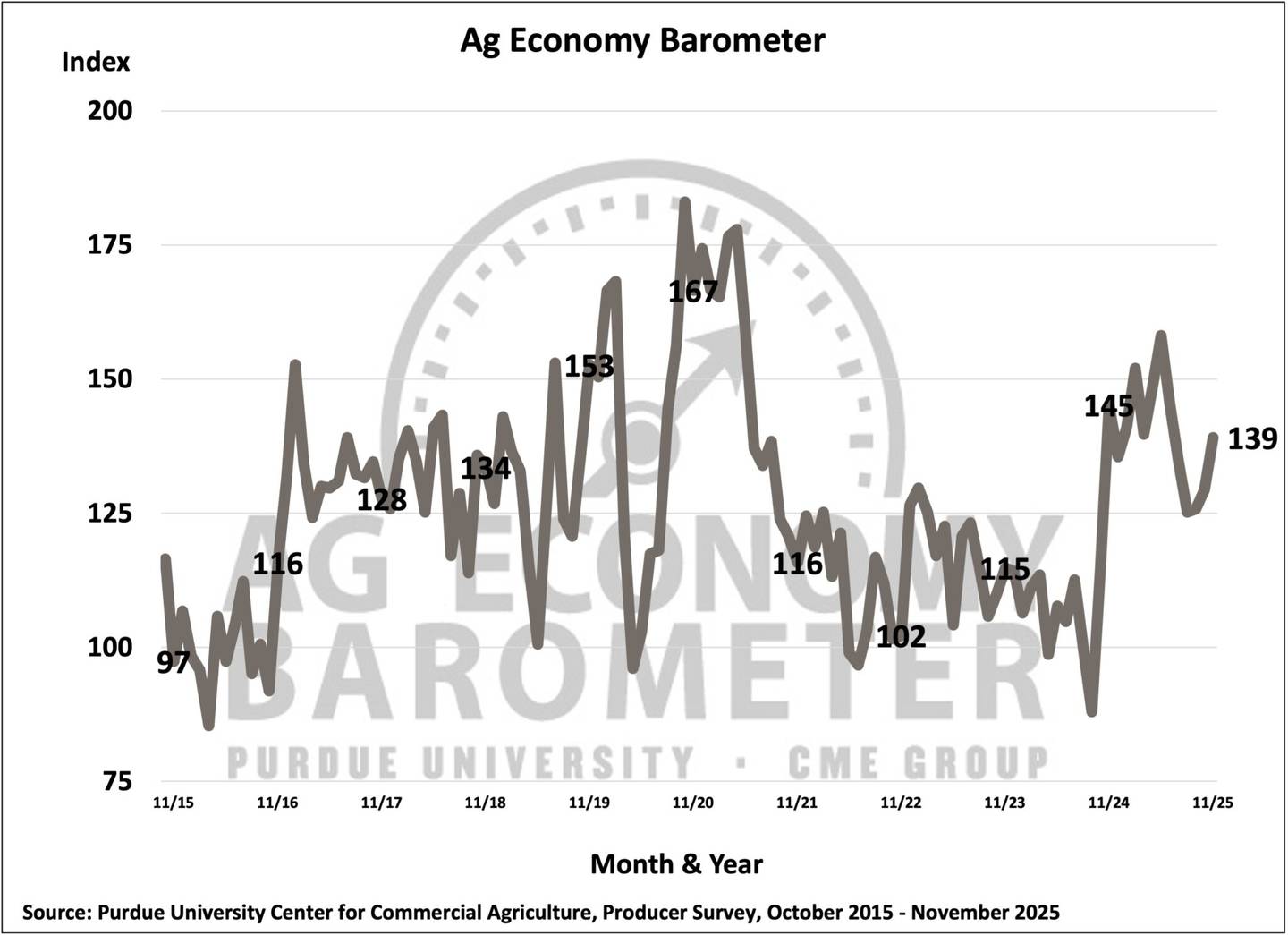
WEST LAFAYETTE, Ind. — Farmers were more optimistic about the ag economy in November, according to the Purdue University/CME Group Ag Economy Barometer.
The barometer rose 10 points from October to a reading of 139.
“The increase was driven primarily by producers’ more optimistic outlook for the future, as the Future Expectations Index climbed 15 points to 144, while the Current Conditions Index dipped two points to 128,” the report stated.
Factors for this spike in optimism include a rise in crop prices during the survey, as well as the announcement of a U.S.-China trade pact signaling expanded U.S. agricultural export opportunities.
The stronger financial outlook in the crop sector compensated for a weaker outlook in the livestock sector, where declining cattle prices affected the industry.
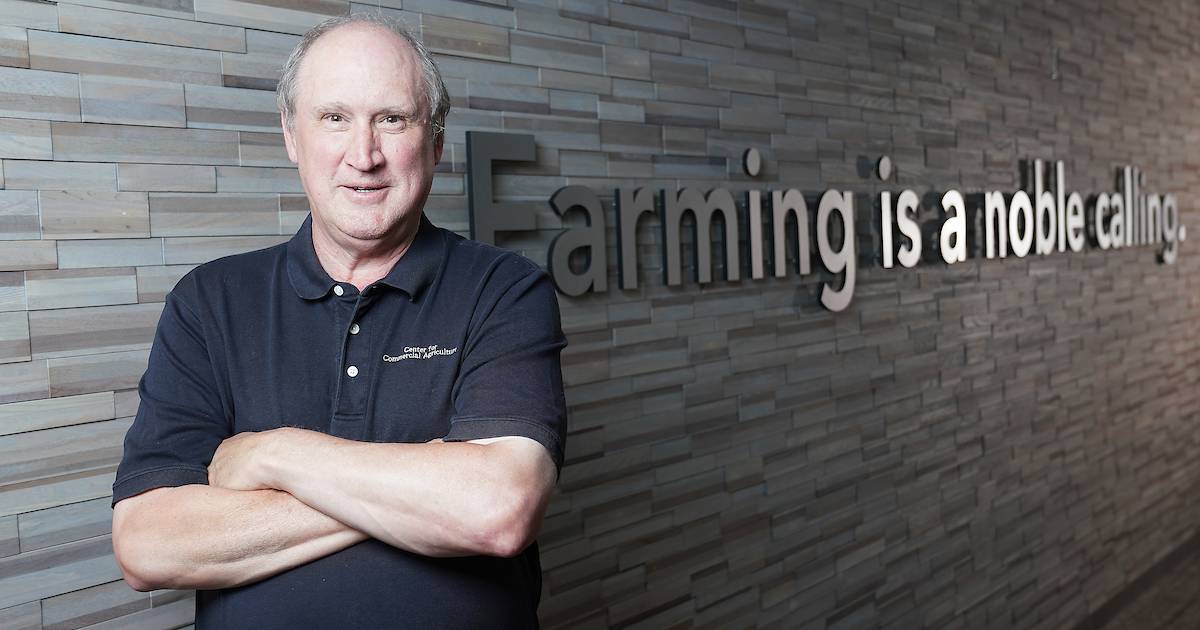
“Producers became more optimistic about U.S. agricultural trade prospects in November,” said Michael Langemeier, the barometer’s principal investigator and director of Purdue’s Center for Commercial Agriculture.
“That coincided with a rise in crop prices, which led to farmers’ improved expectations for their farms’ financial performance and an improvement in farmer sentiment.”
Other report highlights include:
• The percentage of producers expecting better financial results this year grew to 24%, up from 16% in October.
• The Farm Capital Investment Index fell six points to 56, with only 16% of respondents indicating that now is a good time to make major investments in their operations.
• Only 7% of respondents said they expect U.S. agricultural exports to weaken over the next five years, down from 14% in October and 30% in March.
• While 8% anticipate a decline, 47% of corn producers said they expect soybean exports to increase over the next five years.
• Most producers expect to receive a supplementary support payment from the U.S. Department of Agriculture, similar to the 2019 Market Facilitation Program.
• If received, 58% of respondents said they would use an MFP payment to pay down debt.
• The Short-Term Farmland Value Expectations Index increased to 116, up from previous months.
• The Long-Term Farmland Value Expectations Index increased by four points to a record high of 165.
“The record-high reading of the Long-Term Farmland Value Expectations Index indicates that farmers retain an optimistic long-run outlook for agriculture,” Langemeier said.
“Although rising crop prices and improved trade prospects have bolstered optimism, producers remain cautious in their investment and production decisions, reflecting the short-term uncertainty they face.”
Farmers expect weakened operating margins in 2026. To combat this, many are making adjustments, such as switching to lower-cost seed traits or varieties and reducing phosphorus applications.
The survey also asked farmers about their attitudes toward policy shifts. More than half expect U.S. tariffs to ultimately strengthen the agricultural economy.
Read the complete report at purdue.edu/agbarometer.