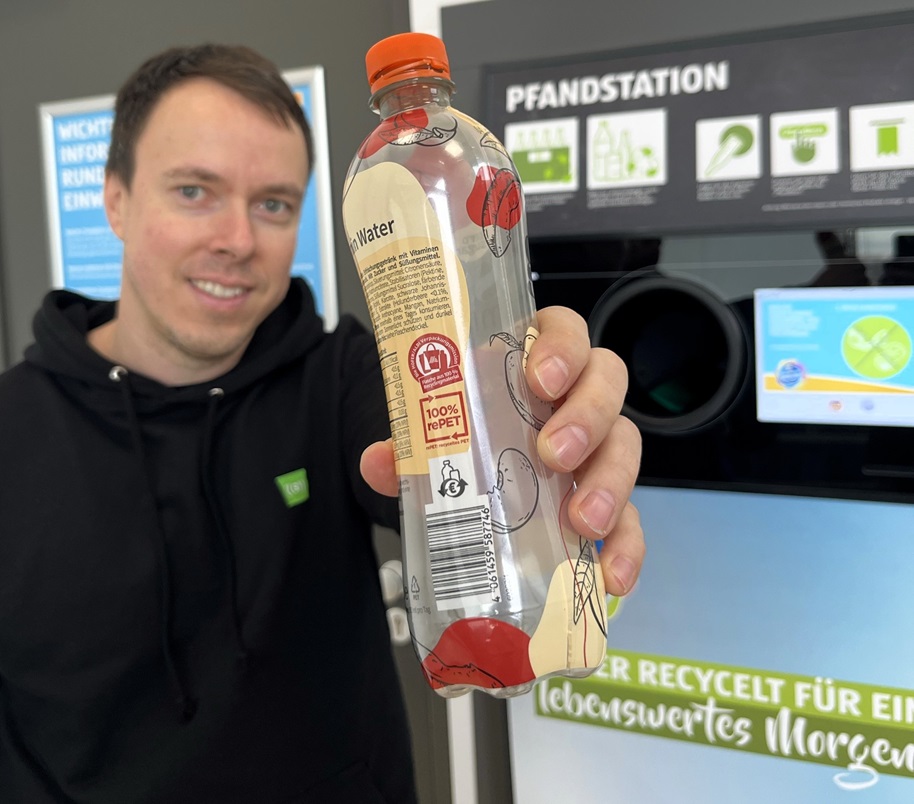
In the first year of its deposit return scheme (DRS), Austria has collected more than 1.2 billion PET bottles and aluminum cans by the end of November, amid strong public support, according to the program administrator.
Austria was the 17th country in Europe to adopt a DRS for single-use beverage containers, to help improve collection rates in line with the EU’s Single-Use Plastics Directive. The country aims to hit a return rate of at least 90% – around 2.2 billion beverage containers – by 2027, two years earlier than the EU directive mandates.
The Recycling Pfand Österreich organization, which administers the DRS, is owned by Trägerverein Einwegpfand (EWP), an industry association composed of beverage producers and retailers. EWP expects to meet the country’s 80% return-rate target by the end of 2025 and to release the final yearly figures in January, according to a press release.
Looking ahead, EWP plans to clarify consumer guidance by highlighting the difference between previous recycling efforts and the DRS, which offers verifiable recycling outcomes. In addition, the association plans to add more manual collection points to support smaller retailers and increase accessibility, introduce drop-off points that direct the returned deposit to charitable organizations, and explore the possibility of public container-return points.
The Austrian scheme, implemented Jan. 1, 2025, accepts PET beverage bottles and aluminum cans from 0.1 liters to 3 liters (about 3 to 100 fluid ounces). Consumers pay a €0.25 (about $0.30) deposit per container, which is refunded upon return.
Continental DRS programs drive high collection
The deposit amount in other European countries with DRS varies from about 10 to 25 cents, with Sweden implementing the first program, in 1984.

European collection rates for PET bottles range from 98% in Germany and 97% in Finland, which implemented DRS programs in 2003 and 1996, respectively, to 43% in Poland, whose scheme started this year, according to data compiled by Sensoneo. The global sensor technology firm has collaborated on DRS in several European nations, including Ireland and Slovakia.
Top 10 EU PET bottle collection rates
CountryCollection rateYear DRS implementedGermany98%2003Finland97%1996Denmark93%2002Norway92%1999Slovakia92%2022Iceland91%1989Ireland91%2024Lithuania90%2016Sweden88%1984Estonia87%2005
Source: Data collated by Sensoneo as of 10 November 2025
The Austrian program was implemented just two years after being established in late 2022, and in its first months weekly returns increased steadily before stabilizing at 7 million to 9 million units collected per week. This indicates high consumer engagement and smooth national operation, according to the press release.
EWP said Sensoneo’s prior experience helped ensure a smooth rollout in Austria.
“Sensoneo’s expertise in other countries that started implementation of a DRS before Austria was not only valuable during the setup phase of the scheme in 2024, but Sensoneo is still acting as a kind of sparring partner to reflect ideas and solution approaches by Austrian colleagues,” said Valentin Hamm, head of IT at EWP.