Willow Kennedy
A new independent analysis finds that restarting construction of two advanced nuclear reactors at the V.C. Summer Nuclear Station could deliver long-term economic, workforce, and energy infrastructure benefits for South Carolina, reinforcing the state’s role in the next phase of U.S. nuclear deployment.
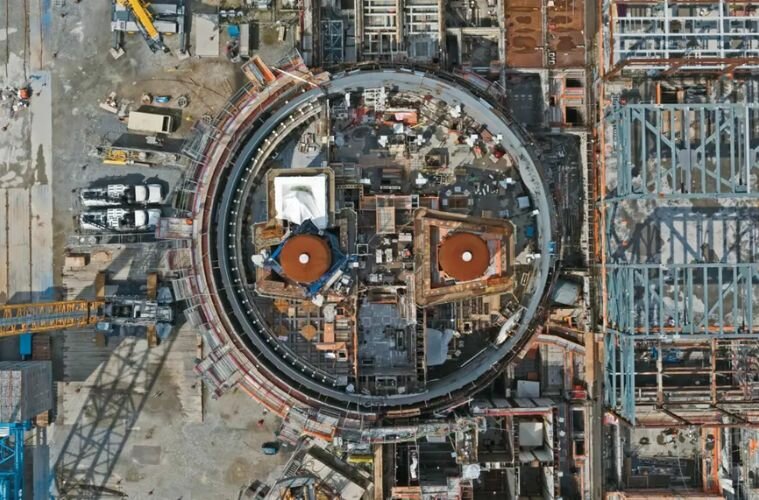
The study, conducted by PricewaterhouseCoopers (PwC) and released by Westinghouse Electric Company, evaluates the economic impact of completing two partially built AP1000 reactors at the V.C. Summer site in Jenkinsville. PwC’s assessment concludes that the project would generate billions in economic activity during construction and sustain thousands of high-skill jobs once operational.
Construction Phase Drives Near-Term Economic Impact
According to PwC, the seven-year construction period—expected to run from 2026 through 2032—would contribute an estimated $7.3 billion to South Carolina’s gross domestic product. During this phase, the project would support an average of approximately 7,300 jobs annually, totaling more than 51,000 person-years of employment across engineering, manufacturing, construction, and project management roles.
Labor income during construction is projected at $4.1 billion statewide, with tax revenues reaching approximately $1.6 billion when federal, state, and local impacts are included. PwC notes that leveraging the existing partially built infrastructure at V.C. Summer significantly reduces both construction costs and deployment timelines compared with greenfield nuclear projects.
Beyond South Carolina, the national economic footprint during construction would be even larger. PwC estimates $13.8 billion in U.S. GDP and nearly 13,000 jobs supported annually across the broader supply chain, underscoring the project’s relevance to domestic manufacturing and industrial policy objectives.
Long-Term Operations Deliver Sustained Employment
Once operational, the two AP1000 units would provide approximately 2,300 megawatts of nuclear capacity—enough to power at least 1.5 million homes in South Carolina. PwC projects that ongoing plant operations would generate $1.6 billion in annual state GDP and support roughly 2,700 jobs each year over a minimum operating life of 80 years.
Cumulatively, long-term operations are estimated to produce more than $130 billion in state GDP, alongside $30 billion in labor income and $31 billion in tax revenues. Nationally, operational impacts would reach $2.1 billion in annual GDP and support approximately 3,700 jobs across the U.S. economy.
Workforce Development and Nuclear Cluster Effects
PwC’s analysis emphasizes that economic impacts extend beyond direct employment. The project would require approximately 1,000 permanent, highly skilled workers onsite, including engineers, nuclear technicians, chemists, and operations specialists. Westinghouse plans to invest heavily in workforce training and partnerships with educational institutions to ensure a qualified labor pipeline.
South Carolina already hosts a significant nuclear energy cluster, employing more than 16,000 workers statewide. Completing the V.C. Summer reactors would reinforce this ecosystem, strengthening supplier networks, attracting related industries, and anchoring advanced energy skills in the region.
Infrastructure, Grid Reliability, and Policy Context
The report situates the V.C. Summer restart within broader national energy policy trends. The project aligns with federal efforts to expand nuclear capacity as a tool for grid reliability, energy security, and industrial competitiveness. The AP1000 technology is currently the only Generation III+ reactor operating commercially with fully passive safety systems and an established global deployment track record.
With electricity demand rising from data centers, advanced manufacturing, and electrification, the analysis frames large-scale nuclear projects as foundational infrastructure rather than standalone generation assets. By reactivating a partially completed site, South Carolina could accelerate deployment while minimizing land use and construction risk relative to new builds.
A Long-Horizon Infrastructure Decision
PwC’s findings present the V.C. Summer restart as a multi-decade infrastructure investment with implications well beyond short-term job creation. The combination of construction-phase stimulus, long-term operational employment, and grid-scale carbon-free power positions the project as both an economic development and energy resilience strategy for the state.
While final investment and regulatory decisions remain ahead, the report concludes that completing the two AP1000 units would represent one of the most consequential energy infrastructure investments in South Carolina in decades—one with measurable impacts on jobs, GDP, and the future structure of the state’s power system.
Put Your Results in Front of Industry Peers
Use the Awards platform to benchmark your progress and increase visibility with decision-makers.
Entries must be received by December 31, 2025.