Two separate incidents involving protected bird species have raised serious concerns among conservationists in Slovakia, with environmental groups warning of weak enforcement of nature protection rules in some of the country’s most valuable habitats.
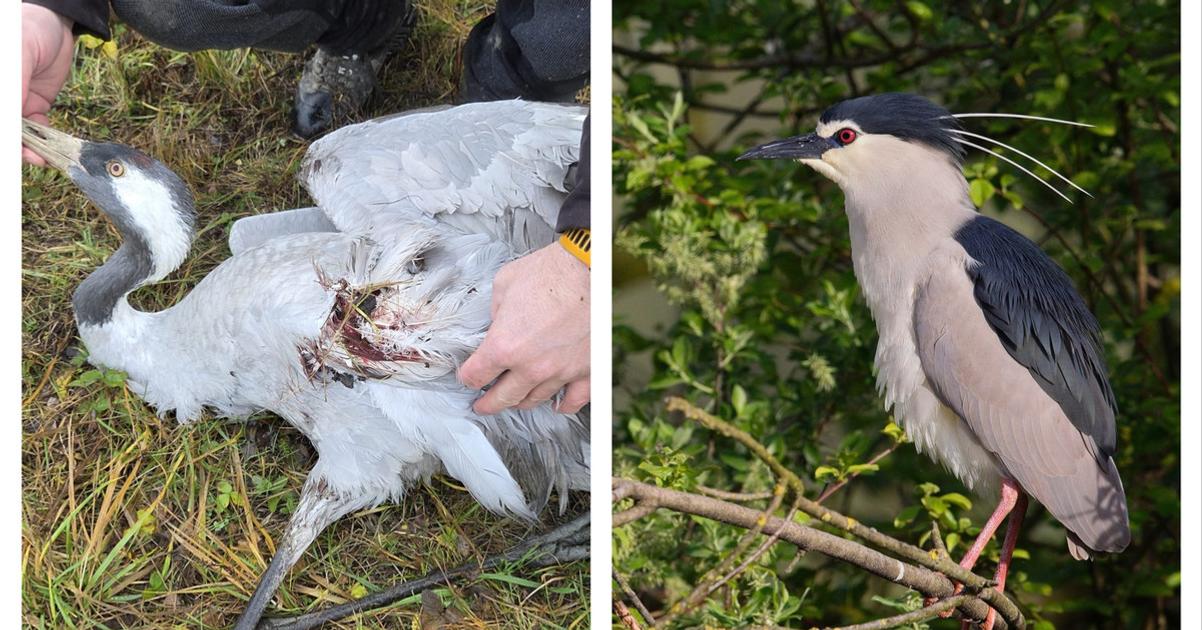
Two strictly protected common cranes were shot dead over the weekend at the Senné Fishponds in eastern Slovakia, one of the country’s most important wetland areas. At the same time, conservationists are disputing a logging operation in another protected bird area, which they say threatens one of Slovakia’s last stable breeding colonies of the rare black-crowned night heron.
Matej Repel, director of the Slovak Ornithological Society/BirdLife Slovakia (SOS/BirdLife Slovensko), described the developments as a “black week for birds”, according to Denník N.
Related article
Birdwatching in Bratislava
Read more
Protected cranes killed at major migration site
The crane shooting took place on 13 December along the Bird Paradise educational trail in the Senné Fishponds protected bird area (CHVÚ Senianske rybníky).
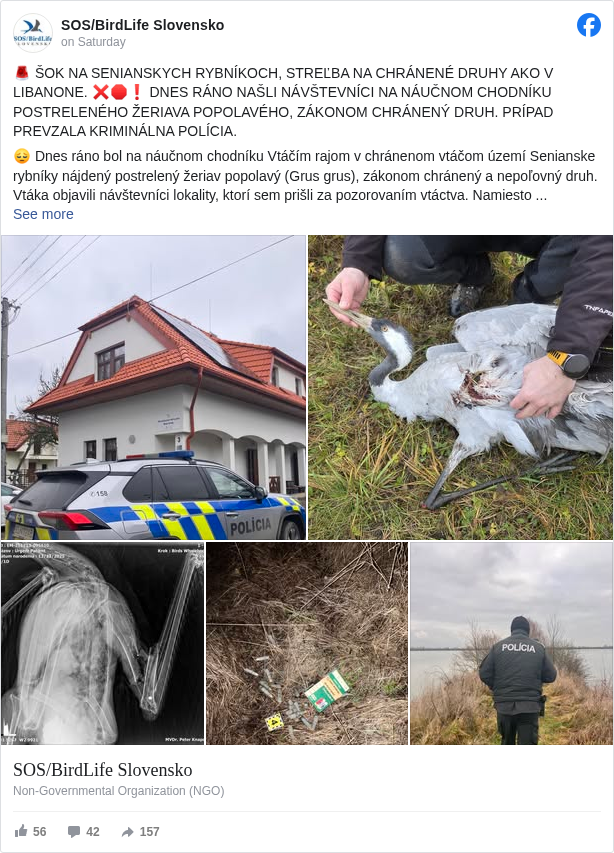
Ornithologists carrying out a routine census reported hearing gunshots during the morning. Shortly afterwards, they discovered a seriously injured crane hidden in nearby shrubs. Specialists transported the bird, which was still alive, to a veterinary clinic, where X-ray examinations confirmed the presence of shotgun pellets. Due to the severity of its injuries, the crane had to be humanely euthanised.
Police were called to the scene and an investigator has taken over the case. According to information published by public broadcaster STVR, a second crane was later found dead on the surface of one of the fishponds.
“We needed to retrieve the bird from the water because if it was shot, the pellets in its body can serve as evidence,” ornithologist Repel said.
The common crane is a strictly protected species in Slovakia and may not be hunted under any circumstances. According to nature protection legislation, its so-called social value is €3,000 per bird. As the killing occurred in a protected area, the assessed damage may be multiplied, potentially qualifying the case as a criminal offence.
SOS/BirdLife Slovakia has photographs of hunters present at the site and has handed them over to police investigators. Police are currently searching for the perpetrators and examining whether the shooting was deliberate.
The Slovak Hunting Chamber (SPK) condemned the shooting of protected species at the Senné Fishponds.
Long-standing hunting pressure
According to Denník N, the shooting follows months of intensive hunting activity at Senné Fishponds, which serve as a night roost for large numbers of migrating and wintering birds.
While hunting of certain game species, such as geese and ducks, is legally permitted in parts of the area, conservationists argue that frequent shooting near roosting sites poses a serious risk to protected, non-game species.
Repel told Denník N that on the evening before the incident, around 16,000 geese and 6,000 cranes were roosting at the fishponds. Senné Fishponds are the only regular stopover site for migrating cranes in Slovakia and are considered symbolic of the region.
Dispute over logging in protected bird area
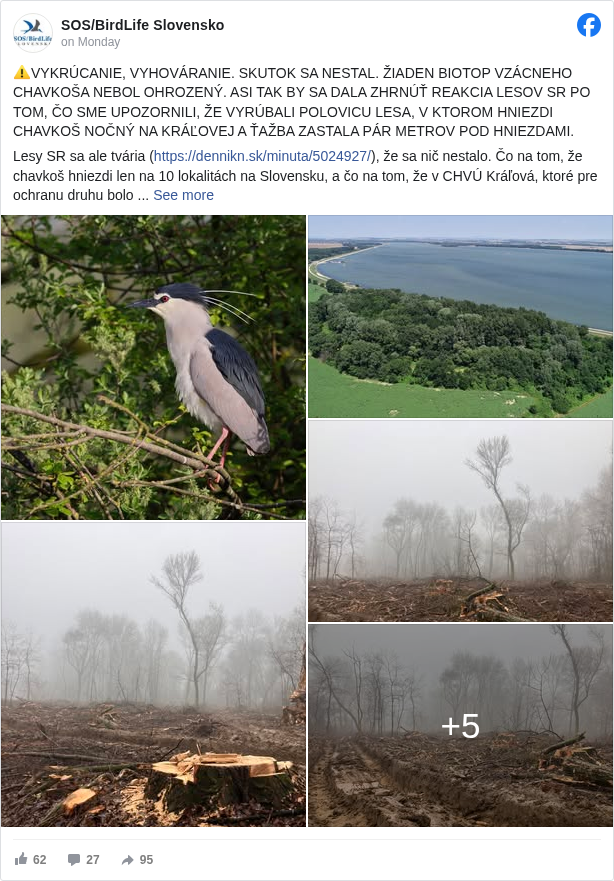
In a separate case, SOS/BirdLife Slovakia has warned of potential damage to a rare black-crowned night heron colony following logging in the Kráľová protected bird area (CHVÚ Kráľová) near Galanta, Trnava Region.
The organisation claims that logging carried out by contractors working for the state forestry company Lesy SR affected part of a floodplain forest that has long served as a nesting site for the species. The black-crowned night heron is one of Slovakia’s rarest breeding birds, with only around ten known colonies nationwide.
“This intervention, although carried out outside the nesting season, represents a serious problem for nature protection,” said Zuzana Lackovičová of SOS/BirdLife Slovakia. She warned that nearly half of the nesting habitats in the protected area — and one of ten Slovak colonies — could be affected.
SOS/BirdLife Slovakia has announced it will file a submission with the relevant district authority seeking to ban further logging in the area and to preserve the remaining forest stand.
Lesy SR rejects allegations
The state forestry enterprise has firmly rejected claims that the logging destroyed protected habitat.
Laura Tettingerová from Lesy SR’s communications department said the logging was carried out strictly in line with the legal regime governing CHVÚ Kráľová and the approved forest management programme.
She said the work took place outside the breeding season and only after checks confirmed that no active colony of black-crowned night herons or other target species was present in the affected stand. The operation concerned a forest stand under 50 years old and will be followed by replanting across the entire area, she added.
“The claims that half of the nesting habitats are endangered do not correspond to reality,” Tettingerová said.
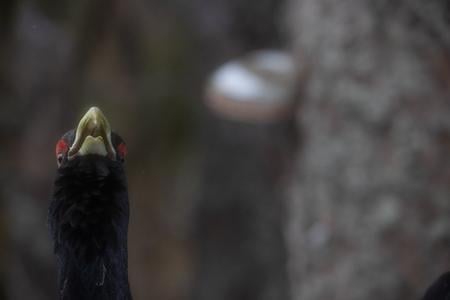
In the past, Lesy SR has denied that logging in mountain forests poses a threat to capercaillie habitats.
“Ignoring the forest’s other vital functions beyond timber production has brought Slovakia, in the case of the capercaillie, to the brink of a second legal dispute with the European Commission. We are now seeing the same dismissive approach again,” said Milan Olekšák, an activist with the My sme les (We Are the Forest) initiative.
Related article
Slovakia failed to protect the capercaillie, EU court rules
Read more