On September 28, 2025, Moldovans went to the polls to vote in an election that would determine their country’s geopolitical orientation. Despite predictions of a divided parliament and strong evidence of Russian interference, President Maia Sandu’s pro-European Action and Solidarity Party (PAS) secured an unexpected majority, far ahead of the pro-Russian faction. This outcome carries significant implications: it preserves the government’s ability to advance negotiations toward EU accession, which a coalition government would likely have derailed. For many, this victory was not only decisive for Moldova’s future but also a demonstration of the limits of Moscow’s strategy of destabilization in Eastern Europe.
However, Russia’s meddling was never just about winning. Its fundamental aim, to cause instability and undermine public trust in democratic institutions, may well have succeeded. The Moldovan case reflects a broader pattern of Russian hybrid warfare across its so-called “near abroad”; even when Moscow loses, the damage to public confidence and political cohesion often endures.
The Kremlin has long sought to reestablish its dominant influence over Moldova, a country it views as part of the “Russian World,” a privileged sphere of influence essential to Russia’s security and identity as a great power. To prevent these former Soviet republics from integrating Western institutions like NATO or the EU, Russia relies heavily on hybrid warfare, a blend of conventional military force and non-military tools, from cyberattacks and electoral interference to economic pressure. Moldova is no exception. In the months leading up to the election, Moscow intensified these tactics on every front, testing the limits of Moldovan resilience.
In this hybrid war, the main battlefield is Transnistria, a separatist region in eastern Moldova where Russia has maintained around 1500 troops since its military intervention in 1992. Despite the Kremlin’s pledge to withdraw its forces, Transnistria remains a “frozen conflict”; internationally recognized as part of Moldova, but de facto independent since 2005, with its own political and administrative institutions deeply tied to Russia. While Chisinau pursues democratization and the rule of law, Transnistria stands as its antithesis: a hub of money laundering, smuggling, and opaque governance.
For decades, Russia used free gas supplies to preserve the region’s loyalty. But in January 2025, when Ukraine stopped allowing gas to be delivered through its territory, Moscow allegedly failed to find an alternative route for Transnistria and blamed Chisinau for the resulting energy crisis. This cutoff was largely interpreted as a political weapon intended to push Moldovans toward social unrest, especially before the elections, and to pressure the government to negotiate reintegration on terms favourable to the Kremlin.
Beyond electoral manipulation, Transnistria remains a structural vulnerability that Moscow can exploit even after the elections, keeping Moldova in a permanent state of tension. The region’s fragile economy, dependence on Russian energy and financing, and its unresolved legal status make reintegration into Moldova politically and economically perilous. Reunification would strain Moldova’s limited resources, introduce some 300,000 largely pro-Russian voters into the electorate, and reignite disputes over the presence of Russian troops and ammunition depots. Even the prospect of reunification risks dividing Moldovan society between those who see it as a patriotic necessity and those who fear it as a path to instability.
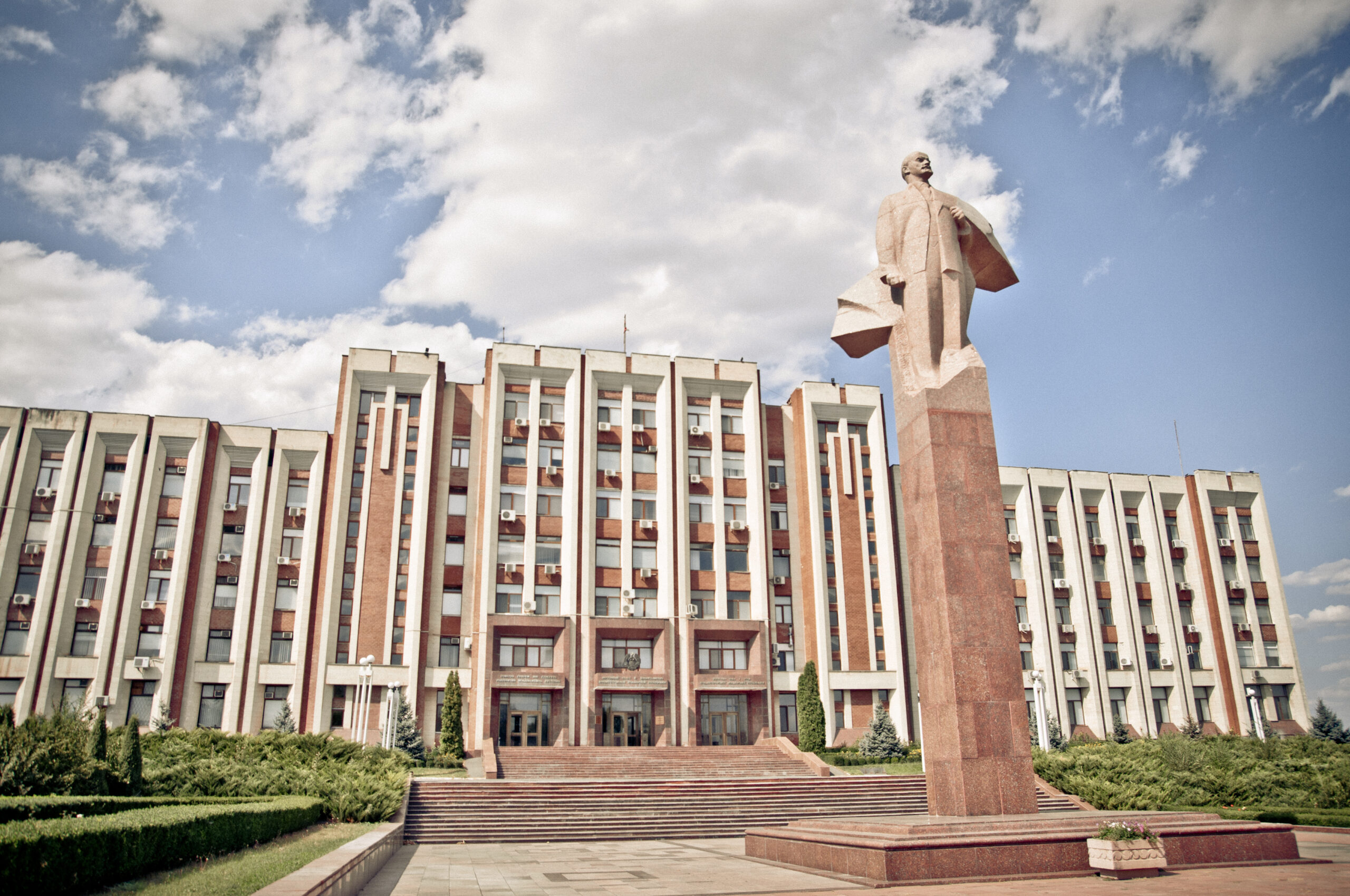 A statue of Lenin in front of the Transnistrian Parliament symbolizes Transnistria’s nostalgia for the Soviet Union and its drive for reunification with Russia.“Transnistrian Parliament, Tiraspol” by Marco Fieber is licensed under CC BY-SA 2.0.
Russia’s interference extends far beyond Transnistria. On social media, the Matryoshka and Overload operations spread fake pro-Russian content aimed at undermining trust in the Sandu government and the European Union. The Orthodox Church, one of Moldova’s most trusted institutions, was also used as a Russian means of influence, with priests invited to Russia and paid to warn parishioners of Europe’s “corrupted values.”
Concerning electoral fraud, after Russian interference in previous elections, Moldova was prepared. The Atlantic Council praised the Moldovan institutions’ vigilance, enforcement of campaign-finance laws, combat against disinformation, and clear communication with voters. The Victory Bloc, a pro-Russian party founded by oligarch Ilan Sor, was excluded from the elections due to illegal financing, and measures to anticipate election fraud were implemented: more than 25,000 people were fined for vote selling before election day, and the maximum sentence for organized vote-buying was raised to seven years in prison. Yet, Russian efforts were massive, including the training of Moldovan men on how to resist the security forces, violence strategies, and even how to use firearms. Similarly, considerable measures to mitigate cyber threats were undertaken, but it remained a serious concern. Overall, it seems that Russia failed to overcome Moldova’s legal and institutional defences, a rare display of democratic resilience in the region.
For most observers, the election signalled a clear rejection of Russian influence. Yet to view the Kremlin’s strategy through the lens of victory and defeat is to misunderstand it. Moscow’s operations in Moldova were not aimed at changing the outcome, but rather at weakening confidence in the process itself.
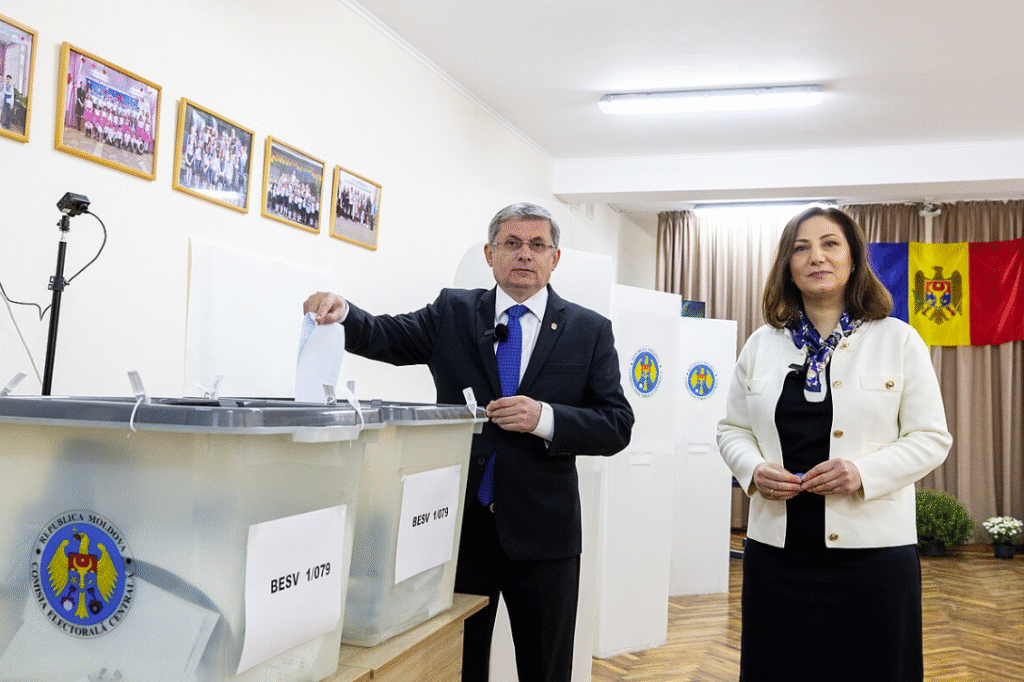 The President of the Moldovan Parliament is casting his vote. “Exercitarea dreptului de vot de către Președintele Parlamentului, Igor Grosu” by Parlamentul Republicii Moldova is licensed under Creative Commons CC0 1.0 Universal Public Domain Dedication.
Even after the ballots were counted, Russian-linked actors attempted to inflame post-election protests and online narratives questioning the vote’s legitimacy. This persistence reveals the essence of hybrid warfare, which is a campaign less about conquering territory than about exhausting societies politically, economically, and psychologically. Clara Volintru, the head of the Bucharest office of the German Marshall Fund, identifies Russia’s ultimate goal as to make citizens doubt that democracy can deliver stability. This psychological component of hybrid warfare had significant effects. A Moldovan government survey found that 70 per cent of the population reported heightened anxiety during the campaign. Another poll revealed that the share of citizens favouring alignment with Russia has only declined by three percentage points since the invasion of Ukraine, now standing at 15 per cent, a reminder of how enduring Moscow’s narratives remain.
Moldova’s election proved that vigilance and transparency can undermine foreign interference. However, it also exposed how fragile that resilience remains. Economic hardship, disinformation, and fatigue continue to threaten the trust that underpins democratic institutions. The Kremlin’s defeat at the polls does not mean the war is over–it has simply shifted to subtler fronts in media, energy, and perception.
For Moldova, the challenge now is endurance. Sustaining institutional strength after the crisis moment has passed will be critical for the future. For Europe, the lesson is clear. In the age of hybrid warfare, success is not measured only by votes cast or alliances secured, but by whether democracies can remain stable and self-confident when interference is permanent and invisible.
Edited by Madeleine Glover
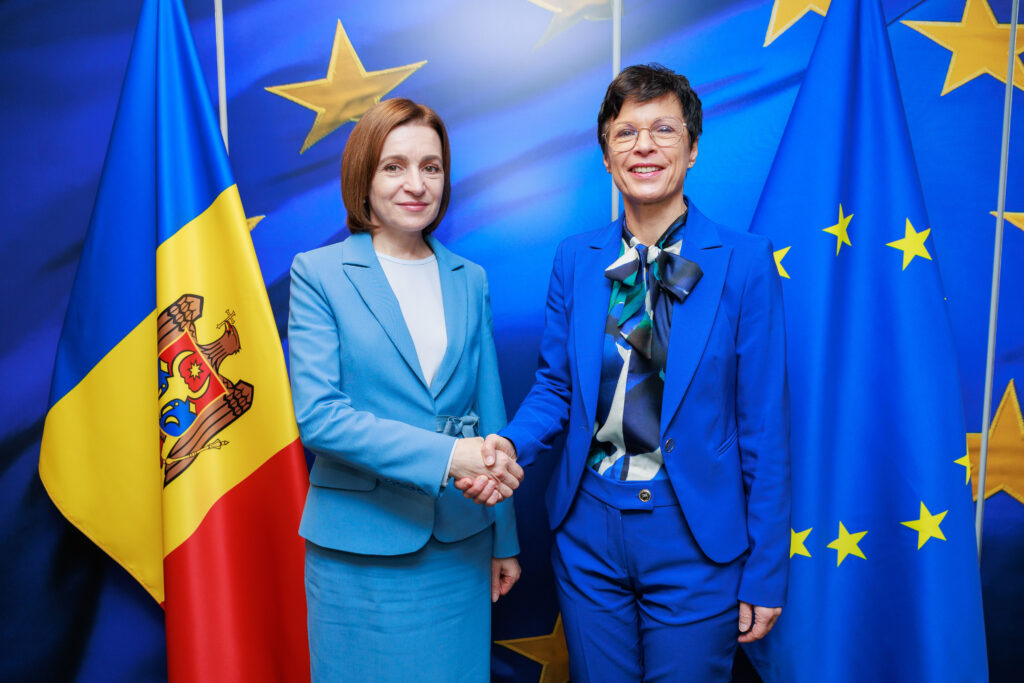
Featured image: “Visit of Maia Sandu, President of Moldova, to the European Commission”, by the Audiovisual Service website of the European Commission, is licensed under the CC BY 4.0