
As the irresistible wave of artificial intelligence sweeps across the globe, a hidden crisis regarding energy and the environment is quietly unfolding.
The International Energy Agency reported in April this year that by 2030, the global electricity demand of data centers is expected to more than double, with artificial intelligence being the primary driver of this surge in electricity consumption.
In this digital arms race triggered by large models, energy has become the scarcest strategic resource. Tech giants such as Microsoft, Google, and Amazon are building their own nuclear power plants, liquid – cooling systems, and even undersea data centers in an attempt to relieve the pressure of energy consumption.
However, a more science – fiction – like solution is emerging: sending data centers into space.
Elon Musk has taken on the role of a promoter single – handedly. With a series of tweets, he first announced on October 31 that SpaceX would deploy data centers in space in the future, and then left a comment of “interesting” when Google announced its space data center plan.

Musk confirmed on Twitter that data centers will be deployed in space in the future
Jensen Huang, the CEO of NVIDIA, also publicly announced his support for StarCloud at GTC 2025, calling it “the next – generation green computing infrastructure.” For a while, “space data centers” were hailed as the ultimate solution in the AI era.
But the question is: Is this a technological leap or a capital – driven story? Can it really relieve the burden on the Earth?
01 The Giants Enter the Game: A High – Stakes Gamble on Space – Based Computing Power
If a few years ago, the concept of “space data centers” was still confined to PowerPoint presentations, then looking back at the end of 2025, this year is undoubtedly the first year for the actual implementation of this concept. Tech giants and emerging aerospace companies are joining hands to build a new digital infrastructure network in space.
In December 2025, a piece of news shocked the tech world: Starcloud completed the world’s first space – based large – model training, achieved orbital AI inference based on Google’s open – source Gemma model, and successfully ran the NanoGPT model trained on the complete works of Shakespeare, enabling it to have Shakespeare – style English expression ability. This system has been actually applied to process satellite images from Capella Space, support the positioning of life rafts at sea and the identification of thermal characteristics of forest fires, and can push real – time alerts to rescue personnel.
This is not just a show of sending servers into space. It is a breakthrough in verification, proving the feasibility of high – performance computing in the harsh space environment.
The CEO of StarCloud couldn’t hide his excitement in an interview with CNBC. He emphasized the core advantage of the space environment: “In space, you can get almost unlimited solar energy. This is much more efficient than building data centers on Earth.”
NVIDIA’s in – depth involvement indicates that the computing – power chip giant has realized that its future growth space may no longer be limited to ground – based computer rooms. By collaborating with companies specializing in the design of space – grade server hardware, NVIDIA is setting standards for the future “orbital computing – power cluster.”
As the leader in commercial aerospace, SpaceX plans to launch the largest IPO in history with a valuation of $1.5 trillion. Its Starlink business and Starship project will be the key engines, and its revenue in 2026 may exceed $24 billion.
For SpaceX, this forms a perfect business closed – loop: using its own Starship to send heavy data – center modules into orbit, using Starlink’s vast satellite network to provide high – bandwidth, low – latency global connectivity, and combining its experience in solar energy and battery management. What Musk is building is not just a rocket company, but an infrastructure empire in the space age.
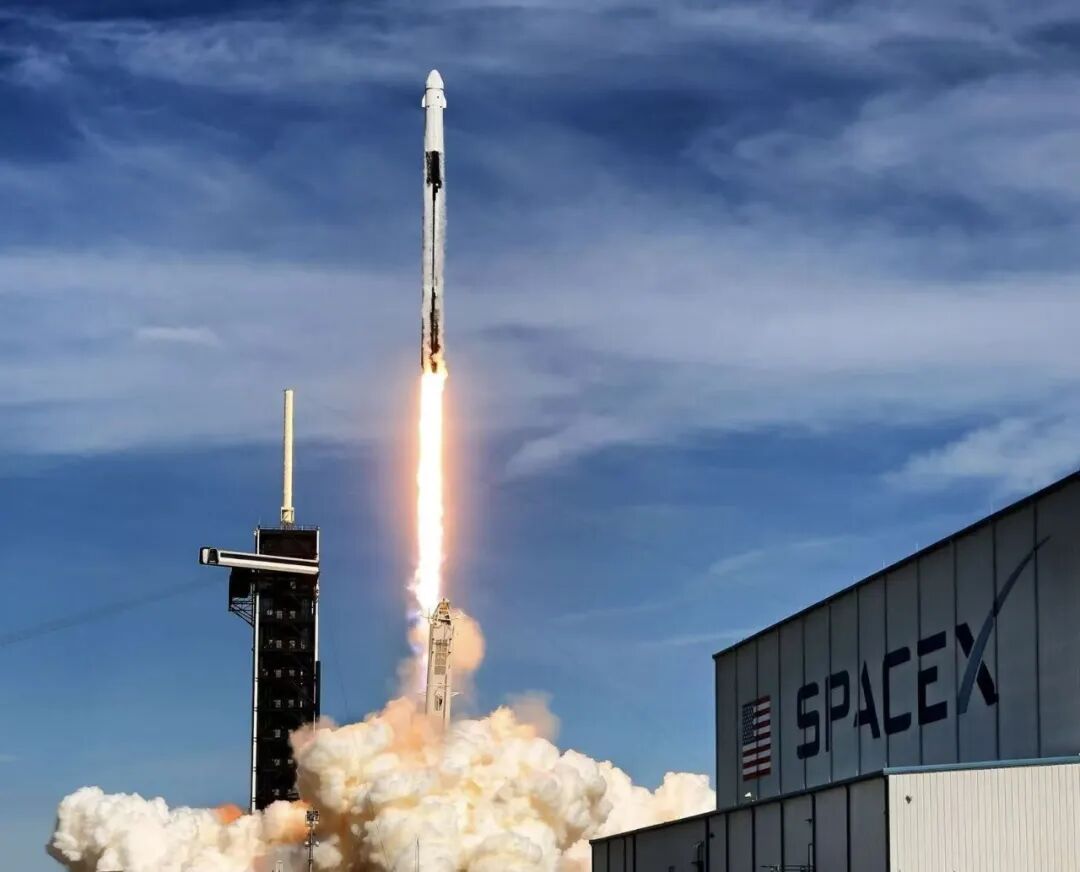
Picture of a SpaceX rocket launch. Source | SpaceX official website
Blue Origin, founded by Amazon’s founder Jeff Bezos, has also assembled a team and has been researching the technologies required for orbital AI data centers for over a year. Sam Altman, the CEO of OpenAI, has also studied the possibility of acquiring a rocket operator to deploy AI computing power in space. Tech giants such as Google are also actively making arrangements.
A land – grab around “orbital computing power” has begun. The giants are not only competing for space resources but also for the right to speak in the future digital economy.
02 A Real Burden – Reliever or Just “Telling a Story”? A Complex Environmental Account
While tech giants are painting a grand blueprint of the stars and the sea, especially at the sensitive time when SpaceX is about to go public, the voices of opposition and doubt have never stopped. Critics believe that this is just another grand narrative in the tech circle to boost valuations, a form of “greenwashing.”
The core point of contention is: Is it really more environmentally friendly to move high – energy – consuming industries into space than to keep them on the ground?
We need to calculate an environmental account dialectically, clarifying the theoretical utopia and the real – world technological constraints.
Supporters of space data centers hold two seemingly unassailable aces: energy and heat dissipation.
Even if ground – based data centers purchase green electricity, they still face the problem of intermittency. For example, there is no light at night and no electricity when there is no wind, and they often need fossil energy for peak – shaving and backup. In contrast, space data centers, in an appropriate orbit such as a sun – synchronous orbit, can receive high – intensity solar radiation almost 24 hours a day without atmospheric attenuation or cloud cover. This is truly stable clean energy.
In terms of the heat – dissipation mechanism, on Earth, cooling data centers usually requires huge cooling towers, consumes millions of gallons of fresh water, or runs high – energy – consuming air – conditioning systems.
Although space is a vacuum and cannot conduct convective heat dissipation, it is an excellent environment for radiative heat dissipation. The cosmic background temperature is close to absolute zero. By designing large radiator panels, heat can be directly radiated into deep space in the form of infrared radiation. Supporters believe that this means the PUE (Power Usage Effectiveness, the closer to 1, the better) can theoretically approach the perfect 1.0, far exceeding the ground – based level.
However, when we delve into authoritative scientific journals and legal analyses, we will find that the reality is far more harsh than the PowerPoint presentation. To achieve the environmental – protection dream in space, we must first cross the threshold of ground – based pollution.
The most fatal factor is the carbon emissions caused by rocket launches themselves, which is the Achilles’ heel of space data centers. Sending tons of server racks and heat – dissipation structures into orbit requires burning large amounts of rocket fuel.
Starcloud estimates that the carbon emissions of an orbital data center powered by solar energy may be 10 times lower than those of a land – based data center powered by a natural – gas generator. However, researchers from Saarland University in Germany calculated in a paper titled “Dirty Bits in Low – Earth Orbit” that considering the emissions from rocket launches and the re – entry of spacecraft components into the atmosphere, the emissions of an orbital data center powered by solar energy may still be an order of magnitude higher than those of a land – based data center. Andreas Schmidt, a computer scientist at Saarland University and a co – author of the paper, said that these additional emissions mainly come from the burning of rocket stages and hardware when entering the atmosphere, which will form pollutants and further damage the Earth’s ozone layer.
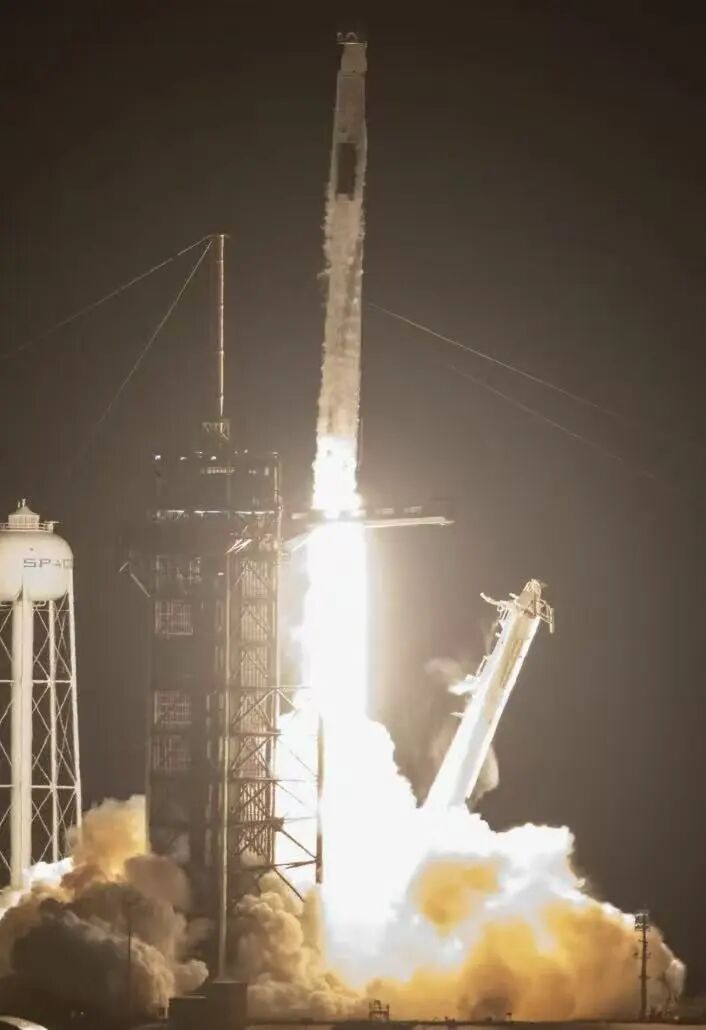
Smoke generated by the night launch of the Artemis I SLS rocket. Source | NASA official website
Scientific American pointed out that even if space data centers become economically feasible, their environmental benefits are not guaranteed. The article cited a research view, warning that current rocket launches emit black carbon and aluminum oxide particles in the stratosphere and higher atmospheres.
The behavior of these pollutants in the upper atmosphere is completely different from that on the ground. They stay longer, have a stronger greenhouse effect, and have a greater potential to damage the ozone layer than equivalent emissions on the ground. In other words, we may be replacing ground – based carbon emissions with a more hidden and difficult – to – manage high – altitude pollution.
Astronomers also have their own concerns. Johnston said that the ideal sun – synchronous orbit would only make orbital data centers visible in the night sky at dawn or dusk. However, Samantha Lawler, an astronomer at the University of Regina, pointed out that some observers rely on dusk to search for near – Earth asteroids, and she is cautious about orbital data centers with solar – panel arrays several kilometers long. She is also worried that such projects may exacerbate the growing problem of space debris, as more hardware is launched into space and more debris and wreckage will fall back into the atmosphere. “There is already so much pollution and debris falling to the ground,” she said.
Therefore, with the current aerospace technology level mainly relying on chemical – fuel rockets, space data centers are unlikely to be a perfect “net – green” solution in the short term. It is more like a stop – gap measure that transfers the ground – based energy pressure to the risk of high – altitude atmospheric pollution, an environmental – protection bet that requires significant technological breakthroughs to pay off.
03 Global Competition and Cooperation: Differentiated Paths of Radicalism and Caution
Space data centers are not just a matter of business and environmental protection. They are rapidly becoming a new battlefield for geopolitics and technological sovereignty. Whoever controls the orbital computing power will occupy the high – ground in the future digital economy.
In this round of competition, the world’s major powers are re – evaluating their positions.
Europe is at risk of falling behind in the space data center competition. The European Space Policy Institute (ESPI) released a report, pointing out that if Europe does not take action now, the EU may miss a “major and emerging” opportunity in its digital and aerospace industries. Europe’s attitude is both anxious and cautious, preferring to conduct rigorous environmental and economic demonstrations first.
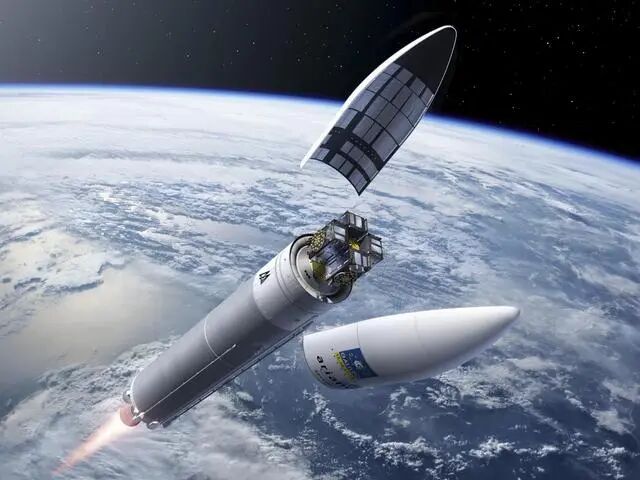
An artistic concept map of the European Galileo navigation satellite. Source | European Space Agency official website
Meanwhile, China is not absent from this competition. Guided by the Beijing Municipal Science and Technology Commission and the Zhongguancun Administrative Committee, the Beijing Star Future Space Technology Research Institute and Beijing Orbital Dawn Technology Co., Ltd. took the lead in establishing the “Space Data Center Innovation Consortium” to integrate the resources of the commercial aerospace industry chain and promote it collaboratively.
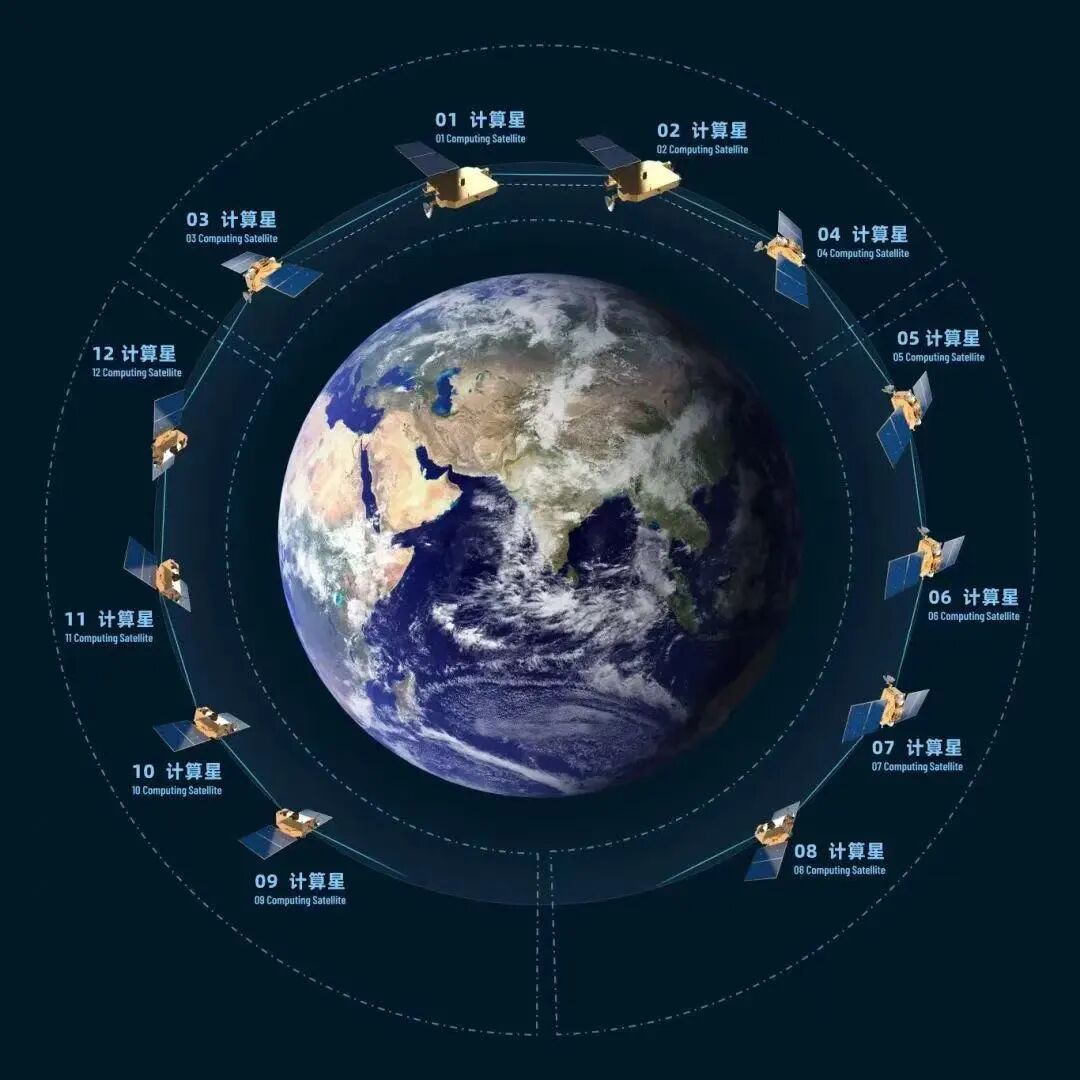
A schematic diagram of the layout of China’s space data center computing – power constellation. Source | WeChat official account of Zhejiang Lab
According to Zhang Shancong, the dean of the Beijing Star Future Space Technology Research Institute, the construction is planned to be divided into three stages:
From 2025 to 2027, key technologies such as energy and heat dissipation for space data centers will be broken through, experimental satellites will be iteratively developed, the first – phase computing – power constellation will be built, with a planned total power of 200 KW and a computing – power scale of 1000 POPS, achieving the application goal of “space data processed in space”;
From 2028 to 2030, key technologies such as on – orbit assembly and construction of space data centers will be broken through, construction and operation costs will be reduced, the second – phase computing – power constellation will be built, achieving the application goal of “ground data processed in space”;
From 2031 to 2035, satellites will be mass – produced and launched in a network, and a large – scale space data center will be built through on – orbit docking, supporting the future “space – based main computing.”
Returning to the original question: Can space data centers really relieve the burden on the Earth?
The answer is not black – and – white.
In the short term, it is probably not a “carbon – reduction tool” but a high – cost, high – risk technological exploration. Especially when people like Musk are eager to promote their IPOs, the public should be more vigilant against the risk of “greenwashing.”
But in the long run, it may be an important part of the future green digital infrastructure. In specific scenarios, such as Earth observation, deep – space exploration, and emergency communication, space – based computing can reduce overall energy consumption with system – level efficiency. More importantly, it forces humanity to think: How can we expand the digital boundaries while maintaining the ecological bottom line?
Space data centers may not become mainstream in the short term, but they remind us that true sustainability does not lie in fleeing the Earth but in redefining the relationship between technology and nature.
References:
CNN Science: Why these companies want to send data centers into space.
CNBC:‘Greetings,earthlings’:Nvidia – backed
Starcloud trains first AI model in space as orbital data center race heats up.
Euronews: Europe risks falling behind in space data centre race, new report warns.
Nature Electronics: The development of carbon – neutral data centres in space.
Scientific American: Data Centers in Space Aren’t as Wild as They Sound.
Wall Street Journal: The Race to Bring Data Centers to Space.
This article is from the WeChat official account “TouchBase”. Author: Huang Wei, Editor: Guo Jiajia. Republished by 36Kr with permission.