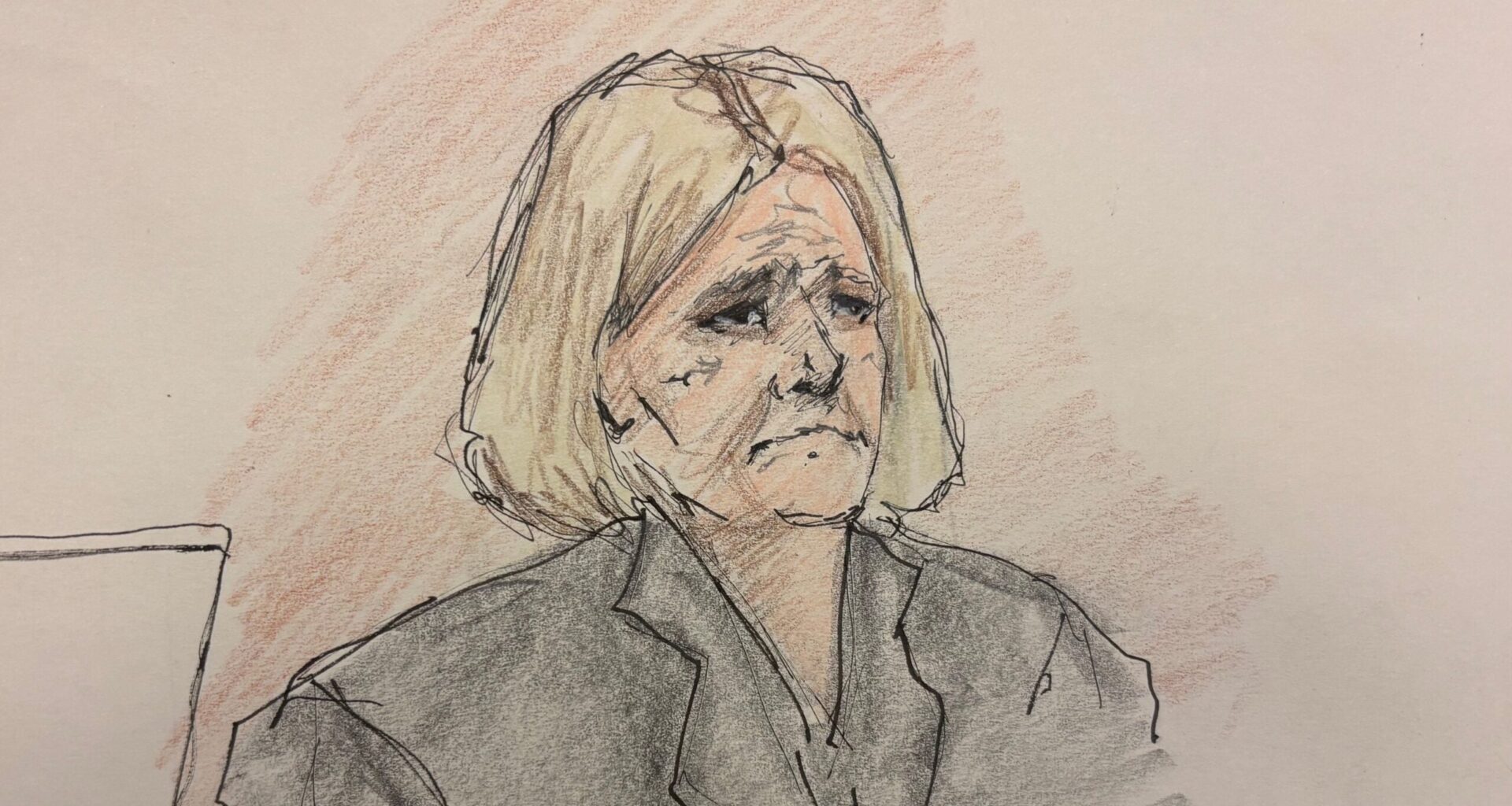
Milwaukee County Judge Hannah Dugan has been found guilty of one count against her and not guilty of another.
She was found guilty of impeding a proceeding, a felony, but not guilty of the less serious misdemeanor charge of concealing an individual to prevent his arrest or discovery.
The jury announced the decision after 8:30 p.m. at the federal courthouse in Milwaukee.
WPR’s “Wisconsin Today” newsletter keeps you connected to the state you love without feeling overwhelmed. No paywall. No agenda. No corporate filter.
The charges stem from an April 18 incident, in which Dugan led a man through a side door of her Milwaukee County courtroom. That happened after federal agents showed up at the courthouse to arrest the man for being in the country illegally.
Dugan’s attorney: ‘The case is a long way from over’
It’s up to U.S. District Court Judge Lynn Adelman to decide Dugan’s sentence. A sentencing date has not yet been set.
Dugan’s defense attorney, Steve Biskupic, said the verdict is “disappointing.”
“The case is a long way from over,” Biskupic told reporters.
He suggested the juror’s split verdict was puzzling and said some elements of one charge against Dugan were the same as the elements needed to prove the other.
“How can you find (her) guilty there and not guilty on the first?” Biskpuic asked.
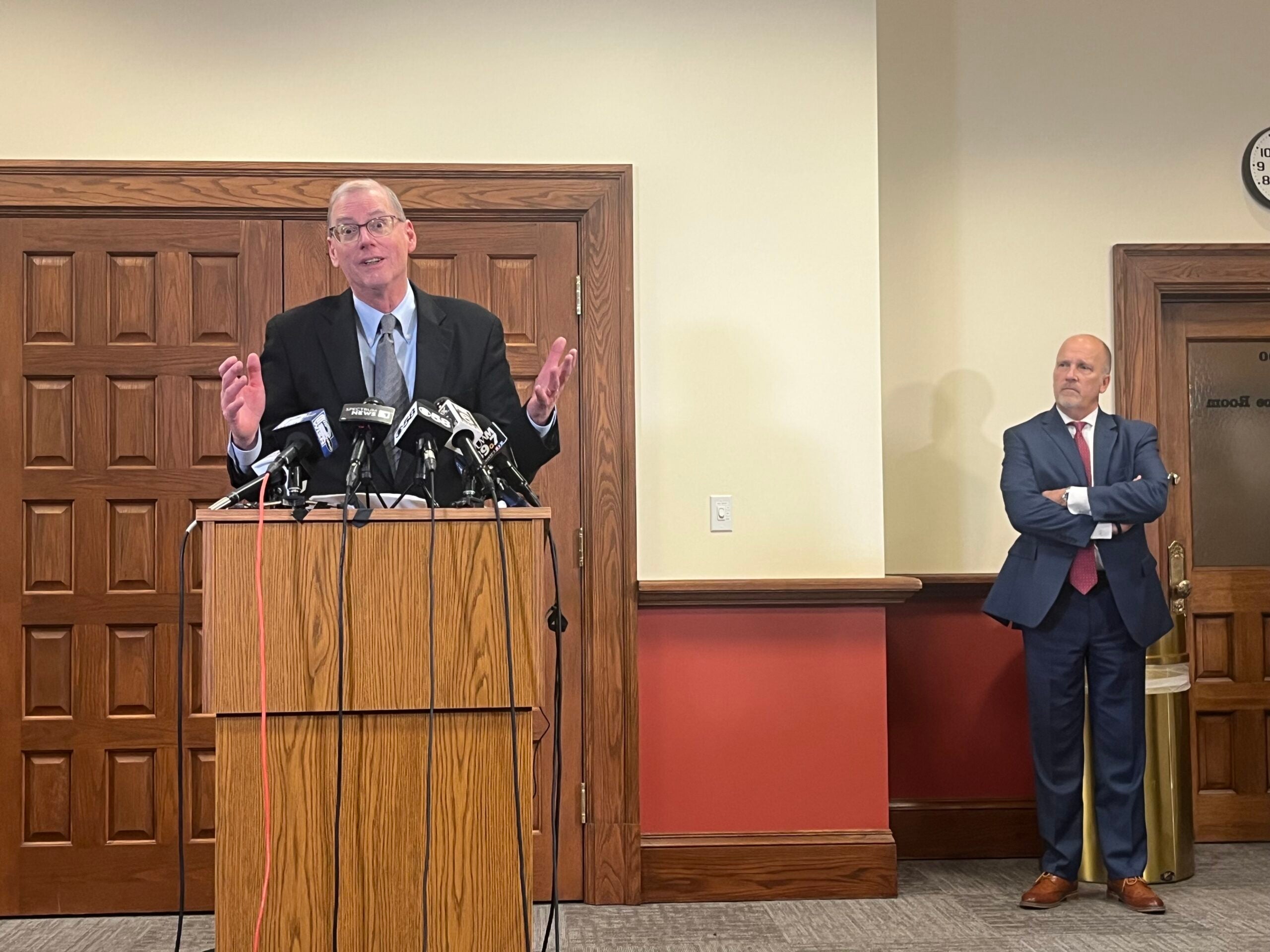 Steve Biskupic, the lead defense attorney for Judge Hannah Dugan, addresses reporters following the verdict in Dugan’s jury trial on Dec. 18, 2025. Brad Schimel, the interim U.S. Attorney for the Eastern District of Wisconsin, watches in the background. Corrinne Hess/WPR
Brad Schimel, the U.S. attorney for the Eastern District of Milwaukee, said he’s proud of the federal prosecutors who tried the case.
He said the verdict demonstrates that the “safest” places for carrying out arrest warrants are the public hallways of courthouses.
“The defendant’s actions provided an opportunity for a wanted subject to flee outside that safe courthouse environment, which led to a dangerous foot chase through automobile traffic,” Schimel said. “I’d like to think that she looked back on this from the get go with some regrets about what she did that day.”
On Thursday, Adelman warned the jury they should not consider Dugan’s potential punishment when deciding whether or not she’s guilty.
Throughout the evening Thursday, jurors sent Adelman notes, asking to see exhibits and requesting more clarity on the definitions of the charges against Dugan. At one point, jurors sent for pizza.
Stopped by reporters after the verdict, one juror, who asked not to be named, said the jury followed Adelman’s instructions faithfully. Asked if it was hard to decide, the person answered directly.
“Yes,” said the juror. “Yes.”
Along with potential fines, the impeding-a-proceeding charge filed against Dugan carries a maximum penalty of five years in prison, while the concealment charge carried a maximum penalty of one year behind bars.
But prison time in Dugan’s case would be virtually unheard of given the allegations in the case and Dugan’s lack of a criminal record, University of Wisconsin-Madison Law Professor John Gross told WPR.
Gross called the case “incredibly unique.”
“Judges rarely face criminal charges,” Gross said. “Generally speaking, (judges are) people who are pretty outstanding members of the community.”
Dugan’s trial has put a spotlight on Milwaukee, and it’s highlighted the tension between President Donald Trump’s immigration crackdown and the authority of a local judge.
Federal prosecutor: Dugan is neither evil nor a martyr
Speaking to reporters late Thursday evening, Schimel, the top federal prosecutor for the Milwaukee region, suggested the case was not “about a larger political battle.”
“While this case is serious for all involved, it is ultimately about a single day, a single bad day in a public courthouse,” Schimel said. “The defendant is certainly not evil, nor is she a martyr for some greater cause. It was a criminal case like many that make their way through this courthouse.”
During closing arguments on Thursday, Dugan’s defense attorney, Jason Luczak, said Dugan was the victim of “government overreach” in a case “riddled with doubt.” Meanwhile, prosecutors said Dugan undermined the neutrality of the justice system when she abused her power to knowingly break the law.
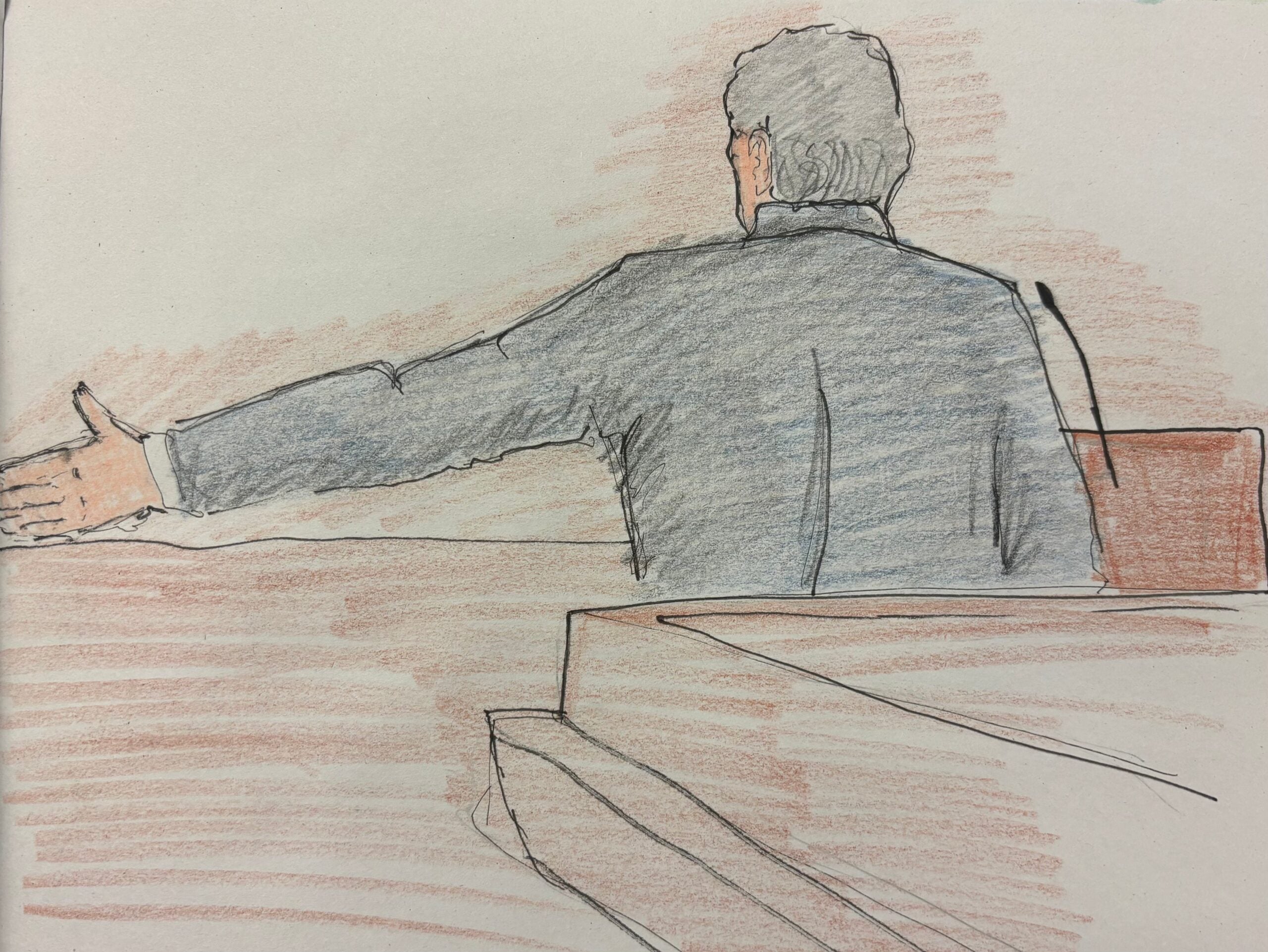 This courtroom sketch depicts the defense attorney giving a closing argument to the jury at Milwaukee County Circuit Judge Hannah Dugan’s trial in court, Thursday, Dec. 18, 2025 in Milwaukee, Wis. Adela Tesnow via AP, Pool
Prior to Dugan’s indictment in May, a group of more than 100 state and federal judges signed a letter condemning Dugan’s arrest as an attempt to “intimidate” the judiciary.
When speaking to Fox News after Dugan’s arrest in April, U.S. Attorney General Pam Bondi said judges are not above prosecution if they break the law.
“You cannot obstruct a criminal case. And really, shame on her,” Bondi said of Dugan’s actions.
During the four-day trial, Dugan did not take the stand to testify in her own defense. Adelman told jurors they may not consider the fact that she chose not to testify as evidence against her.
Dugan has been a Milwaukee County judge since 2016. This spring, the Wisconsin Supreme Court suspended her from her duties while the criminal case against her was still ongoing.
Editor’s note: WPR’s Corrinne Hess and Anya van Wagtendonk contributed reporting.
Wisconsin Public Radio, © Copyright 2025, Board of Regents of the University of Wisconsin System and Wisconsin Educational Communications Board.