The Department of Homeland Security’s attorneys inside New York’s immigration courts are moving to close asylum claims en masse, arguing that people in deportation proceedings have no right to seek asylum in the United States because they’re eligible to do so in three other countries with which the U.S. has recent agreements: Honduras, Ecuador and Uganda.
Word spread of the new Trump administration tactic among the city’s immigration attorneys in recent weeks, as it’s been rolled out inside immigration courts in San Francisco, according to local media there. In New York City’s immigration courthouses, the novel strategy kicked off in full steam over the last two weeks inside, observers told THE CITY. Hellgate earlier reported on the new Trump administration tactic, which sets the stage for potential third-country removals on a large scale in the coming months.
THE CITY watched a Department of Homeland lawyer make a motion to “pretermit” asylum claims inside the courtroom of Immigration Judge Tiesha Peal in case after case on Thursday morning. The request to “pretermit” the asylum claim is an effort to toss a person’s asylum claim, leaving them defenseless against deportation to a country they are not from and may have never even entered before.
“The Department is moving to pretermit the respondent’s asylum application,” the Trump administration attorney said. “The respondent is subject to three cooperative agreements, Ecuador, Honduras, Uganda,” he went on. “And because of that, the respondent is barred from seeking asylum in the U.S.”
Peal gave people in her courtroom until Jan. 22 to respond to the motion in writing and then set another court date for early February where she would rule on it.
“Do you understand,” Judge Peal asked an Ecuadorean woman sitting before her who’d been told she would have to apply for asylum in Uganda or Honduras. “What that means is the government is saying you are not eligible for asylum here.”
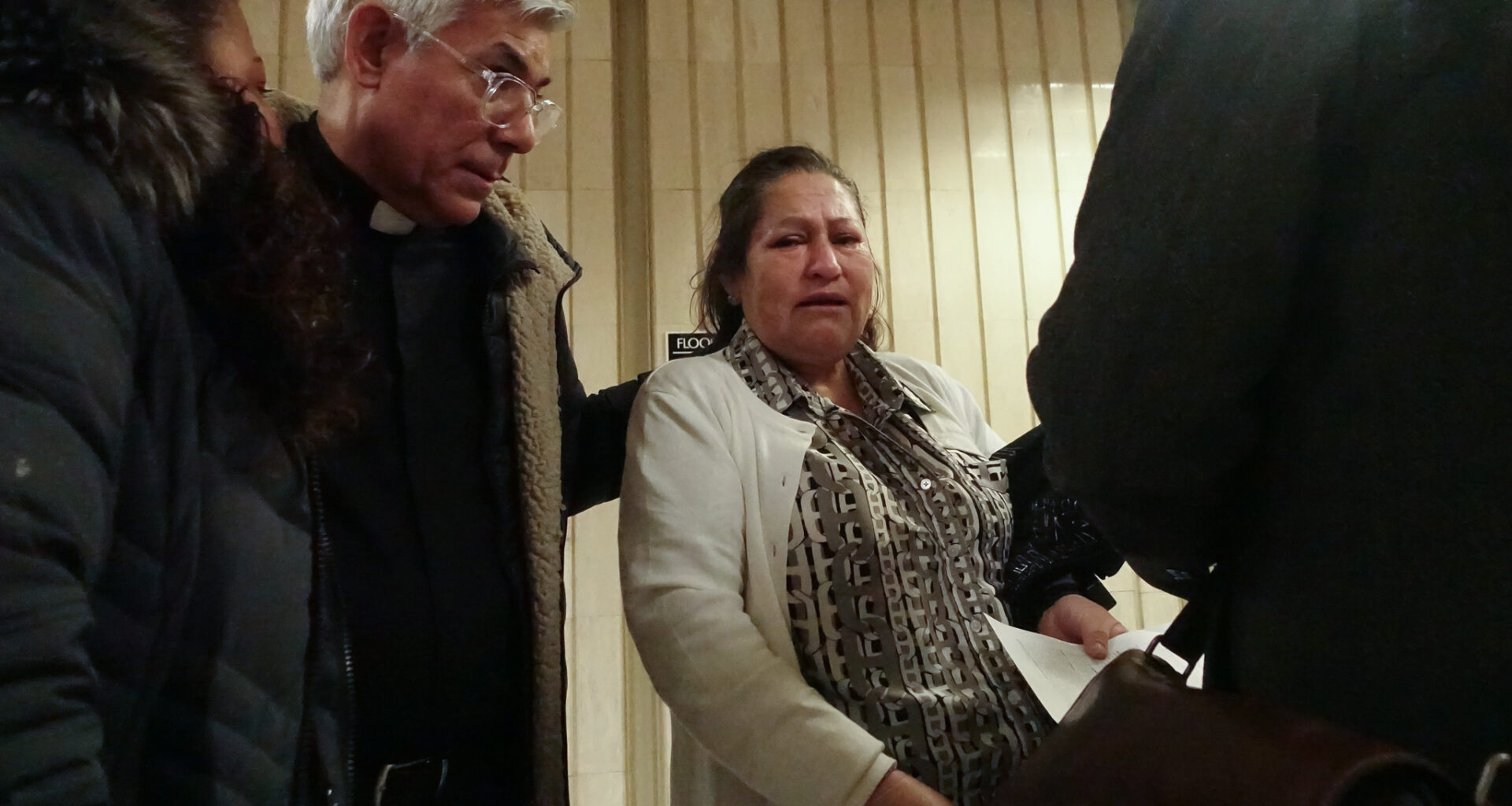
“Yes,” the woman replied, bursting into tears as soon as she made it out the courtroom door moments later. “It’s so unjust,” the woman said in Spanish, asking to be identified by only her first name, Narcisa.
Another immigrant named Darlene emerged moments later also in tears. “I’m terrified,” the 33-year-old said in Spanish, adding “it’s my first court date.”
Benjamin Remy, an immigration attorney with the New York Legal Assistance Group, tried to console the women offering information about how to reply in writing.
“It’s not an order of deportation,” he told them in Spanish. “You have a chance to respond.”
It’s not yet clear if the Department of Homeland Security plans to roll the motions to pretermit across the board or target specific groups of asylum seekers.
In a written statement sent to THE CITY, DHS said it was “working to get illegal aliens out of our country as quickly as possible while ensuring they receive all available legal process, including a hearing before an immigration judge.”
“Asylum Cooperative Agreements are lawful bilateral arrangements that allow illegal aliens seeking asylum in the United States to pursue protection in a partner country that has agreed to fairly adjudicate their claims,” the statement read. “DHS is using every lawful tool available to address the backlog and abuse of the asylum system.”
In June, the U.S. Supreme Court cleared the way for the Trump administration to ramp up third-country removals, granting a stay of a lower court’s order requiring advanced written warning and a chance to provide a defense against removal to that country, but thus far the practice has not been used on a large scale.
Earlier this month, THE CITY reported between the start of the year and mid-October, just 62 people from New York had been deported to countries different from their country of origin. That figure seems poised to increase in the coming months.
Now, in order to keep their asylum claims alive, people will have to submit a written motion to the court. But exactly what to say in that motion to convince an immigration judge to keep their claim open is anyone’s guess, even for savvy immigration attorneys, let alone recent immigrants who don’t speak English and can’t afford lawyers, like many of the people in deportation proceedings.
“We have no case law,” Remy said. “We have nothing but the statute.”
The Board of Immigration Appeals, which sets precedent in the nation’s immigration courts, decided a similar case in October, finding immigration judges should grant motions to permit asylum claims unless the person could “establish by a preponderance of the evidence that he or she will more likely than not be persecuted on account of a protected ground,” in that third country.
Remy called the latest Trump administration tactic “a slaughter,” saying it’s even worse than the masked federal agents stalking immigration court hallways arresting people seemingly at random.
At least then, Remy said, “theoretically, you could still win. You could still have your final hearing, you could still be granted asylum. Now you’ve just seen asylum be completely cut off.”
The jury is still out on how immigration judges will rule on the motions to pretermit asylum claims. Most judges have been giving people between 10 and 30 days to reply in writing before ruling on the motions, so the impact of these motions on people’s asylum cases will become clearer in the coming weeks.
The move to pretermit asylum claims is the latest shake up for the nation’s immigration courts, which are part of the Executive Branch under the Department of Justice, and have been under immense pressure from the Trump administration, with waves of firings of tenured judges in New York City and across the country, particularly of those with the highest asylum grant rates.
Volunteer courtwatchers spoke to THE CITY in hushed tones in the hallway Thursday morning as they shuffled between courtrooms trying to console people and explain what steps they should take.
“I can’t tell you how many people are asking me, ‘Where is Uganda?’” one courtwatcher said, who declined to provide their full name.
“I’ve never felt this sick in here,” another added, also declining to be named.
Related